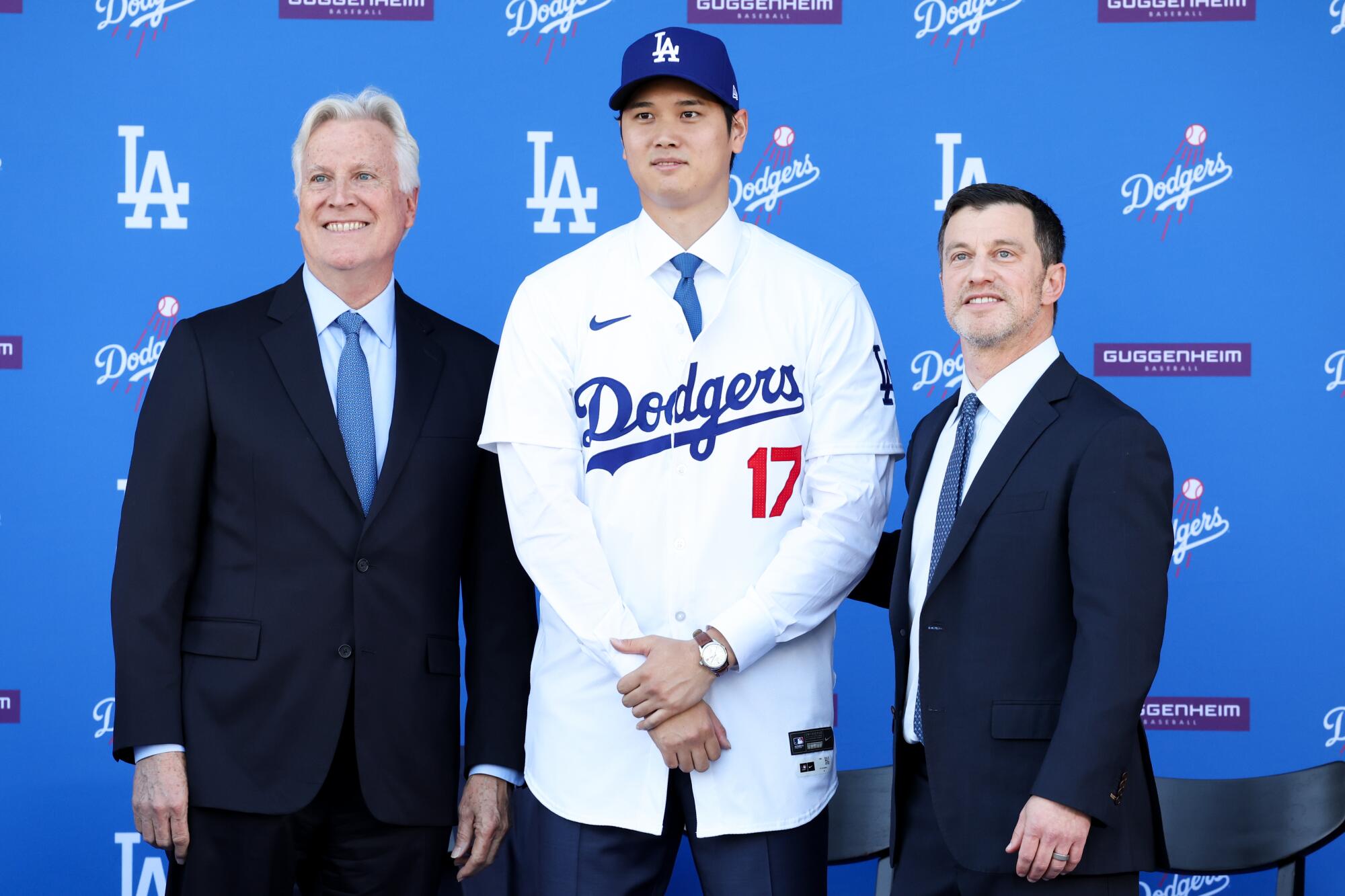
The Los Angeles Dodgers did not trade for Tyler Glasnow to win games in February. They bought him to survive October. When the 6-foot-8 right-hander stepped onto the mound for his first Spring Training start in Camelback Ranch, the box score showed efficiency—two innings, one hit, zero runs, and a handful of pitches that looked like they were falling off a table. But the efficiency wasn't the story. The story is the structural integrity of a right elbow that has been sliced, stitched, and reinforced to the tune of $136 million.
For years, Glasnow has been the white whale of Major League Baseball. He possesses the most devastating "stuff" in the sport, a combination of extreme extension and vertical movement that makes a 98-mph fastball feel like it’s being released from the batter’s own shirt pocket. Yet, he has never thrown more than 120 innings in a single professional season. The Dodgers are gambling that they can solve the durability puzzle that the Tampa Bay Rays—widely considered the smartest developmental organization in baseball—ultimately decided was too risky to keep on the books.
The Mechanics of a Fragile Giant
To understand why Glasnow is both a masterpiece and a liability, you have to look at the physics of his delivery. Because of his massive frame, Glasnow generates more "extension" than almost any pitcher in history. Extension is the distance from the rubber to the point where the ball actually leaves the fingers.
When Glasnow releases the ball, he is nearly seven and a half feet closer to the plate than the average human. This creates a perceived velocity that turns a standard heater into an unhittable blur. However, that same leverage puts an astronomical amount of torque on the ulnar collateral ligament (UCL). It is a simple matter of a long lever requiring more force to move. In 2021, that lever snapped, leading to Tommy John surgery and the insertion of an internal brace.
The Dodgers’ strategy is clear. They aren't looking for a workhorse to eat 200 innings and save the bullpen in June. They are building a rotation of "stints." By surrounding Glasnow with Yoshinobu Yamamoto and eventually a returning Shohei Ohtani, the front office is betting that they can manage Glasnow’s workload with surgical precision. If he gives them 25 starts and enters the playoffs with a fresh arm, the $136 million investment is a bargain. If the elbow flares up in August, it’s a catastrophic failure of roster construction.
The Tampa Bay Divorce
Why would the Rays, a team that clings to elite talent like a life raft, let Glasnow walk? The answer lies in the cold, hard math of their internal projections. Tampa Bay saw a pitcher entering his age-30 season with a medical chart longer than his stat sheet. They saw a player whose salary was about to spike to $25 million—a figure that represents a massive chunk of their total payroll.
But more importantly, the Rays' departure suggests they didn't believe the "efficiency" we saw in this first spring start was sustainable over a full season. In his debut for the Dodgers, Glasnow used his curveball to steal early strikes, a shift from his usual "grip it and rip it" approach. He wasn't maxing out his effort. He was navigating.
The Risk of the Internal Brace
It’s worth noting that Glasnow’s 2021 surgery wasn’t a traditional Tommy John procedure. He received the "internal brace" technique, which uses a thick suture tape to reinforce the ligament. While this allows for a faster recovery time, the long-term data on how these braces hold up under the stress of 100-mph fastballs is still being written. The Dodgers are essentially conducting a high-stakes clinical trial in the middle of a World Series window.
The Pressure of the Billion Dollar Rotation
The atmosphere in Los Angeles has shifted from optimistic to mandatory. After spending over a billion dollars in a single offseason, the Dodgers have removed the "maybe" from their vocabulary. Every time Glasnow shakes his arm or winces after a high-leverage pitch, a collective gasp will ripple through the front office.
This isn't just about baseball. It’s about the business of risk mitigation. The Dodgers have effectively insured their Glasnow bet by signing Yamamoto to a record-breaking deal, but Yamamoto is an unproven commodity in the MLB schedule. This leaves Glasnow as the de facto ace of the present. He has to be the bridge to the era where Ohtani returns to the mound.
Redefining the Ace in the Modern Era
We are witnessing the end of the 200-inning starter. The Dodgers are leaning into this reality more than any other franchise. They are comfortable with a "quality over quantity" model where Glasnow provides five or six elite innings before handing the ball to a parade of high-velocity relievers.
The danger in this model is the "burnout effect" on the rest of the staff. If Glasnow can’t provide length, the middle relief corps will be shredded by mid-July. This is the hidden cost of a fragile rotation. It’s not just about the games the ace misses; it’s about the tax he puts on the 12 other pitchers on the roster.
The Mental Shift
In his post-game comments, Glasnow sounded like a man who has finally stopped fighting his own body. He spoke about "just going out and pitching," a mantra that suggests a move away from the hyper-analytical, max-effort mindset that characterized his time in Pittsburgh and early Tampa. For a pitcher of his size, rhythm is everything. If he can find a "cruising speed" that keeps his velocity at 96 mph instead of 99 mph, he might just find the durability that has eluded him for a decade.
The Inevitability of the Injury Report
The reality of Glasnow is that he will likely spend time on the Injured List this year. The Dodgers know this. Their fans need to know this. The success of the season shouldn't be measured by whether he stays healthy for 162 games—that’s a fantasy. The success will be measured by whether the training staff can time his inevitable "maintenance" stints so that he is peaking on October 1st.
The "efficiency" shown in his spring debut is a promising sign, but it’s a tiny sample size in a sport that demands grueling consistency. Glasnow has the talent to be the best pitcher on the planet. He also has the history of a man who could be sidelined by a stiff breeze. Los Angeles isn't paying for a safe bet; they are paying for the ceiling. And the ceiling in Los Angeles is currently higher than it has ever been in the history of the sport.
Watch the pitch count. Don't look at the velocity; look at the landing leg. If Glasnow stays upright and his mechanics remain fluid, the Dodgers might have pulled off the heist of the century. If he reverts to the high-torque, violent snap of his youth, that $136 million will look like a very expensive souvenir.
Next time you see him on the mound, don't just check the radar gun—check the calendar. Every day he stays active is a win for the Dodgers’ front office, but the only date that matters is the one where the lights are brightest and the margin for error is zero.