The ground in Perry County does not forget.
Decades ago, heavy machinery chewed through the rolling hills of southeastern Ohio, stripping away the topsoil, tearing out centuries-old oaks, and leaving behind a jagged wasteland of gray shale and acidic spoil banks. Strip mining paid the bills for a season, but it left behind a permanent scar. For forty years, sixty acres of once-vibrant earth sat abandoned. Water pooling in the low cuts turned the color of rust, poisoned by heavy metals and sulfuric acid. Nothing grew. Nothing lived there, save for the occasional migrating hawk refusing to look down at the dead zone below.
Dead zones have a way of spreading if you let them. They bleed into the water table. They choke the creeks. They remind everyone living within shouting distance of what industry takes when it stops caring about what it leaves behind.
Then came the Millers.
They are not corporate crusaders with venture capital backing or PR teams in tow. They are an ordinary Ohio family who looked out their kitchen window at a neighbor’s ecological nightmare and decided they had waited long enough for someone else to fix it.
Real estate listings usually market such land as a total loss. Unbuildable. Worthless. Tax liabilities dressed up as acreage. But the Millers saw a blank canvas, albeit a broken one. They understood a fundamental truth that modern land management often forgets: nature wants to heal, but sometimes she needs a shovel and a pair of stubborn hands to clear the path.
Consider what happens when you walk across abandoned mine land. The earth feels hollow beneath your boots. The soil is compacted, suffocated by coal dust and clay, locked in a chemical freeze that repels life.
The family started with a soil test. The results were terrifying. The pH levels hovered near battery acid. Nitrogen was non-existent. Traditional planting was out of the question; throwing seeds at this dirt would be like tossing corn into a furnace.
So, they changed the chemistry.
They hauled in organic matter by the truckload. They spent weekends moving stone by hand to slow the rushing water erosion that threatened to wash away whatever little progress they made. It was slow, backbreaking work. The kind of labor that makes your lower back scream and turns your fingernails black for days at a time.
(Note: While the family's exact daily regimen varied based on seasonal weather, their approach mirrors established United States Office of Surface Mining Reclamation and Enforcement guidelines for acid mine drainage mitigation.)
Tree by tree, the landscape shifted.
They chose native species deliberately. White oaks, red maples, sycamores, and Virginia pines went into the ground. These are not ornamental trees meant to sit prettily in a suburban front yard. These are survivors. Their roots are deep anchors designed to break through compacted subsoil, reaching down until they find moisture and stability.
In the first year, survival rates were brutal. Less than half the saplings took hold. The earth fought back. A sudden summer drought baked the clay into concrete, snapping stems like dry twigs.
They didn't quit. They hauled water in 275-gallon tanks mounted on the back of an old flatbed truck, watering individual trees by hand when the rains failed. They planted more. They added mycorrhizal fungi to the root zones to help the saplings trade nutrients with the microscopic life they were desperately trying to reintroduce to the soil.
Year two brought a shift. The earth began to soften.
Earthworms, long absent from the acidic wasteland, found their way back into the amended beds, tunneling through the dirt and creating microscopic airways that allowed the stubborn tree roots to breathe.
By year five, the transformation crossed an invisible threshold. The canopy closed.
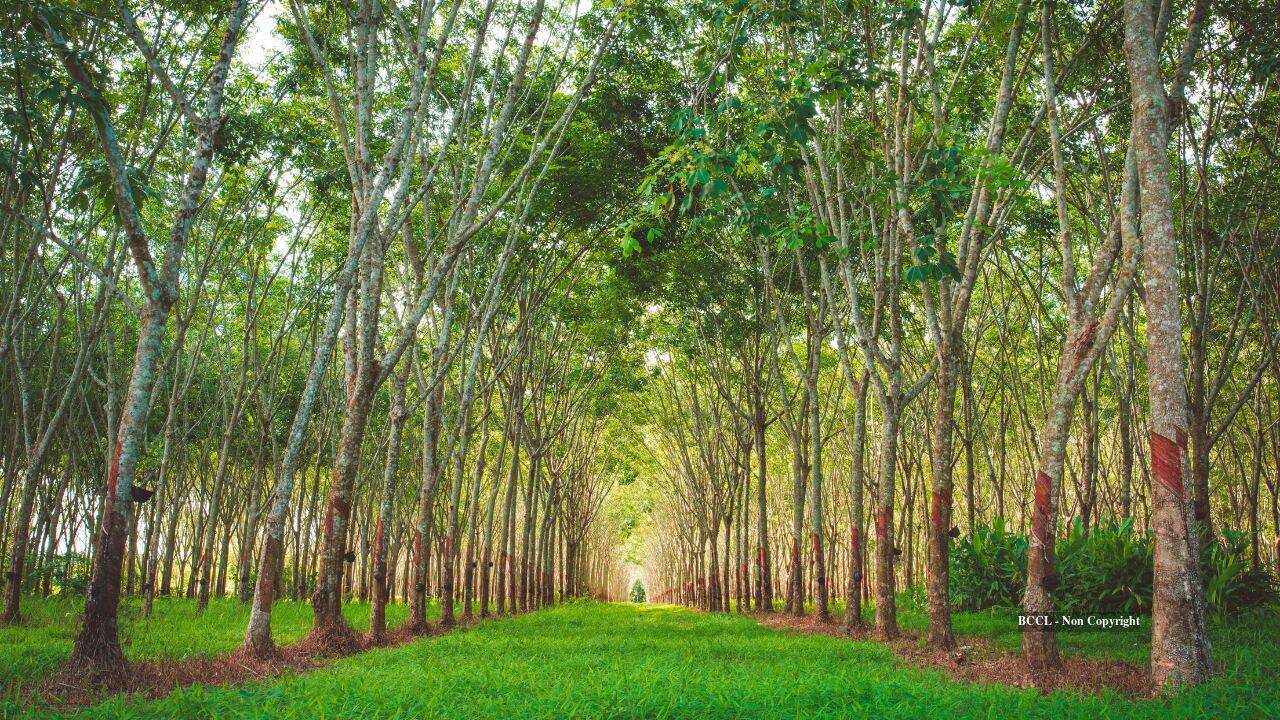
Walk through those sixty acres today, and the silence of the dead zone is gone, replaced by a chaotic, beautiful racket. Red-winged blackbirds dart through the branches of maturing maples. White-tailed deer bed down in the tall grass that now carpets what was once barren gray shale. The water in the streams runs clear again, filtered by miles of root systems and biological buffers.
The economic math of reforestation rarely makes sense on a quarterly spreadsheet. Planting sixty acres of native trees does not yield an immediate return on investment. There is no cash crop harvested in autumn. The value here is entirely different. It is measured in the return of the water table, the stabilization of the topsoil, and the restoration of a local ecosystem that had been written off as collateral damage.
We live in a culture obsessed with scale, constantly searching for global solutions to planetary crises while ignoring the dirt directly beneath our feet. We wait for policy shifts. We wait for billionaires to fund green initiatives. We wait for someone else to care.
The Millers proved something radical. Healing the earth is local work. It happens one shovel-full of compost, one stubborn sapling, and one exhausted weekend at a time.
The sixty acres in Perry County are no longer a monument to what we broke. They are a living, breathing blueprint for what we can repair. The trees are taller now, their leaves rustling in the autumn wind, whispering a simple truth to anyone willing to listen: the damage is deep, but the desire to grow is deeper.