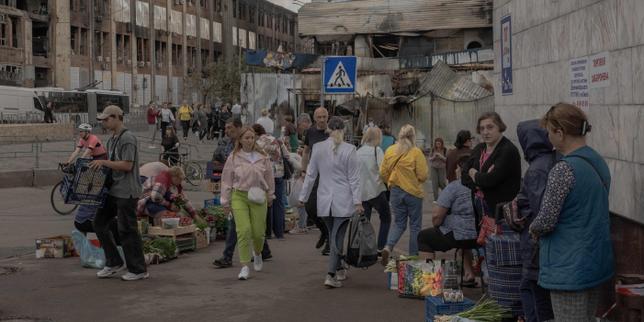
The United Nations recently issued another stark warning regarding the "dangerous escalation" of the war in Ukraine, coupled with its standard plea for global restraint. Yet, these recursive warnings highlight a deeper systemic breakdown. The conflict is escalating because the international frameworks designed to prevent global warfare are fundamentally broken, leaving a diplomatic vacuum that both sides are filling with heavier ordnance and broader engagement parameters. UN press releases cannot bridge the gap between a gridlocked Security Council and the raw geopolitical calculations driving the front lines. The current trajectory points toward an unmanaged expansion of the theater of war.
The Mechanism of Gridlock
Every time a red line dissolves in Ukraine, the international community follows a predictable script. The UN Secretary-General expresses profound concern. High-ranking officials give briefings on the humanitarian fallout. Statements are drafted, debated, and ultimately filed away without triggering structural change.
This paralysis is not an accident of diplomacy. It is a direct feature of the UN Security Council's design.
[Security Council Resolution Proposed]
                  │
                  ▼
   [Permanent Member Veto (Russia)]
                  │
                  ▼
       [Diplomatic Deadlock]
                  │
                  ▼
 [Unilateral Escalation on the Ground]
When one of the five permanent members with veto power is an active combatant, the council’s enforcement mechanisms are instantly neutralized. Russia vetoes any collective security action targeting its operations, while Western powers ensure their strategic aid packages remain unimpeded by international mandates.
The General Assembly can pass non-binding resolutions with overwhelming majorities. They hold symbolic weight. They signal global disapproval. However, symbolic weight does not intercept ballistic missiles or alter trench lines in the Donbas. The hard reality is that the UN was built to maintain a peace agreed upon by major powers, not to enforce peace upon a major power that refuses it.
The Illusion of Red Lines
For over two years, the conflict has been defined by a slow, deliberate creep in capabilities and targets. What was deemed unthinkable in the spring of 2022 is now standard operational procedure.
This escalation follows a distinct pattern of boundary testing.
- Weaponry Progression: The logistical pipeline shifted from defensive infantry weapons to heavy artillery, then to main battle tanks, advanced air defense batteries, and long-range precision strike systems.
- Geographic Expansion: The geographic boundaries of the war have blurred. Cross-border incursions, drone strikes deep within Russian territory, and the targeting of critical infrastructure have normalized the idea that no zone is truly sanctuary.
- Coalition Deepening: The conflict is no longer a localized engagement. It draws heavily on global supply chains, intelligence sharing, and foreign manufacturing support, turning it into a proxy war of industrial attrition.
Each step across a previous threshold occurs after a period of rhetorical brinkmanship. The escalatory cycle operates like a ratchet. It turns in one direction only. Once a new class of weapon is deployed or a new target set is authorized, the baseline of the war permanently shifts.
Restraint is an unviable strategy when both sides believe that pausing means ceding the initiative to an opponent who will not pause.
The Problem of Asymmetric Risk
Calculations of risk are fundamentally misaligned. For Ukraine, the war is an existential struggle for sovereignty and physical survival. Any restriction on how it uses provided hardware is viewed as a forced handicap against a larger, wealthier adversary.
For the Kremlin, the conflict has been tied directly to state prestige and regime stability. Backing down or accepting a status quo ante bellum is framed internally as an unacceptable defeat that could trigger internal collapse.
When both actors view the costs of compromise as higher than the costs of continued escalation, diplomatic appeals for moderation become irrelevant noise. They are ignored because they offer no viable security guarantees to either participant.
The Deterrence Trap
Western strategy has relied on a delicate balancing act. The goal has been to provide Ukraine with enough military material to prevent a total collapse while managing the risk of a direct confrontation between NATO and a nuclear-armed Russia.
This approach has created what defense analysts call a deterrence trap. By explicitly stating what it will not do to avoid World War III, the West inadvertently mapped out the boundaries within which Moscow could operate with relative impunity. Conversely, by slowly feeding advanced capabilities into the theater to avoid sudden shocks, the West allowed the Kremlin time to adjust its logistics, economy, and political messaging to a prolonged, high-intensity conflict.
The result is a war of attrition that consumes resources at a rate unseen since the mid-twentieth century.
The Cost of Industrial Attrition
Wars are won by factories as much as by armies on the ground. The current escalation is straining global defense manufacturing capacities to their limits.
Consider a hypothetical scenario where a state requires 10,000 artillery shells a day to hold a defensive line, but its global suppliers can only produce 3,000 shells a day. No amount of diplomatic goodwill or strategic maneuvering can overcome that math. The shortfall must be compensated for with territory, human lives, or a reliance on increasingly destabilizing weapon systems, such as cluster munitions or unguided, heavy-yield glide bombs.
This industrial bottleneck forces a reliance on external actors outside the primary alliance structures. As the war drains conventional stockpiles, both sides seek secondary supply chains, drawing in states like North Korea and Iran on one side, and revitalizing dormant Western defense plants on the other. The conflict acts as a centrifugal force, pulling the rest of the world into its economic and military orbit.
The Collapse of Arms Control Architecture
The escalation in Ukraine does not happen in a vacuum. It is taking place alongside the systematic dismantling of the global arms control architecture that kept the Cold War from turning hot.
Over the last decade, key treaties have been abandoned, suspended, or ignored. The Intermediate-Range Nuclear Forces (INF) Treaty is gone. The Open Skies Treaty is defunct. Russia’s suspension of its participation in the New START treaty effectively removed the last remaining guardrails on the world’s two largest nuclear arsenals.
Without these verification mechanisms and communication channels, the risk of miscalculation skyrockets. A stray missile crossing an international border, a misinterpreted radar signature during a mass drone attack, or an unannounced military exercise can trigger an unintended response.
The UN warns of danger because it can see that the safety nets have been cut. There are no hotlines, no mutual inspection teams, and no shared agreements on strategic stability left to cushion a mistake.
The Futility of the Neutrality Model
Historically, conflicts of this scale were occasionally mediated by powerful, neutral third parties. In the current geopolitical alignment, true neutrality has become functionally extinct.
Global powers that claim neutrality are often engaging in calculated hedging. They buy discounted commodities from one side while selling dual-use components that keep military industries running. This economic liferaft prevents total isolation and undercuts the effectiveness of international sanctions regimes.
Mediation requires leverage. If a mediating state is financially benefiting from the continuation of the economic rebalancing caused by the war, its incentive to force a harsh peace diminishes. The traditional toolkits of international diplomacy—peace conferences, back-channel negotiations, and multilateral summits—fail when the mediators themselves have a structural interest in the ongoing realignment of global trade and influence.
The Operational Reality on the Ground
While the diplomatic community debates semantics in New York and Geneva, the tactical execution of the war forces escalation on a daily basis. Military commanders do not operate on the timelines of international bodies. They operate on the immediate demands of the battlefield.
When a defensive line is threatened with a breakthrough, a commander will utilize every asset available, regardless of whether that asset crosses a theoretical diplomatic threshold. If long-range surveillance detects a troop concentration preparing an assault across a border, the tactical imperative is to strike that concentration before it moves.
This reality creates an irreversible momentum. Political leaders are often left retroactively validating tactical decisions made under duress by their military personnel. The diplomatic framework is constantly chasing a reality that has already shifted miles ahead on the ground.
The Weaponization of Interdependence
The globalized economy was once championed as an insurance policy against large-scale war. The theory held that nations intertwined by trade would find conflict too costly to pursue.
The war in Ukraine turned that theory on its head. Interdependence has not prevented conflict; it has been weaponized as a tool of engagement. Energy flows, agricultural exports, semiconductor supply lines, and global financial messaging systems are now active fronts in the war.
┌────────────────────────────────────────────────────────┐
│               Weaponized Interdependence               │
└───────────────────────────┬────────────────────────────┘
                            │
         ┌──────────────────┴──────────────────┐
         ▼                                     ▼
┌─────────────────┐                   ┌─────────────────┐
│ Energy & Grain  │                   │ Semiconductor   │
│ Blockades       │                   │ & Tech Embargoes│
└─────────────────┘                   └─────────────────┘
This weaponization expands the impact of the escalation far beyond the borders of the Donbas. A blockade in the Black Sea threatens food security in North Africa. A shift in natural gas pipeline dynamics reshapes industrial policy in Western Europe.
Because the collateral damage of this economic warfare is global, it dilutes the moral authority of international institutions. Developing nations, watching their food and energy costs soar due to a European conflict, grow weary of voting for resolutions that offer them no material relief. This fragmentation weakens the collective will required to enforce international norms, leaving the combatants with even more latitude to pursue total victory.
The Strategic Inertia
The fundamental reason the conflict defies containment is that neither side possesses a clear pathway to a decisive military victory under the current parameters, yet neither can afford to quit.
A stalemate in a war of attrition is not static. It is highly volatile. To break a deadlock, forces must innovate, deploy novel technologies, modify tactics, and expand their targeting logic. This innovation is, by definition, escalatory.
Electronic warfare systems now blank out civilian GPS signals across entire regions. Autonomous drones utilize rudimentary artificial intelligence to bypass jamming, removing human decision-making from the terminal phase of a strike. Each technological adaptation forces a counter-response, dragging the conflict into deeper, unmapped ethical and operational territory.
The UN’s call for restraint asks the combatants to accept a slow, agonizing drain on their national vitality without attempting to change the strategic calculus. It is an invitation to lose quietly. In the cold logic of state survival, an escalation that carries a risk of wider war is consistently chosen over a restraint that guarantees eventual defeat.
The international community faces a choice that it continually tries to evade. It must either assemble the raw economic and military leverage required to force an unpalatable peace on both parties, or it must accept that the war will continue to expand until the internal resources of one or both combatants are entirely exhausted. Until that choice is made, the ritualistic expressions of concern from international bodies remain a hollow accompaniment to an accelerating global crisis.