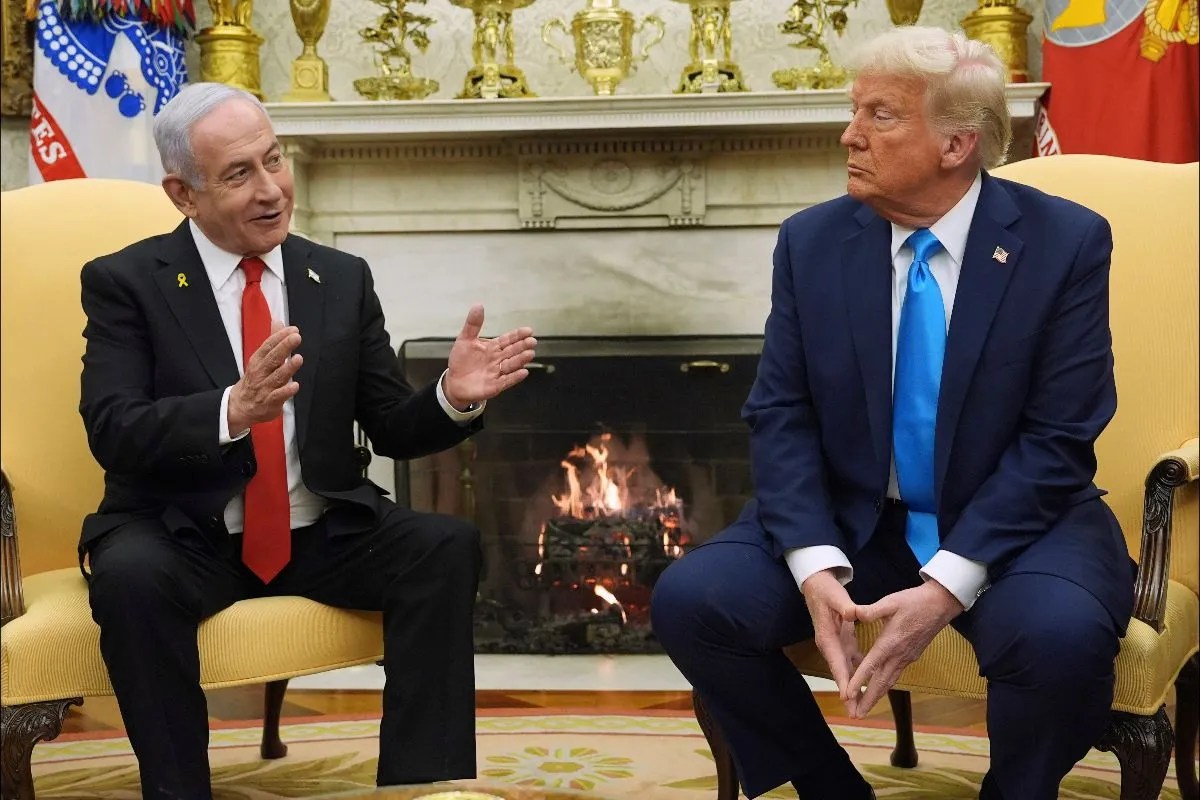
The enforcement of International Criminal Court (ICC) arrest warrants within the United States operates under a complex system of domestic law, international treaties, and executive discretion. Statements by former political leaders regarding foreign leaders, such as Benjamin Netanyahu, highlight the tension between international legal mandates and national sovereignty. Understanding whether a foreign head of government could face arrest in the US requires evaluating three primary structural mechanisms: international jurisdictional limits, domestic legal frameworks, and executive enforcement authority.
The Structural Limits of ICC Jurisdiction in the United States
The International Criminal Court functions on the principle of treaty-based jurisdiction established under the Rome Statute. The United States is not a state party to the Rome Statute, having withdrawn its signature in 2002. This non-ratification status creates a fundamental legal barrier to the automated execution of ICC warrants on US soil. Also making headlines in related news: Why the Marine Corps Future Reconnaissance Vehicle Faces a Brutal Reality Check.
International law recognizes two primary mechanisms for jurisdiction execution:
- Member State Obligation: States party to the Rome Statute are treaty-bound under Article 86 to cooperate fully with the Court, including the surrender and extradition of targeted individuals.
- Non-Member Autonomy: Non-signatory nations retain complete autonomy regarding whether to recognize, process, or enforce mandates issued by the ICC.
Because the US operates outside the Rome Statute framework, an ICC arrest warrant holds no direct legal authority within American jurisdiction. Enforcement cannot occur through standard judicial channels without specific intervention by the executive or legislative branches. More insights into this topic are explored by Associated Press.
Executive Immunity and the American Legal Architecture
Domestic statutory law further restricts the automated application of international warrants against foreign officials. Head-of-state immunity remains a core doctrine of customary international law, recognized by US federal courts through executive branch determination.
The legal mechanics governing foreign official presence in the US involve distinct layers of legal protection:
- Customary International Immunity: Sitting heads of state and heads of government enjoy absolute immunity from civil and criminal jurisdiction (ratione personae) while holding office. This immunity protects the individual from arrest, detention, or legal process by domestic courts of another sovereign nation.
- The Foreign Sovereign Immunities Act (FSIA): While FSIA primarily addresses civil liability for foreign states, federal common law governs criminal immunity for foreign officials, relying heavily on interest statements submitted by the US Department of Justice.
- Statutory Enforcement Constraints: The American Servicemembers' Protection Act (ASPA) of 2002 explicitly limits US government cooperation with the ICC. The statute restricts federal, state, and local agencies from assisting the Court in extradition or investigative actions without explicit statutory exceptions.
For an arrest to occur, the executive branch would need to formally strip the foreign leader of recognized diplomatic immunity, override ASPA restrictions through legislative or executive waivers, and direct federal law enforcement agencies to execute an international detainer. Such a sequence has no precedent for a sitting head of a recognized allied government.
Geopolitical Strategy and Strategic Rhetoric
Public statements regarding foreign arrests serve strategic political functions rather than legal forecasts. When political figures address the potential arrest of foreign leaders, the statements signal strategic alignment, deterrence, and domestic policy priorities.
Declarations assuring protection for foreign leaders function across two primary vectors:
Diplomatic Signaling
Reassuring an ally of safe passage reinforces bilateral security commitments and signals stability to international partners. It indicates that domestic political shifts will not compromise established diplomatic protections or bilateral agreements.
Jurisdictional Assertion
Emphasizing that foreign mandates will not be recognized on domestic soil asserts national sovereignty over international judicial bodies. This reinforces the long-standing US policy favoring national courts over multinational tribunals.
The enforcement of international warrants ultimately remains subordinate to sovereign domestic law and executive policy. Absent a fundamental rewrite of US statutory law and a complete shift in executive branch policy regarding international tribunals, foreign heads of government visiting the United States operate under robust domestic legal protections that prevent statutory enforcement of ICC warrants.