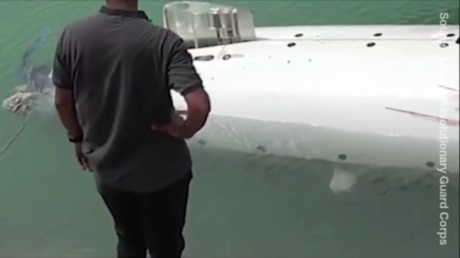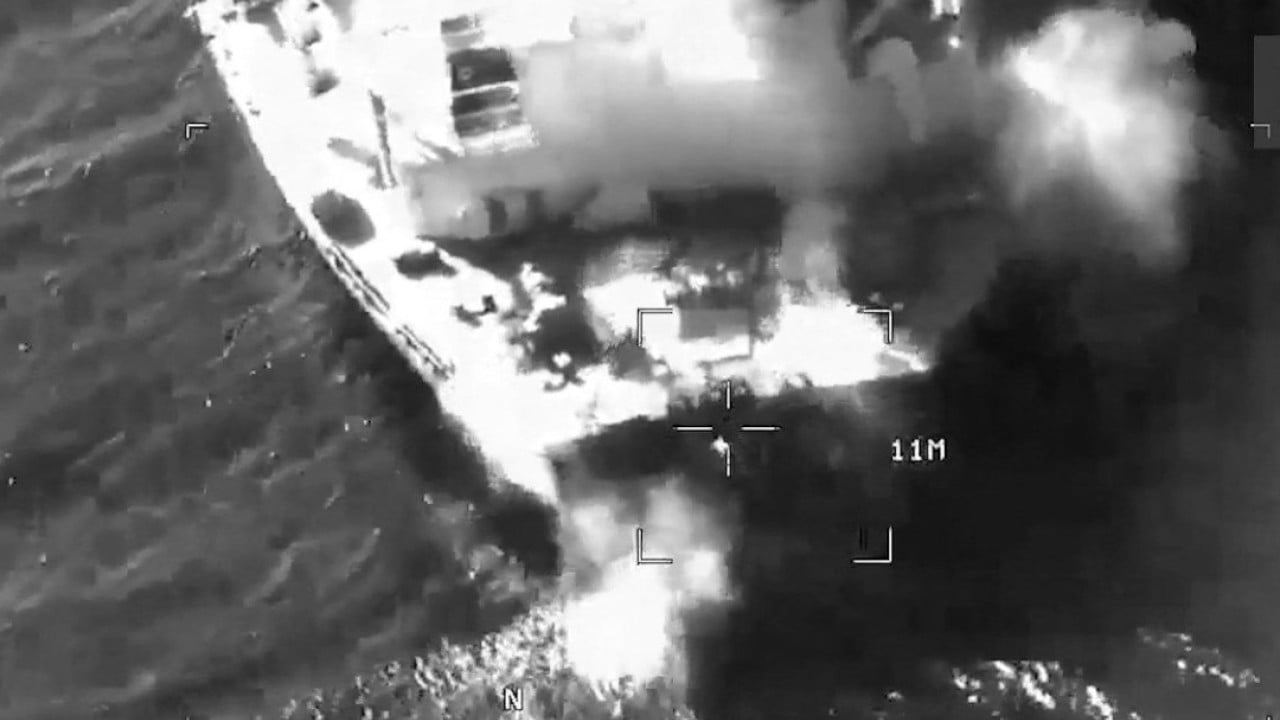
Every desk-bound strategist in Washington is currently popping champagne because the military reportedly turned five Iranian oil tankers into scrap metal after a skirmish involving a Navy destroyer. Headlines read like a 1980s action movie script. We struck back. We decimated their logistics. We showed strength.
It is all a dangerous delusion. If you liked this piece, you should look at: this related article.
I spent a decade analyzing asymmetric maritime choke points and maritime logistics supply chains for private defense syndicates. I have seen military boards sign off on billions in kinetic responses that solve tactical boredom while failing to shift strategic reality by a single millimeter. Sinking an oil tanker in the Persian Gulf does not project power. It acts as an expensive distraction from a complete failure of deterrence, economics, and basic math.
The lazy consensus in the defense press is that blowing up hulls hurts Tehran where it counts. The reality is far worse. Those tankers were likely empty, insured to the gills, and functioning as cheap bait or obsolete relics in a shadow fleet that operates independently of traditional state-owned logistics. For another look on this event, see the latest coverage from Reuters.
Let us look at the mechanics of modern maritime conflict.
The Arithmetic of Asymmetric Attrition
When a multimillion-dollar missile or torpedo obliterates a rust-bucket tanker, who actually absorbs the loss? Not the Iranian Revolutionary Guard Corps leadership sitting comfortably in Tehran. They view these ships as disposable assets, bought pennies on the dollar from the global scrap market, repurposed for illicit sanctions-evasion runs, and often carrying crude that has already cleared its profit margin three times over via ship-to-ship transfers in the dead of night.
Compare that to the cost curve. A standard surface-to-air or anti-ship missile system deployed from a guided-missile destroyer costs millions of dollars per round. Add the operational deployment cost of the carrier strike group or surface action group required to secure the theater, and you realize the economic asymmetry is upside down. We are spending elite-tier ordnance to eliminate low-tier decoys.
Iran does not need to win a naval artillery duel. They win by forcing the United States Navy into a continuous, high-burn consumption cycle of finite precision munitions in a confined body of water.
The Myth of Choke Point Control
Another favorite narrative of the armchair admirals is that controlling the Strait of Hormuz is simply a matter of punching hard enough to keep the lanes open.
This ignores how modern energy markets actually function. The Strait of Hormuz is roughly twenty-one miles wide at its narrowest point, with inbound and outbound shipping lanes only two miles wide each. It is a ditch. If a state actor wants to choke global crude flows, they do not need a blue-water navy. They need inexpensive coastal batteries, swarms of fast attack craft, and thousands of commercial-grade sea mines that can be manufactured in a garage for a few hundred dollars each.
When we focus our analytical lens on flashy tanker sinkings, we miss the quiet, grinding reality of maritime insurance rates and risk premiums. A single near-miss or drone strike on a VLCC pushes insurance syndicates in London to spike war-risk premiums by triple digits. That spikes global energy prices. Tehran achieves its geopolitical objectives without firing a single shot that leaves a mark on their own balance sheet, simply by maintaining an environment of chronic instability.
The Intelligence Gap Nobody Mentions
During my briefings with intelligence analysts tracking dark-fleet movements, the recurring frustration was never a lack of hardware. It was a complete absence of strategic imagination.
We suffer from a syndrome of tactical competence married to strategic illiteracy. We can hit a floating target with pinpoint accuracy from fifty miles away. That is a given. Our defense contractors built incredible machines. But asking a kinetic strike to solve a political and economic stalemate is like using a sledgehammer to fix a Swiss watch.
The targets we choose are dictated by what is easy to find on satellite imagery and permissible to hit under current rules of engagement, rather than what actually disrupts the opponent's decision-making calculus. An oil tanker doesn't make policy. Sinking one does not alter the supreme leader's risk assessment. It merely provides 24-hour news networks with dramatic B-roll while the actual levers of regional leverage remain untouched.
What Real Deterrence Looks Like
If we want to change behavior in the Gulf, we have to stop playing the game on terms designed by the adversary.
Real deterrence does not look like fiery explosions on the horizon for the evening news. It looks like systematic financial interdiction, the aggressive dismantling of shell company networks in Dubai and Shanghai that finance these ghost tankers, and cyber operations that make the logistics chain invisible to the people orchestrating it. It is boring. It does not generate cinematic footage. And it actually works.
Until Washington trades its addiction to kinetic spectacle for cold, hard economic warfare, sinking empty tankers will remain what it has always been: expensive theater masking a lack of strategy.