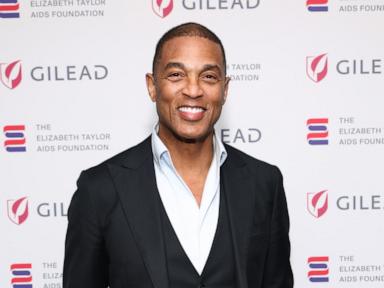
The federal indictment of independent journalist Don Lemon following an anti-immigration enforcement protest at a Minnesota church forces a fundamental stress test on the boundaries between press observation and criminal participation. Lemon’s legal team filed a multi-pronged motion to dismiss the charges, arguing selective enforcement, executive animus, and constitutional protections under the First Amendment. Analyzing this litigation requires stripping away the political rhetoric to evaluate the operational mechanics of the prosecution, the statutory reach of civil rights legislation, and the judicial hurdles required to prove vindictive intent.
The prosecution relies on two primary statutory instruments: a conspiracy charge to interfere with religious rights and a violation of the Freedom of Access to Clinic Entrances Act, commonly known as the FACE Act. Enacted in 1994, the statute prohibits force, threats of force, or physical obstruction intended to interfere with individuals exercising their religious freedom at a place of worship.
To secure an indictment after an initial magistrate judge rejected the criminal complaint for lack of probable cause, the Department of Justice shifted its strategy to a grand jury. The core evidentiary dispute centers on physical proximity versus operational integration. Prosecutors claim Lemon did not merely observe the disruption at Cities Church in St. Paul, but actively participated in a coordinated intrusion. Conversely, the defense argues that physical presence during a newsworthy event does not constitute complicity, pointing to historical precedents of reporters covering civil disobedience, conflict zones, and volatile domestic protests.
The legal strategy rests on three distinct constitutional and procedural pillars.
First, the defense asserts that the indictments violate core First Amendment protections for newsgathering. The motion argues that penalizing a reporter for documenting unlawful conduct by third parties creates an untenable chilling effect. Under this framework, proximity to a crime scene is an occupational requirement for reporters, not a badge of criminal conspiracy. If reporting on an event tainted by the unlawful actions of participants exposes a journalist to identical felony charges, independent field reporting becomes legally impossible.
Second, the defense challenges the statutory application itself. Legal filings contend that the government misapplied both the FACE Act and the conspiracy statutes by conflating standard journalistic documentation—such as live-streaming, interviewing participants, and recording institutional leadership—with the substantive elements of coercion and obstruction.
Third, the motion introduces a claim of vindictive prosecution, highlighting a documented history of public hostility from the executive branch and senior Justice Department officials directed specifically at Lemon. Proving vindictive prosecution under established federal jurisprudence requires clear evidence that the government brought charges out of actual animus and that the prosecution would not have occurred absent retaliation for protected speech. The defense points to public statements, social media posts mocking the defendant following his arrest in Los Angeles, and the extraordinary procedural escalation after the initial magistrate refusal as operational indicators of retaliatory intent.
The broader operational fallout of this case extends far beyond an individual media figure. It redefines the risk matrix for independent journalists operating without the institutional indemnity of legacy media corporations. When state or federal prosecutors cross the line from investigating unlawful entry or disruption to prosecuting the documentation of that disruption, the state assumes an expanded power to license what constitutes legitimate press coverage.
The immediate trajectory of the litigation depends on the federal judge's willingness to parse the line between an active participant and an embedded observer. If the defense successfully demonstrates that the case agent's affidavits relied on false characterizations of chanting and obstruction, the evidentiary foundation of the indictment fractures. The strategic play for the defense is to force an evidentiary hearing on the selective prosecution claims, compelling the government to disclose internal communications that establish the threshold criteria used to target media personnel alongside demonstrators.