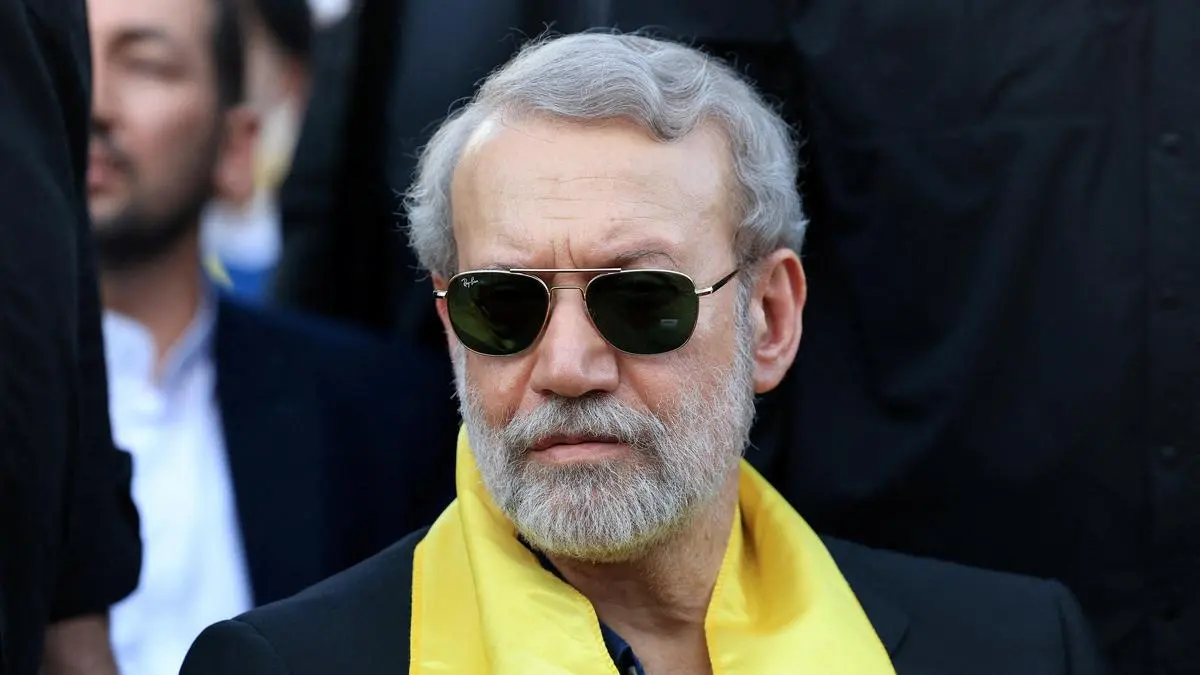
The targeted assassination of Ali Larijani in a midnight strike on a residence in Tehran’s Pardis district has effectively left the Iranian state without its primary engine of survival. While the official confirmation from the Supreme National Security Council speaks of "the sweet grace of martyrdom," the cold reality is far more clinical. Israel and the United States have successfully eliminated the one man capable of bridging the gap between Iran’s ideological hardliners and the pragmatic necessity of wartime management. Larijani was not just a bureaucrat; he was the de facto custodian of a regime whose actual Supreme Leader, Mojtaba Khamenei, remains a ghost in the machinery, unseen since the war’s inception on February 28.
The Architect of a Besieged State
To understand why the loss of Larijani is perhaps more devastating than the death of the elder Ayatollah Khamenei three weeks ago, one must look at the specific power vacuum it creates. Larijani was the "Mastermind of Pardis," a nickname earned by his recent efforts to consolidate control over the Islamic Revolutionary Guard Corps (IRGC) and the clergy during the January 2026 domestic crackdowns. He possessed a unique political pedigree—son of an ayatollah, brother to a former Chief Justice, and a former nuclear negotiator who knew exactly how the West thought.
His death, alongside Basij commander Gholamreza Soleimani, suggests a catastrophic intelligence breach within the inner sanctum of the Iranian security apparatus. Israeli Defense Minister Israel Katz’s confirmation of the strike emphasizes a "targeted" approach based on precision intelligence. For a figure as high-profile as Larijani to be tracked to his daughter’s home in the middle of a high-intensity conflict indicates that the regime’s "stealth" protocols have been compromised at the root.
The Intelligence Failure in the Shadows
The mechanics of the strike reveal a shift in the coalition's strategy. No longer satisfied with hitting missile silos or Kharg Island’s oil infrastructure, the focus has moved to a decapitation campaign. Larijani had been using a rotating series of safe houses and apartments to evade detection. The fact that the strike was reportedly postponed by 24 hours to wait for "visual confirmation" of his arrival suggests that the IDF and its partners have near-total visibility over Tehran's restricted zones.
This is not merely about a bomb hitting a building. It is about the psychological collapse of a leadership that can no longer trust its own couriers or communication lines. When Larijani’s social media account posted a handwritten note honoring dead sailors just hours after the strike, it was a desperate attempt by the remaining elements of the state to project a "business as usual" image. It failed. The subsequent confirmation by the state-run Fars News Agency was an admission that the shadow government running Iran had been brought into the light and dismantled.
The Mojtaba Problem
With Larijani gone, the regime faces an existential succession crisis in the middle of a hot war. Mojtaba Khamenei, the successor to his father, has yet to make a televised appearance or a public speech. This absence has fueled rumors regarding his health or his actual location, possibly deep within the "Qeshm Fortress" or other underground complexes.
Larijani served as the public face and the operational hand for this invisible leader. He was the one lobbying the Assembly of Experts to maintain a veneer of legitimacy. Without his diplomatic and political maneuvering, the IRGC is now the sole remaining pillar of the state. This creates a dangerous "praetorian" scenario where the military wing of the government no longer has a civilian or "pragmatic" counterweight to restrain its most aggressive impulses.
Regional Contagion and the Hormuz Squeeze
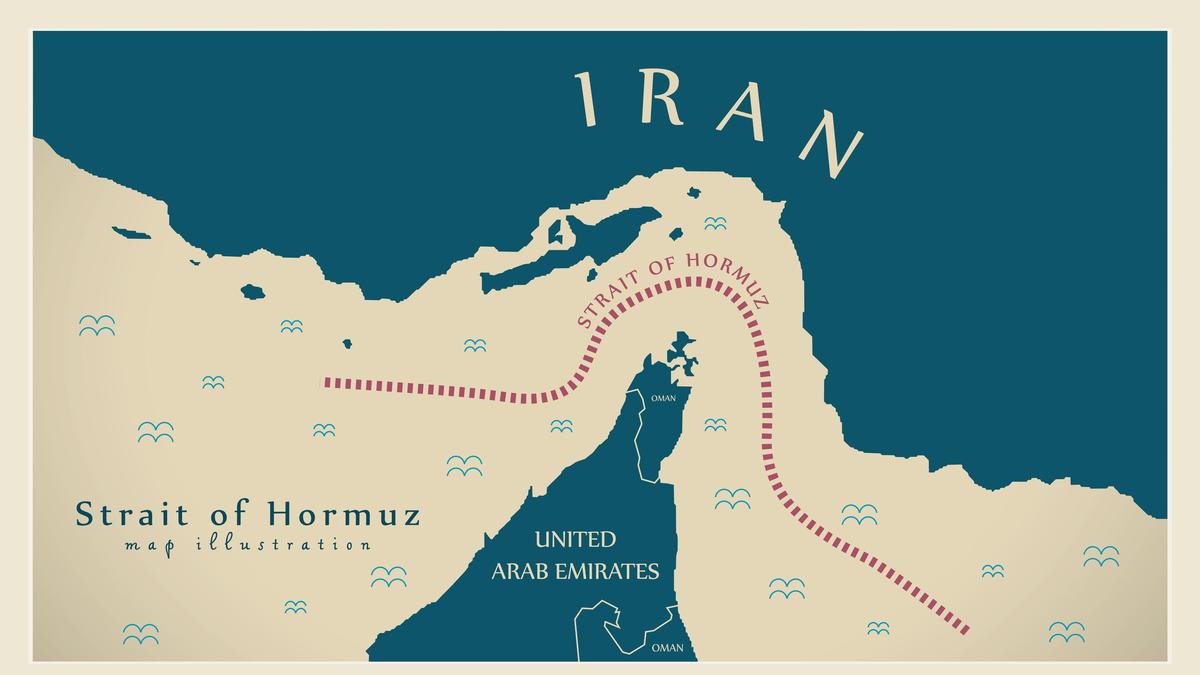
The immediate fallout of the assassination is being felt in the global markets and the waters of the Persian Gulf. Brent crude surged past $103 on news of the death, reflecting a fear that the "restrained" phase of the conflict has ended. Iran’s Parliament Speaker has already declared that shipping in the Strait of Hormuz will never return to its "pre-war norm."
| Metric | Pre-War (Feb 2026) | Post-Larijani Strike (Mar 18, 2026) |
|---|---|---|
| Brent Crude Price | $78.50 | $103.20 |
| Strait of Hormuz Throughput | 21M barrels/day | < 4M barrels/day (estimated) |
| Leadership Status | Centralized | Fragmented/Decapitated |
The strategy of the US-Israeli coalition appears to be the systematic removal of "the bridge" figures. By killing Larijani, they have removed the man most likely to eventually negotiate an exit from the war. What remains is a cornered IRGC and a leaderless Basij.
The Narrowing Path to Resolution
There is no longer a "moderate" or "pragmatic" faction within reach of the levers of power in Tehran. Larijani was the last of the old guard who could speak the language of international relations while maintaining the brutal discipline required by the Islamic Republic. His removal forces the regime into a binary choice: total capitulation or an escalatory "scorched earth" policy in the Gulf.
As funerals for Larijani and Soleimani begin in central Tehran, the streets are reportedly filled with a mix of state-mandated mourners and a terrified populace. The January protests showed that the regime’s grip is brittle. Without Larijani’s tactical mind to navigate the internal security challenges, the IRGC may find that guns alone cannot hold a country together when the men behind the guns are being picked off from the sky one by one. The war has moved past the stage of military theater; it is now an autopsy of a dying state being performed in real-time.
Would you like me to analyze the specific shifts in IRGC command structure following Gholamreza Soleimani's death?