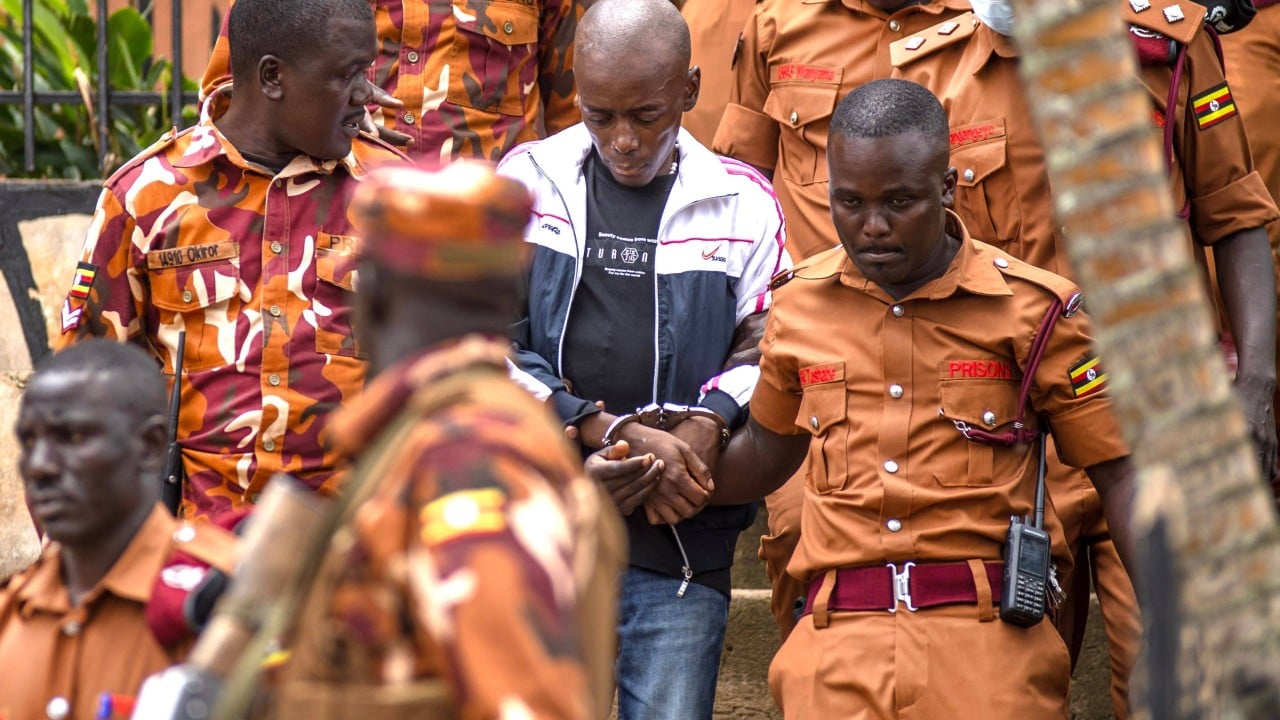
Ugandan Justice Musa Ssekaana has delivered a final, lethal verdict for a crime that shook the foundation of the nation's capital. Kanyike Mathias, the man responsible for the brutal 2020 murder of a four-year-old girl at a kindergarten in Kira, has been sentenced to death. This ruling marks the end of a long, agonizing legal battle, but the execution of a single man does not address the systemic negligence that allowed a predator to walk through a school gate and end a life.
The case of Kanyike Mathias was never a mystery of "who," but a harrowing examination of "how." On a morning meant for learning, the perpetrator gained access to the school premises, singled out a defenseless child, and committed an act of such visceral cruelty that the details remain a scar on the public consciousness. The court found that the evidence—ranging from forensic DNA to eyewitness testimony—was insurmountable. In a legal system that has often been criticized for delays and inconsistencies, this death sentence is being framed by some as a restoration of the rule of law. To the family of the victim, however, it is a hollow victory that comes far too late to change the reality of an empty bedroom.
The Illusion of School Security
Uganda’s private education sector is a multi-billion shilling industry. From high-end international schools to small neighborhood kindergartens, parents pay a premium for what they believe is a safe environment. The Kira murder shattered that belief. We have to look at the reality of these institutions. Most "security" consists of a single man in a faded uniform carrying a baton or, at best, a dated rifle. There is no standardized vetting process for staff, and even fewer protocols for who is allowed to enter the grounds during school hours.
Investigation into the Kira incident revealed a terrifying lack of oversight. The perpetrator didn't scale a wall or break a lock; he walked into a space where children are at their most vulnerable. This wasn't a sophisticated breach. It was a failure of the most basic duty of care. When a school takes a child from a parent at the gate, they are entering into a sacred contract of protection. In this case, that contract was shredded for a few minutes of unsupervised access.
The Death Penalty Debate in a Modern Context
Uganda has not carried out an execution in years, despite the death penalty remaining on the books. This creates a strange legal limbo where "sentenced to death" often translates to "life in prison without the possibility of parole." The judge’s decision to hand down the ultimate state sanction serves a dual purpose. First, it satisfies a public outcry for retribution that has simmered since 2020. Second, it sends a message to a society increasingly worried about violent crime.
However, the legal community remains divided. Human rights advocates argue that the death penalty is a relic of a colonial legal system that does nothing to deter crime. They suggest that the focus should be on the failures of the police and the social services meant to identify violent offenders before they strike. On the other side of the aisle, the prosecution argued that some crimes are so heinous, so fundamentally damaging to the social fabric, that the offender forfeits their right to exist within that society. The murder of a child in a place of learning falls squarely into that category.
Beyond the Verdict
The conviction of Kanyike Mathias should have been the catalyst for a total overhaul of the Ministry of Education’s safety guidelines. It hasn't been. Walk into almost any mid-tier kindergarten in Kampala or Wakiso today, and you will see the same vulnerabilities. Unlocked gates. Unvetted visitors. Staff members who have never undergone a criminal background check.
The government's response has been largely reactive. They wait for a tragedy, offer condolences, and perhaps push through a speedy trial to calm the masses. What is missing is a proactive, legislative framework that mandates specific security standards for every child-care facility in the country. This isn't about expensive technology or high-tech cameras. It is about simple accountability. It is about ensuring that every person who interacts with a child in an official capacity has been cleared by a centralized database.
The Mental Health Variable
We cannot ignore the psychological profile of an individual who targets a kindergarten. During the trial, glimpses of a fractured mind emerged, yet the legal standard for insanity is incredibly high in Uganda. While the court found Kanyike fit to stand trial and responsible for his actions, the case highlights a massive gap in our mental health infrastructure. Violent tendencies often leave a trail of breadcrumbs before they lead to a crime scene. In a country where mental health services are almost non-existent for the average citizen, these individuals are left to roam until they do something unthinkable.
The state focuses on the punishment because it is easier than fixing the cause. Hanging a man—or keeping him on death row for thirty years—is a visible act of power. Building a functional mental health surveillance system and a robust social safety net is a decades-long commitment that doesn't yield easy headlines.
A Warning to the Private Education Sector
If you are a school owner, this verdict is your final warning. The courts are increasingly willing to hold individuals and institutions accountable for the maximum possible outcome when a child is harmed. The civil liabilities following this criminal case could bankrupt the institution involved. More importantly, the reputational damage is permanent.
Parents are no longer satisfied with "we are sorry." They are demanding to see the logs. They want to know the names of the guards and the history of the teachers. They are looking for the perimeter fences and the check-in protocols. The Kira murder was a wake-up call that many chose to snooze. The death sentence handed to Kanyike Mathias is a reminder that the cost of failure is absolute.
Security is not a luxury. It is the fundamental requirement of any business that handles human lives. The moment you prioritize profit over the physical safety of your students, you are complicit in the next tragedy. We have seen what happens when the system breaks. A child is gone, a family is destroyed, and a man sits in a cell waiting for a gallows that may or may not ever be prepared.
The true measure of justice for the Kira victim won't be found in the execution chamber. It will be found in the next school gate that stays locked, the next visitor who is turned away, and the next teacher who is properly vetted before they are ever allowed to stand in a classroom. Stop looking at the courtroom and start looking at the school yard. That is where the real battle for our children’s lives is won or lost.
Install the locks. Screen the staff. Guard the gates.