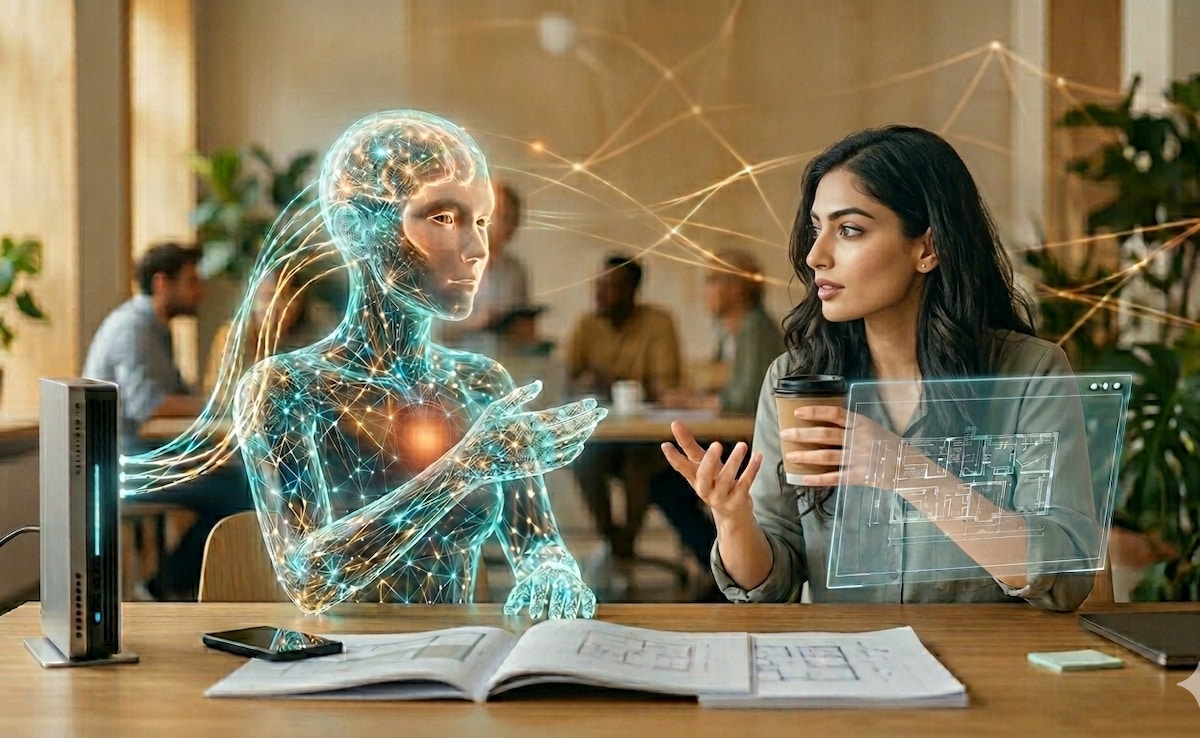
Sarah sits at her kitchen table, staring at a digital bank statement that feels more like a leaked script from a dystopian play than a personal ledger. There is a $12.99 charge for a library of music she doesn’t own. There is a $15.49 charge for a gym she hasn’t visited in three weeks. There is a $9.00 charge for a doorbell—yes, a doorbell—that requires a monthly tribute just to show her who is standing on her own porch.
She isn't alone. We have transitioned, almost overnight, from a society of owners to a society of permanent renters.
The shift happened quietly. It didn’t arrive with a bang or a revolutionary decree. Instead, it crept in through the convenience of "automatic renewals" and the seductive lure of low entry prices. We used to buy things. We bought cars, we bought software in cardboard boxes with physical discs, and we bought albums that lived on shelves. Now, we subscribe to life.
The Psychology of the Low Monthly Payment
The math of the subscription economy is designed to bypass the logical centers of the human brain. Behavioral economists call this the "frictionless transaction." When you see a piece of professional photo-editing software priced at $600, your brain triggers a pain response associated with loss. You hesitate. You evaluate the utility.
But when that same software is offered for $19.99 a month? The pain disappears.
It feels like a cup of coffee. It feels negligible. This is the "Micro-Transaction Trap." Companies realized that by lowering the barrier to entry, they could capture a much larger percentage of the market. The catch is that the "rent" never ends. Over five years, that $600 software now costs you $1,200. You have paid double for the privilege of never truly owning the tool you use to earn a living.
Consider the hypothetical case of Mark, a freelance graphic designer. In 2010, Mark owned his tools. If he had a slow month, his overhead stayed low because his computer and his software were already paid for. Today, if Mark has a slow month, his tools can be remotely deactivated the moment his credit card fails to clear. His ability to work is contingent on a continuous stream of outgoing capital. He is no longer an artisan with a toolbox; he is a tenant in a digital storefront.
The Hardware Hostage Crisis
The trend has moved beyond the digital "cloud" and into the physical objects we touch every day. This is where the narrative takes a darker turn. We are entering the age of "Feature as a Service."
Automotive manufacturers are currently leading this charge. Imagine buying a luxury vehicle. You sit in the leather seat, admiring the craftsmanship. You notice a button for heated seats. You press it. Nothing happens. A message appears on the dashboard: Subscribe for $18 a month to unlock this hardware feature.
The heating elements are already in the car. The wires are there. The alternator is capable of powering them. You paid for the physical weight of that technology when you bought the car, yet the manufacturer has placed a digital padlock on a physical component. This isn't just a business model. It is a fundamental shift in the concept of property rights.
When you buy an object, you expect to own its capabilities. The subscription model turns your car into a "platform" where the manufacturer can continue to extract value long after the initial sale. If you stop paying, the car's utility shrinks. We are effectively paying for "permission" to use things we already possess.
The Infinite Content Loop and the Loss of History
In the realm of entertainment, the subscription model has created a paradox of choice that masks a deeper fragility. We have access to everything, yet we possess nothing.
Think back to a favorite movie from your childhood. If you own the DVD or the VHS, that film exists. It is a physical artifact. In the streaming era, content is a ghost. Licensing agreements expire. Digital libraries vanish. Whole series are scrubbed from platforms for tax write-offs, leaving fans with no way to legally access the art they love.
The emotional stake here is the erosion of a personal archive. Our culture is becoming ephemeral. When our music, our films, and our books are tied to a monthly fee, our personal history is hosted on someone else’s server. If the company goes under, or if they decide your region no longer has access, your "collection" evaporates.
We are trading the permanence of a home library for the convenience of a search bar. It feels like a fair trade—until the day you realize you’ve spent thousands of dollars over a decade and have nothing to show for it but a history of "Recently Watched" thumbnails.
The Hidden Cost of Cognitive Load
Beyond the financial drain, there is a mental tax to the subscription life. Every subscription is a relationship that requires maintenance.
There is the "Subscription Fatigue" that sets in when you realize you are managing fifteen different passwords and billing cycles. Each one is a tiny leak in your financial bucket. Individually, they are small. Collectively, they create a sense of being nibbled to death by ducks.
The companies count on "Inertia Selling." They know that once you are in the ecosystem, the effort required to leave is just high enough that you will keep paying for a service you barely use. They make the sign-up process a single click, while the cancellation process is often buried under five layers of menus or requires a phone call to a "retention specialist."
The Right to Repair and the End of the Tinkerer
The subscription model is the natural enemy of the tinkerer. In a world of ownership, if something breaks, you fix it. You open the casing, you swap a part, and you extend the life of your investment.
In a subscription-dominated world, the hardware is often leased or tied to proprietary software that prevents third-party repairs. This creates a cycle of planned obsolescence and waste. If you don't "own" the software running your tractor—as many farmers have discovered with modern agricultural equipment—you don't really own the tractor. You are a glorified operator of a piece of equipment that belongs to the manufacturer's ecosystem.
This centralization of control creates a massive power imbalance. When the "off" switch for your home's smart locks, your car's engine, or your business's accounting software is held by a corporation a thousand miles away, your autonomy is compromised.
The Path Back to Tangibility
The pendulum is beginning to swing back, but only for those who are paying attention.
A small but vocal movement is returning to "dumb" appliances—fridges that don't need firmware updates and watches that don't require a monthly data plan. There is a renewed interest in physical media, not just for the nostalgia, but for the security of knowing that once you pay for a book, no one can come into your house and redact the pages.
We are forced to ask ourselves: What is the true value of "unlimited"? If we spend our lives paying for access to everything, we may find ourselves in an old age where we own nothing.
The subscription economy promised us freedom from the clutter of things. It promised us a world where we only paid for what we used. Instead, it has delivered a world of perpetual debt, where the basic functions of our daily lives are subject to the whims of a corporate balance sheet.
Sarah looks at her doorbell again. She thinks about the $9. She thinks about the fact that ten years ago, a doorbell worked because of a wire and a button, and it worked for forty years without a bill. She cancels the subscription. The camera goes dark. For the first time in months, she feels like the house actually belongs to her.
Ownership is more than a legal status. It is a form of privacy. It is a form of silence. In a world that wants to charge you for every heartbeat and every click, the most radical act you can perform is to own something that doesn't talk back to a server.