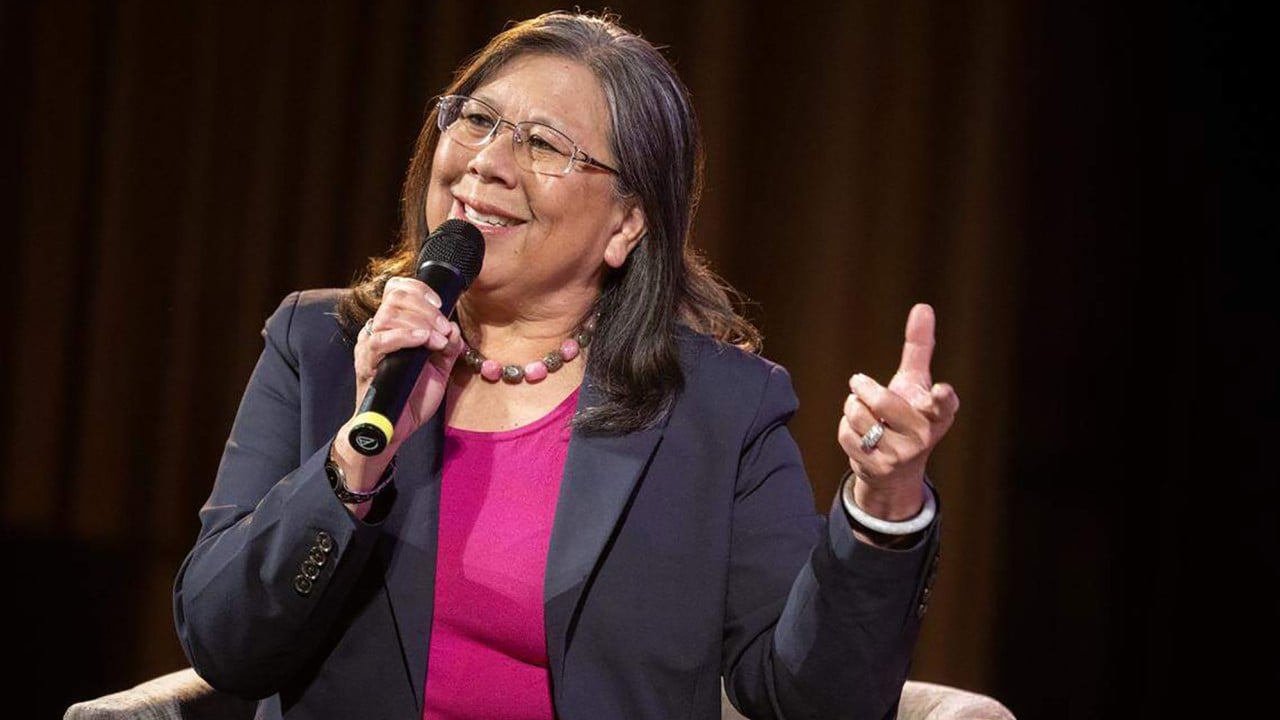
Betty Yee, the former California State Controller who once garnered more votes than any candidate in the nation, suspended her campaign for governor on Monday. She didn’t leave because of a scandal or a shift in policy. She left because, in the modern California political machine, being "Boring Betty" is a terminal diagnosis. Her exit six weeks before the June primary is a cold indictment of a system that now rewards viral "gimmicks" over decades of fiscal oversight.
Yee’s departure leaves a massive hole in a race that is increasingly defined by deep pockets and loud microphones. For a candidate who spent eight years as the state’s chief fiscal officer, auditing billions and managing the books of the world’s fifth-largest economy, the math simply stopped working.
The Fundraising Wall and the Price of Admission
In California, the "grassroots" path is often a polite term for a slow-motion collision with reality. While rivals like billionaire Tom Steyer and well-funded regulars like Xavier Becerra and Katie Porter reported millions in their war chests, Yee’s campaign was running on fumes. In the second half of last year, she raised a meager $344,000, a figure dwarfed by the administrative costs of running a statewide operation.
The financial disparity isn't just about the total cash; it’s about the signal it sends to institutional donors. When a candidate lags in early polls, the "smart money" retreats, creating a self-fulfilling prophecy of failure. Yee pointedly noted that even traditional backers in the Asian American community began to drift away as her polling numbers stagnated around 3%.
The Polling Trap
The California Democratic Party, led by Chair Rusty Hicks, has adopted a strategy of releasing internal polls to nudge "non-viable" candidates toward the exit. Yee described this as a "self-fulfilling" pressure tactic.
By the time the latest party-funded poll hit the desks of donors on Monday, Yee had slipped to 1% of likely voters. In a field of over 60 candidates, the "top-two" primary system effectively silences anyone who can't break into the double digits by April.
Why Experience Failed to Sell
Yee’s campaign was built on a foundation of "good governance"—a phrase that, while noble, has the electoral appeal of a dry cracker in a room full of spiced appetizers. She focused on:
- Audit-driven accountability: Using the Controller’s office to find fraud in state programs.
- Fiscal discipline: Balancing the state budget and managing CalPERS/CalSTRS.
- Long-term policy: Moving away from the 4-year cycle of term-limited thinking.
Her opponents, however, are playing a different game. Steve Hilton and Chad Bianco are fighting for the Republican base with aggressive rhetoric on crime and regulation. On the Democratic side, Becerra is leaning into his record of suing the Trump administration 122 times. These are "splashy" narratives that play well in 30-second television spots and social media clips.
Yee admitted as much in her exit remarks, stating that voters currently demand a "personality" or a "gimmick." She didn't have one. She had an audit trail.
The Diversity Paradox
Yee’s exit also raises uncomfortable questions for the California Democratic Party. Despite its rhetoric on representation, the departure of a high-ranking woman of color—one of only ten women ever elected to statewide office in California—highlights a narrowing path for candidates who don't have personal wealth or high-octane institutional backing.
Last month, Yee and other candidates of color protested their exclusion from a USC debate based on fundraising thresholds. The debate was eventually canceled, but the message was clear: if you aren't already a celebrity or a millionaire, the podium isn't for you.
The Real Cost of "Boring" Politics
The loss of a candidate like Yee is more than just a winnowing of the field. It represents the erosion of the "technocrat" in public life. When the person who knows where every dollar in the state treasury is hidden can't get past 3% in a poll, it suggests that the electorate has stopped valuing the plumbing of government in favor of the paint job.
California faces a massive housing crisis, looming AI-driven job displacement, and a volatile economy. Yee’s proposed "Workers First Fund"—a tax on AI profits to retrain displaced workers—was one of the few concrete, forward-looking policy ideas in the race. Without her voice, the conversation likely shifts back to broader, more performative grievances.
The primary on June 2 will now move forward without its most experienced fiscal hawk. Candidates like Hilton and Steyer will continue to dominate the airwaves, while the unglamorous work of state auditing and budget management retreats further into the shadows of the political stage.
Pragmatism has been outvoted by performance.



:strip_icc()/pic2513216.jpg)