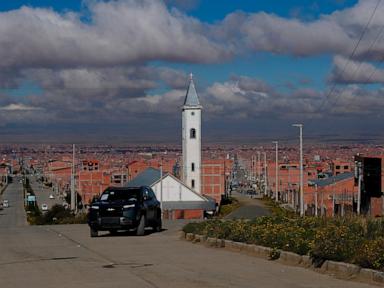
Bolivia is currently the site of a brutal, unplanned experiment in energy survival. In the high-altitude streets of La Paz and the sprawling industrial blocks of El Alto, the internal combustion engine is dying a slow, sputtering death. This is not because of a sudden collective passion for environmentalism or a government-led green initiative. It is a desperate pivot away from a collapsing fossil fuel infrastructure that has left drivers stranded in multi-day lines and saddled with "junk gasoline" that melts engine components from the inside out.
The primary driver for this shift is simple arithmetic. In late 2025, President Rodrigo Paz repealed the decades-old fuel subsidies that once drained $2 billion annually from the national treasury. Gasoline prices doubled overnight. For a population already reeling from a shortage of foreign currency, the choice became clear: stop driving or find a way to bypass the pump entirely. The result has been an explosion in electric vehicle imports, particularly from China, as citizens realize that while the government cannot guarantee a liter of petrol, the power grid—fed by domestic hydro and solar—still hums.
The Junk Gasoline Scandal
While the end of subsidies made gasoline expensive, it was the "junk gasoline" scandal that made it toxic. Throughout early 2026, transport operators reported a surge in mechanical failures. Engines were clogging with carbon buildup and mysterious gums at a rate never seen before. Investigations revealed that the state-owned Yacimientos Petrolíferos Fiscales Bolivianos (YPFB) was distributing fuel contaminated with manganese and old sediment from neglected storage tanks.
This was not a minor technical glitch. It was a systemic failure of the supply chain. Mechanics in Santa Cruz reported that the fuel was essentially "varnishing" the internals of modern fuel-injection systems, leading to repair bills that many families could not afford. For many, the risk of destroying a $20,000 asset with a single tank of bad fuel was the final straw. The transition to electric power shifted from being a luxury to a defensive financial maneuver.
China Fills the Power Vacuum
Western automakers are nowhere to be found in this revolution. They are too expensive and their service networks are nonexistent in the Andes. Instead, Chinese brands like BYD, JMEV, and even small-scale local assemblers like Quantum have seized the market. Between 2022 and late 2025, the value of electric vehicles entering the country grew by nearly 800%.
These are not the high-end Teslas seen in California. They are utilitarian, rugged machines designed to handle the steep inclines of El Alto. Indigenous artisans and small business owners are the ones leading the charge, often importing these vehicles themselves to bypass local markups. They are installing home chargers in their garages, effectively becoming their own energy providers. This decentralization of fuel is a radical shift in a country where the state has traditionally controlled every drop of energy.
The Lithium Irony
There is a deep, bitter irony at the heart of the Bolivian EV surge. The country sits on the Salar de Uyuni, the world’s largest deposit of lithium—the "white gold" essential for the batteries powering the global transition. Yet, for years, political gridlock and technical hurdles have kept Bolivia from becoming a major player in the global supply chain.
As the world looks to Bolivia for the raw materials of the future, Bolivians are looking to the world—specifically China—to send back finished batteries and cars. The government under President Paz has recently moved to review lithium contracts with Chinese and Russian firms, hoping to finally turn the country into a regional hub for component production rather than just a raw material exporter. But for the average driver in La Paz, the global lithium market is an abstraction. The immediate reality is the lack of a gas line and a car that starts every morning on a battery charge.
Infrastructure in the Wild West
The rapid adoption of electric vehicles has outpaced the government’s ability to provide infrastructure. There are currently fewer than five public charging stations in the entire La Paz and El Alto metropolitan area, a region home to 1.6 million people.
This has created a secondary market for specialized electricians. Entrepreneurs are carving out a niche by retrofitting residential electrical systems to handle high-amperage vehicle charging. In a country where building codes are often treated as suggestions, this "Wild West" approach to infrastructure is the only thing keeping the wheels turning.
- The Numbers: The EV fleet grew from 500 to over 3,350 in just five years, with the steepest curve occurring in the last 18 months.
- The Costs: While a Chinese electric SUV can cost upwards of $35,000, the elimination of fuel costs and the high frequency of repairs for gasoline engines means the break-even point is reaching the three-year mark for many high-mileage drivers.
- The Policy: The total elimination of import tariffs on electric cars has further incentivized the switch, effectively making them more competitive than their internal combustion counterparts for the first time in history.
The End of the Subsidy Era
The political fallout of these changes is still settling. While the removal of subsidies sparked protests and strikes in early 2026, the movement has lost some steam as more people realize that the old system is not coming back. The state simply lacks the dollars to buy fuel at international prices and sell it for pennies at home.
Bolivia is moving toward a future where gasoline is no longer a fundamental need but a choice for those who can afford the volatility. The "voltage rebels" of the Andes are proving that when the state fails to provide the most basic components of modern life, the market—and the individual—will find a way to wire their own solution. The hum of electric motors on the steep hills of La Paz is the sound of a country being forced into the future by the sheer weight of its past failures.
The shift is no longer about saving the planet. It is about saving the household budget.


