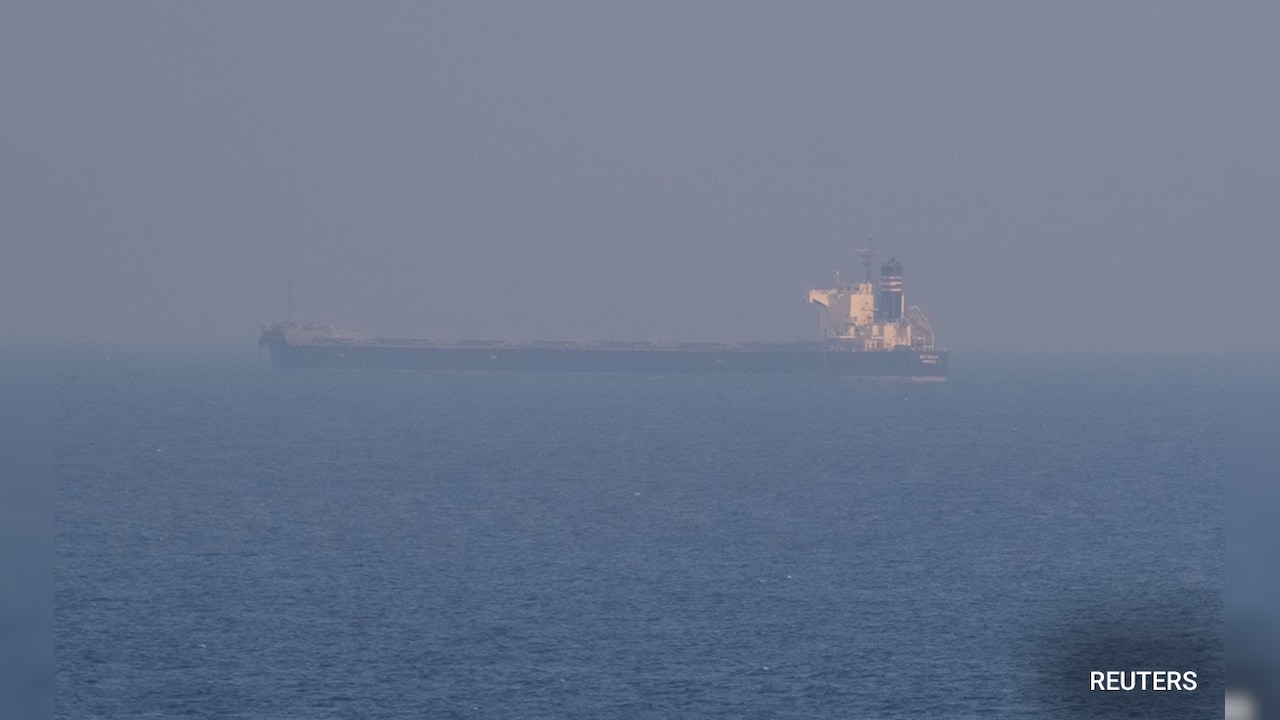
Human remains discovered aboard a struck commercial vessel off the Romanian coast confirm the lethal reality facing civilian mariners navigating the contested Black Sea. While initial maritime reports treat the incident as an isolated tragedy near NATO territorial waters, an investigation into regional shipping corridors, maritime insurance loopholes, and military targeting doctrines reveals a systemic failure to protect non-combatant vessels. The recovery of crew remains inside the charred superstructure underscores a grim operational truth: commercial seafarers are absorbing the kinetic fallout of a regional conflict without adequate naval escorts, clear exclusion boundaries, or functional war-risk deterrence.
The Anatomy of a Maritime Strike Zone
Commercial shipping in the western Black Sea operates inside a narrow, fragile corridor. Vessels transiting between the Bosphorus Strait and the Danube Delta ports of Sulina, Izmail, and Reni must hug the coastlines of Bulgaria and Romania to avoid deep-water minefields and active naval blockades. That geographic compression creates a predictable target funnel.
When a merchant vessel takes a direct hit from a loitering munition, an anti-ship missile, or a drifting sea mine just outside Romania's 12-nautical-mile territorial limit, the physical mechanics of the strike leave little margin for survival. Unlike naval warships built with armored bulkheads, automated fire-suppression systems, and redundant damage-control stations, standard bulk carriers and general cargo ships are floating steel boxes designed strictly for hydrodynamic efficiency and cargo volume.
A warhead detonating against a merchant hull does not merely punch a hole in the steel. The overpressure rips through unreinforced crew quarters, ruptures heavy fuel oil lines, and ignites electrical conduits within milliseconds. If the strike hits the accommodation block or the engine room while watchkeepers are on duty, immediate fatalities are virtually guaranteed. Recovery teams boarding these hulls days later—after coastal tugs tow the smoldering wreck toward ports like Constanta—routinely encounter collapsed steel decks and toxic thermal damage that explain why remains are only located once salvage crews cut through buckled bulkheads.
Why Civilian Ships Keep Sailing Into the Crosshairs
The most pressing question following any fatal strike off the Romanian coast is simple. Why are unarmed merchant ships still operating in waters where anti-ship munitions are actively deployed?
The answer lies in the economics of global grain and commodity supply chains. Following the collapse of formal diplomatic export corridors, Ukrainian agricultural exports and regional industrial freight shifted aggressively toward the Danube River ports and the Romanian port of Constanta. For global commodity traders, moving grain, sunflower oil, and metallurgical products through this coastal artery remains financially viable despite acute physical danger.
Freight rates reflect that risk. Charterers pay steep premiums to move cargo out of the western Black Sea, and shipowners operating aging tonnage—often registered under flags of convenience—accept the gamble because a single successful voyage generates multiples of standard global charter yields.
- The Insurance Mechanism: Standard Protection and Indemnity (P&I) clubs exclude war risks by default. Vessels entering the Black Sea must purchase specialized Additional War Risk Premiums (AWRP) calculated as a percentage of the hull's insured value for every seven-day transit window.
- The Crew Asymmetry: While shipowners hedge their capital losses through Lloyd's of London war-risk syndicates and cargo underwriters, the seafarers aboard those vessels rarely receive proportional compensation. Most crews hail from developing maritime labor markets, working under standard International Bargaining Forum contracts that offer modest hazard bonuses—often a temporary doubling of basic wages—in exchange for entering active combat zones.
- The Operational Reality: A captain cannot simply refuse a voyage into Romanian or adjacent coastal waters without risking breach of contract, blacklisting by crewing agencies, or immediate repatriation without pay, unless the vessel enters an officially designated "Warlike Operations Area" where right-of-refusal clauses strictly apply.
The Gray Zone Off Romania's Territorial Waters
Geography complicates accountability. Romania is a NATO member state, meaning an intentional military attack on Romanian sovereign territory or a NATO warship triggers collective defense consultations under Article 5. Yet the waters immediately beyond Romania's 12-nautical-mile territorial sea constitute an Exclusive Economic Zone (EEZ)—international waters where freedom of navigation applies, and where military liability blurs into diplomatic ambiguity.
When a ship is struck 15 or 20 nautical miles off the Romanian coast, attribution becomes an immediate battleground. Determining whether the impact resulted from a stray air-defense interceptor, a precision-guided munition aimed at a nearby port facility, a deliberate anti-shipping strike meant to terrorize commercial operators, or an unmoored naval mine requires forensic metallurgical analysis of shrapnel fragments recovered from the hull.
Consider a hypothetical scenario illustrating this attribution bottleneck. Suppose a radar-guided missile locks onto the massive steel radar cross-section of a 30,000-ton bulk carrier anchored outside the Sulina Channel because its original coastal target deployed electronic countermeasures. To the ship's crew, the distinction between an intentional war crime and electronic warfare spoofing is meaningless. To naval investigators and maritime insurers, however, that technical distinction determines whether a state actor faces international sanctions or whether the incident is written off as an unattributable hazard of regional instability.
Automatic Identification Systems and Digital Vulnerability
Modern maritime safety regulations unintentionally expose commercial ships to targeting. Under the International Convention for the Safety of Life at Sea (SOLAS), merchant vessels over 300 gross tons must continuously broadcast their identity, exact GPS coordinates, course, and speed via the Automatic Identification System (AIS).
In peacetime, AIS prevents collisions in congested shipping lanes. In a contested maritime theater, an active AIS transponder acts as a digital beacon visible to anyone with a basic VHF receiver or commercial satellite feed.
To evade detection or unwanted scrutiny, many captains operating near the Romanian and Ukrainian coasts switch off their AIS transponders—a practice known in the industry as "going dark."
Going dark creates a dangerous paradox. Turning off AIS reduces a ship's visibility to open-source tracking networks, yet it simultaneously strips the vessel of its primary civilian identification signal. To military radar operators monitoring congested coastal waters at night or during poor weather, an unlit, non-broadcasting radar return moving near a conflict zone looks identical to an auxiliary naval transport or an unmanned surface vessel carrying explosives. By attempting to hide from targeted interdiction, merchant mariners inadvertently increase their risk of misidentification and accidental engagement.
The Myth of the Safe Coastal Corridor
Industry analysts frequently point to the western Black Sea coastal route—hugging Bulgaria and Romania—as a functional substitute for international diplomatic shipping agreements. On paper, keeping vessels inside the territorial waters of NATO coastal states shields them from direct naval interdiction.
In practice, that shield has severe structural flaws.
First, coastal waters are shallow, forcing deep-draft bulk carriers to swing farther offshore when navigating river deltas and sandbars, pushing them directly out of protected territorial limits and back into contested international waters. Second, drifting mines laid during the early stages of regional hostilities do not respect maritime borders. Winter storms and strong Black Sea surface currents routinely tear contact mines from their moorings, pushing them southward directly across the Romanian coastline and into commercial anchorages.
Third, port infrastructure itself remains an active target. A ship waiting at anchor off Romania to enter the Danube River sits just miles away from grain silos, fuel depots, and transshipment terminals that experience frequent aerial bombardment. Debris from intercepted drones, errant munitions, and shockwaves from nearby strikes regularly spill across the maritime boundary.
Salvage, Forensics, and the Silence Around Casualties
When a commercial ship is hit and casualties occur, the flow of verified information slows to a crawl. Maritime law places primary investigative responsibility on the flag state—the country where the ship is registered.
If a vessel flies the flag of Panama, Liberia, or the Marshall Islands, the nominal flag state rarely possesses the naval assets or forensic personnel in the Black Sea to conduct an immediate on-site investigation. Local coastal authorities—in this case, the Romanian Naval Forces and the Romanian Naval Authority—handle emergency search-and-rescue, firefighting, and pollution containment, while criminal and military intelligence agencies secure the wreck.
During this phase, human remains trapped inside flooded or fire-damaged compartments are often recovered days after the initial news cycle has moved on. Shipping companies, eager to protect commercial relationships and avoid prolonged detention of their assets, routinely restrict crew members from speaking to reporters. Non-disclosure agreements and rapid repatriation of surviving sailors ensure that the visceral reality of what happened on the bridge or in the engine room rarely reaches the public record.
What Must Change to Protect Merchant Mariners
The discovery of human remains aboard a struck vessel off Romania exposes the inadequacy of current maritime risk management. Relying on private insurance markets and ad-hoc naval patrols to absorb military violence does not protect human life; it merely prices the loss of it into global freight rates.
Concrete structural shifts are required across three fronts:
- Mandatory Naval Escort Corridors: Coastal states and international coalitions cannot treat commercial transit outside the 12-mile limit as a purely private commercial venture. Coordinated minesweeping—such as the trilateral Black Sea Mine Countermeasures Task Group formed by Turkey, Romania, and Bulgaria—must expand to include active air-defense umbrella coverage and radar deconfliction protocols for registered merchant convoys.
- Strict Port State Control Enforcement: Maritime authorities in Constanta and neighboring ports must enforce rigorous safety and routing compliance, refusing clearance to vessels attempting to transit high-risk zones without functioning damage-control gear, updated mine-avoidance sonar, or verified war-risk crew protections.
- Transparent Attribution and Sanctions: Maritime insurers and flag states must stop treating missile and drone strikes on merchant shipping as opaque "force majeure" events. Every fragment recovered from a struck hull carries a metallurgical and electronic signature; publishing those forensic findings immediately forces accountability on the military actors responsible for firing into civilian sea lanes.
Until naval powers establish enforceable exclusion zones backed by active air and surface defense, merchant seafarers transiting the Romanian coast will remain unarmed combatants in a war they never agreed to fight, sailing steel targets through waters where commercial profit consistently outweighs human survival.