The blackwater does not reflect the sky so much as it swallows it whole.
When you dip a paddle into the Okefenokee Swamp, the tea-colored current parts with an eerie, oil-smooth silence. Spanish moss drips from cypress knees like frayed gray velvet, and for miles in every direction, the world feels utterly primordial. It is one of North America’s last truly wild spaces—a vast, flooded wilderness spanning nearly 400,000 acres across the Georgia-Florida border.
Now, international conservationists are preparing to bestow upon this ancient wetland the highest honor in the natural world: UNESCO World Heritage status. On paper, it is a triumph. It places the Okefenokee alongside the Grand Canyon, the Great Barrier Reef, and the Serengeti.
Yet, along the gravel roads of Charlton County, where the pine barrens meet the swamp’s edge, nobody is opening champagne.
Instead, the porch lights burn late. The talk in the diners is hushed, tense, and defensive. For the people who actually live alongside the Okefenokee, global recognition feels less like a trophy and more like a target painted directly on their backs.
The Weight of a Golden Badge
Consider a man named Earl—a composite of the generational locals who have lived on the swamp’s periphery since the late 1800s. Earl’s grandfather trapped muskrats in these shallows; his mother cooked catfish caught in the tea-tinted waters. To Earl, the swamp isn't an environmental abstraction or a pristine museum piece to be marveled at through binoculars. It is a neighbor. It is unpredictable, occasionally dangerous, deeply generous, and entirely theirs.
When a place becomes a World Heritage site, the global spotlight swings toward it with blinding intensity. International tourists arrive with high-end cameras and higher expectations. Federal regulations tighten. Bureaucracy expands like duckweed across a stagnant pond.
The local resistance isn't driven by a hatred for nature. That is the first misconception outsiders make. The resistance is born from a profound, quiet dread: the fear of being priced out, regulated out, and squeezed out of the very land that forged their identity.
When international bodies step in to protect a landscape, they inevitably redefine how that landscape can be used. For generations, the families bordering the Okefenokee relied on timber, small-scale agriculture, fishing, and local tourism. They navigated the swamp's shifting channels long before GPS existed. Now, they face a bewildering proposition: the world wants to save their backyard, but the world might not want them in it.
The Enemy at the Gate
The irony of the UNESCO bid is that it was largely accelerated by a far more immediate threat.
For years, a mining corporation has been pushing to extract titanium dioxide from Trail Ridge—a prehistoric sand dune that acts as the swamp’s natural earthen dam. Mining the ridge risks altering the delicate hydrology of the entire basin. If you lower the water table even by a few inches, you expose the underlying peat. Exposed peat dries out. Dry peat burns.
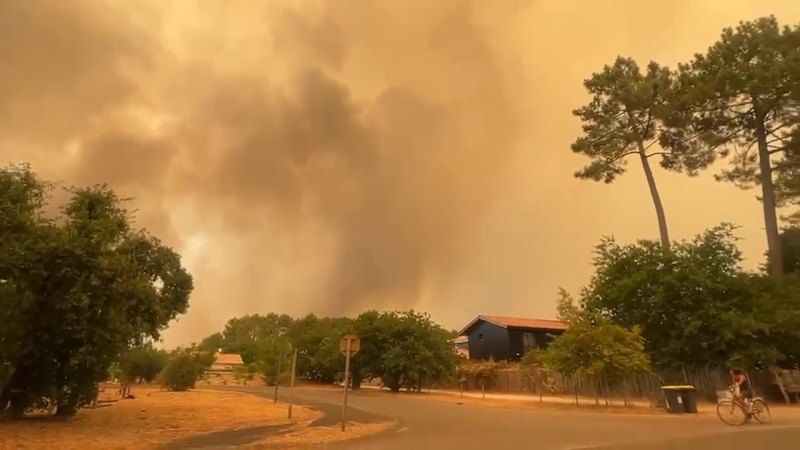
A peat fire in the Okefenokee is a terrifying nightmare. It burns underground for months, suffocating towns fifty miles away in a thick, acrid haze of dark smoke.
Environmentalists rightly rallied. They saw a World Heritage designation as an impenetrable shield—a global mandate that would make industrial mining politically impossible.
Protect the swamp to stop the mine. The logic seemed bulletproof.
But in their rush to secure a victory against heavy machinery, conservation groups inadvertently bypassed the humans standing in between. Locals found themselves caught in a vice between two massive, distant forces: multinational mining interests on one side, and international preservation apparatuses on the other.
Neither side seemed particularly interested in what happens to the small-business owner in Folkston when traffic jams paralyze two-lane roads, or when property taxes skyrocket because eco-tourists suddenly want weekend cabins in the woods.
The Fragile Architecture of Belonging
It is easy to romanticize conservation from an air-conditioned office in Atlanta or Washington. It is far harder when your livelihood depends on the subtle balance of local commerce.
When external organizations descend on a rural community with grand promises of "eco-tourism revenue," locals have every right to be skeptical. They have seen this playbook before. The massive revenue spikes promised by consultants rarely trickles down to the family-run bait shop or the local diner. Instead, it flows toward corporate hotel chains, out-of-state tour outfits, and vacation rental investors.
The culture of the swamp dweller is built on self-reliance. It is an intricate, unwritten social contract forged over generations of surviving floods, heat, and economic isolation.
To introduce a global governing body's influence feels, to many, like a quiet eviction of their heritage. They see their lived experience being replaced by signage, boardwalks, and sanitized narratives designed for people who spend two hours in the swamp before driving back to a resort.
The real conflict here isn't between those who love the swamp and those who want to destroy it.
It is between two fundamentally different definitions of what the swamp actually is.
To the global community, the Okefenokee is a critical carbon sink, a biodiversity hotspot, and a geological marvel that belongs to humanity.
To the person sitting on a porch three miles from the boat ramp, it is home. And home is not something you share easily with eight billion strangers.
The Echo in the Pines
Late in the afternoon, the light over the Okefenokee turns a deep, burning gold. The cicadas begin their deafening, rhythmic buzz, swelling and receding like the breath of some colossal creature slumbering beneath the muck. An alligator glides past a stand of bonnet lilies, its armor breaking the black water without leaving a ripple.
The swamp does not care about UNESCO. It does not care about mining permits, property values, or federal court injunctions. It has endured for thousands of years, swallowing trees, fires, and human ambitions whole.
As the debate rages in town halls and courtrooms, the people who know this water best continue to watch and wait. They know that once a place is declared a wonder of the world, it ceases to belong to the people who kept it secret.
The dark water carries their story quietly, drifting through the cypress trees, holding its secrets just beneath the surface.