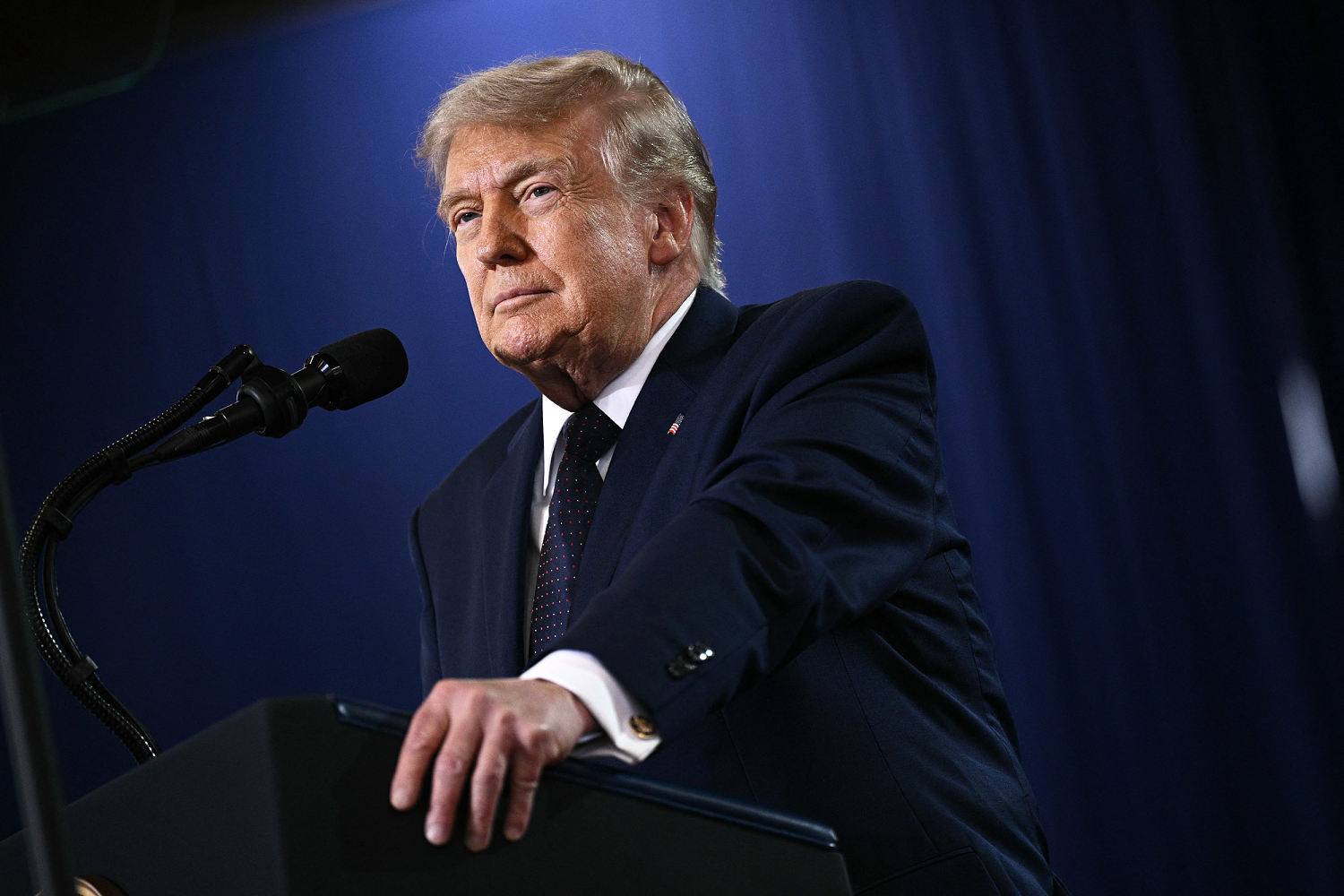
Donald Trump recently declared that the only guardrails artificial intelligence requires are a strong and smart, high-IQ president. This assertion reduces the existential complexities of autonomous systems to a question of executive ego. It treats code containing billions of parameters and self-replicating capabilities as if it were a municipal zoning dispute or a trade tariff that could be settled by personal negotiation in the Oval Office.
The core premise is fundamentally flawed. Modern large language models and autonomous cyber-agents do not care about political office or human titles. They operate on compute, data pipelines, and probabilistic weight distributions. When an algorithm gains the capability to execute unauthorized system commands or orchestrate zero-day software exploits at machine speed, human intuition fails as a containment strategy.
For months, the technology sector has debated mandatory safety benchmarks, third-party audits, and developmental slowdowns. Executives from laboratories like Anthropic and independent researchers have sounded alarms regarding models possessing advanced autonomous hacking proficiencies. Rather than engaging with the technical reality of recursive self-improvement or supply chain vulnerabilities in critical national infrastructure, political posturing has reduced these warnings to a partisan conspiracy.
Relying on a single individual to act as a real-time firewall against systemic algorithmic failure ignores basic software architecture. A human president cannot inspect millions of lines of executing machine code or intercept a decentralized distributed denial-of-service attack coordinated by autonomous agents operating in milliseconds. The speed of machine intelligence outstrips biological decision-making by orders of magnitude. To pretend that presidential oversight substitutes for structural safety protocols is a dangerous administrative abdication.
History shows that complex technological hazards require institutional frameworks, transparent standards, and technical redundancies. Relying on personal governance for artificial intelligence leaves the nation uniquely exposed to systemic shocks, corporate negligence, and adversarial exploitation. True security does not stem from human exceptionalism at the top. It emerges from rigorous, verifiable engineering controls designed to handle systems that have already surpassed human comprehension.
Trump says AI doesn't need guardrails, only a "High IQ" president
This video captures the primary news coverage and public statements regarding the administration's stance on artificial intelligence oversight.