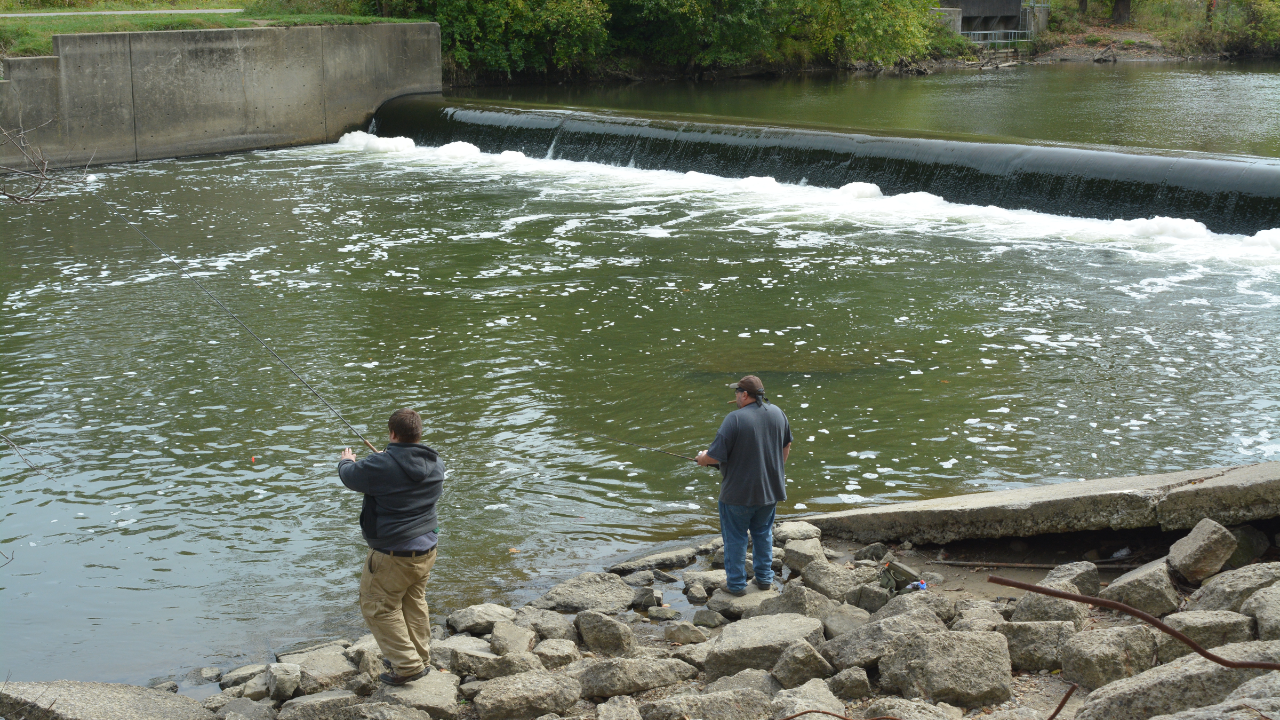
Every conservation press release follows the exact same script. Drop a concrete wall, watch a metric spike, declare victory. When Ohio flattened the Brecksville Dam on the Cuyahoga River, the headlines practically wrote themselves. Free-flowing habitat doubled to 71 kilometers. Fifteen new fish species popped up downstream. Environmentalists popped champagne, kayakers rejoiced, and the media heralded another pristine triumph for Mother Nature.
It is a comforting narrative. It is also dangerously incomplete.
I have spent decades watching municipal authorities and well-meaning ecological groups throw hundreds of millions of dollars at structural removals while completely ignoring the chemical and hydrological realities sitting right behind those barriers. We treat rivers like plumbing fixtures. Turn a valve, clear a pipe, and expect the ecosystem to magically reset to a pre-industrial utopia.
Biology does not work that way. Waterways are not simply blocked by concrete walls; they are fundamentally rewritten by decades of heavy industrial legacy, agricultural runoff, and sediment loading. When you tear down a dam without addressing what is buried upstream, you aren’t restoring a river. You are launching a slow-motion environmental bomb.
Let us look at the lazy consensus. The dominant assumption in aquatic restoration is linear: remove the obstruction, expand the habitat range, and biodiversity automatically scales upward. Proponents point to acoustic telemetry and short-term fish counts as proof of success. But counting fish swimming through a newly opened bottleneck is the ecological equivalent of measuring foot traffic outside a newly unlocked subway turnstile. It tells you movement is happening, but it tells you nothing about long-term survival, genetic health, or water toxicity.
Imagine a scenario where you spend three decades fighting to take down an industrial relic like the Brecksville Diversion Dam, which historically fed water to steel mills. You celebrate the return of free-flowing water. Yet, hidden beneath the impounded pool sediments lie layers of heavy metals, PCBs, and excess nutrients accumulated over a century of rust-belt manufacturing. The moment you rip out the barrier without dredging or stabilizing that sediment, you flush decades of industrial toxicity straight down into the primary nursery zones of Lake Erie.
Yes, the fish move upstream. They also swim right into a soup of mobilized contaminants that the standard impact reports gloss over in favor of shiny kilometer metrics.
We need to redefine how we measure success in aquatic restoration. The current metrics rely on surface-level geography. Kilometers of connected water sound impressive in a grant proposal, but linear distance is a vanity metric. A fish swimming fifty kilometers through a chemically degraded, uniform channel with zero thermal refugia is worse off than a fish confined to ten kilometers of a structurally complex, chemically stable, highly-vegetated aquatic sanctuary.
Furthermore, let us dismantle the panic surrounding so-called "dead spots" behind low-head dams. While these pools trap silt and reduce localized dissolved oxygen, they also act as accidental settling basins. They trap fine sediments that would otherwise smother downstream spawning gravels. When you eliminate the dam instantly, you release massive pulses of bedload sediment that choke out macroinvertebrates—the literal base of the aquatic food web. We trade a localized stagnation problem for a watershed-wide siltation crisis, and we call it progress.
To fix our approach to river management, we have to stop treating dam removal as an end point. It is merely a demolition phase. Real restoration begins only after the concrete is gone, and it requires three unconventional shifts in execution:
First, mandate comprehensive sediment remediation prior to breaching. If the silt behind the wall is toxic, dredging it out costs a fortune and slows down political timelines. Too bad. Dumping decades of industrial fallout onto downstream wetlands just to score a political win is ecocide dressed up as conservation.
Second, prioritize structural complexity over mere connectivity. Opening up miles of a straightened, channelized ditch does nothing for native species if there is no woody debris, no floodplain connectivity, and no shade to combat rising water temperatures. Connectivity without habitat heterogeneity is just an empty highway.
Third, factor in the invasive species superhighway. Dams are ugly, but they are also stubborn physical deterrents against aggressive invaders like round gobies, sea lampreys, and carp pushing up from the great lakes into delicate interior tributaries. When you take down a barrier, you don't just roll out the red carpet for native walleye; you clear the runway for every biological disruptor in the system. If you aren't concurrently implementing upstream bio-barriers or targeted management protocols, you are inviting an ecosystem takeover.
The romanticized vision of a wild river instantly snapping back to its 18th-century glory days the second an excavator bites into concrete is a fairy tale designed for fundraising brochures. The Cuyahoga River has made incredible strides from its burning-river days, largely thanks to strict point-source pollution controls under the Clean Water Act, not just because a few concrete slabs were crushed.
Stop celebrating the mere absence of walls. Start demanding accountability for the entire watershed. Until we match our enthusiasm for demolition with an equal obsession for chemical remediation, structural habitat engineering, and invasive species defense, our grand restoration projects will remain expensive theater.
The concrete is gone. Now the real work begins. Or we can keep cheering for empty metrics while the water rots from the inside out.