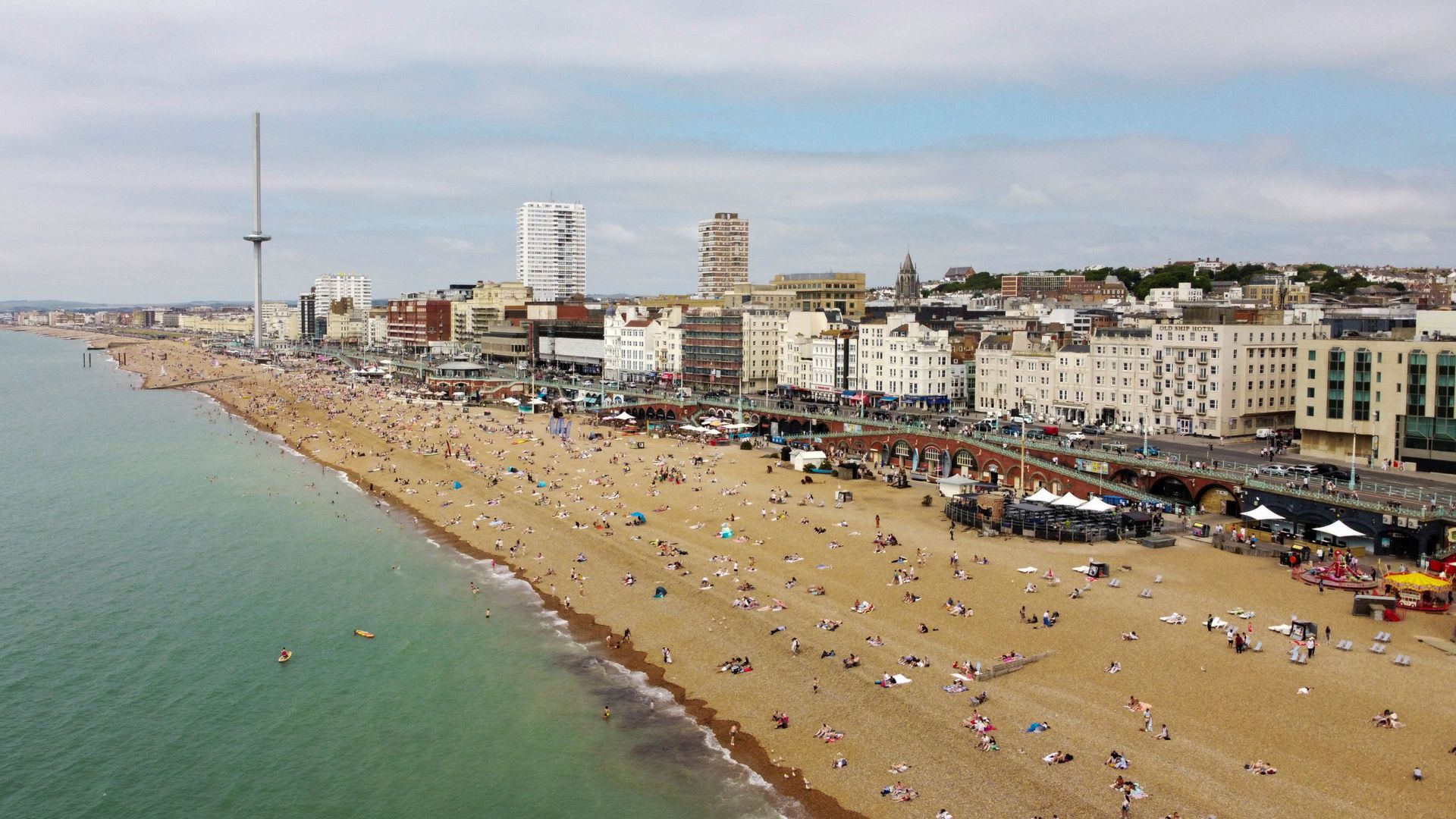
Read any standard local crime blotter following a charge for sexual assault in a public space—like the recent charge involving an attack on Brighton beach—and you will see the exact same hollow formula. Three paragraphs of sterile police press-release copy. A location pin. A court date. A standard appeal for witnesses.
And then, inevitably, the public commentary spirals into the exact same lazy consensus.
People demand more CCTV cameras on the seafront. They demand brighter floodlights along the pebbles. They call for heavier late-night police patrols along the coastline, treating a horrifying violent crime as if it were simply a municipal lighting failure or a lapse in street-level surveillance.
That narrative is comforting because it offers an easy, architectural fix to a terrifying problem. It is also completely wrong.
When media outlets reduce complex criminal cases to geography and police blotter summaries, they actively mislead the public about how sexual violence actually happens, how the UK criminal justice system processes these charges, and what genuinely keeps communities safe. If you want to understand the reality behind high-profile beach assault headlines, you have to strip away the sensationalism of the setting and look at the mechanics of the legal system and criminological data.
The Myth of the "Dangerous Public Space"
The press loves a dramatic backdrop. A dark beach. An isolated alleyway. A quiet park after midnight. Highlighting the location triggers a primal, cinematic fear in readers—the "stranger danger" trope that has dominated crime journalism for over a century.
I have spent years analyzing how local newsrooms and digital media platforms frame violent crime, and the pattern never changes. Editors know that "Brighton beach" in a headline drives clicks because readers immediately project themselves onto that familiar geography. If you have walked along that seafront, the story feels personal.
Here is the problem with that framing: it distorts the actual risk profile of sexual violence.
According to consistent data from the Office for National Statistics (ONS) and the Crime Survey for England and Wales, the overwhelming majority of sexual assaults do not happen in dark public spaces committed by lurking strangers. In roughly 90% of cases, the victim knows the perpetrator—an intimate partner, an acquaintance, a colleague, or a friend—and the offense takes place in a private residence.
Even when an offense does occur in a public space like a beach or a coastal promenade, treating the location as the primary variable is a massive analytical error. Public-space offenses are statistical outliers that receive disproportionate media oxygen. When journalism fixates on the setting, it creates two dangerous blind spots:
- Misallocated civic pressure: Local councils spend millions installing high-definition surveillance networks along seafronts and high streets while gutting funding for domestic violence shelters, crisis intervention teams, and specialized victim advocacy services.
- False security: People alter their behavior around public geography—avoiding the beach at night, taking longer routes home—while remaining completely unequipped to recognize coercive control, predatory grooming, or drug-facilitated assault within their own social circles.
Does that mean public safety infrastructure on coastlines doesn't matter? Of course not. Adequate lighting and visible community presence reduce opportunistic street crime. The downside to pushing back against the "public space panic" is that critics will accuse you of ignoring real victims of stranger assaults. That is a cheap smear. Acknowledging statistical reality does not diminish the trauma of someone attacked on a seafront; it simply demands that our policy responses match the actual scale and nature of the threat.
What "Charged" Actually Means in the UK Justice System
When a headline announces that a man has been charged with rape, most readers mentally fast-forward to a conviction. They assume the police found overwhelming evidence, the case is airtight, and the legal process is merely a formality before sentencing.
Anyone who has actually worked inside or covered the Crown Court system knows how divorced from reality that assumption is.
In England and Wales, the threshold to bring a charge is governed by the Code for Crown Prosecutors, issued by the Director of Public Prosecutions. To authorize a charge, the Crown Prosecution Service (CPS) must apply the Full Code Test, which has two strict stages:
- The Evidential Stage: Prosecutors must be satisfied that there is sufficient evidence to provide a "realistic prospect of conviction" against each suspect on each charge. This is an objective test. It means a jury or bench of magistrates, properly directed and acting in accordance with the law, is more likely than not to convict the defendant of the charge alleged. It is not the same standard as "beyond reasonable doubt" required at trial.
- The Public Interest Stage: If the evidential test is passed, prosecutors must decide whether a prosecution is required in the public interest. For an offense as severe as rape under Section 1 of the Sexual Offences Act 2003, a prosecution will almost always proceed unless there are extraordinary mitigating factors.
Here is the brutal truth that short news blurbs omit: reaching the charging stage in a UK rape case is statistically rare, and surviving the trial backlog is an endurance test that breaks most complainants before a jury is ever sworn in.
For years, Ministry of Justice statistics have shown a catastrophic gap between reported rapes and actual charges. While tens of thousands of rapes are recorded by police annually in England and Wales, the charge rate has hovered in the low single digits—often under 3% to 5%. When a case does result in a charge, it means investigators and specialist CPS Rape and Serious Sexual Offences (RASSO) lawyers cleared an extraordinarily high evidentiary hurdle.
Yet, once that charge is announced in a 150-word local news post, the media vanishes until the verdict—which, given current Crown Court backlogs, might not happen for 18 to 36 months.
During that multi-year black hole, the Contempt of Court Act 1981 strictly limits what journalists can report to avoid prejudicing a future jury. That legal guardrail is essential for a fair trial. However, because outlets rarely explain why reporting goes silent after a charge, the public is left with the impression that cases simply disappear into a bureaucratic void.
Dismantling the Wrong Questions
When a high-profile charge hits the local press, search engines immediately flood with predictable queries. People look up the suspect's background, the exact time of the incident, or whether a specific neighborhood is "safe." Nearly every one of these questions misses the structural reality of how violent crime operates.
"Is Brighton beach safe at night?"
This is the wrong question. Asking whether a mile-long stretch of public coastline is "safe" treats safety as a static property of geography rather than a dynamic interaction of human behavior, policing strategy, and nighttime economy management. Brighton has one of the busiest nighttime economies in southern England, drawing hundreds of thousands of visitors, students, and weekend tourists. High foot traffic combined with heavy alcohol consumption naturally elevates the raw volume of reported incidents compared to a quiet residential village. Statistically, you are vastly safer walking along Brighton seafront than you are inside a household experiencing domestic abuse—yet nobody searches Google asking if their living room is safe.
"Why didn't CCTV stop the attack?"
Because cameras are forensic tools, not force fields. This is one of the most persistent delusions in modern civic debate. High-resolution surveillance cameras—like those operated across Brighton and Hove—are exceptionally useful for tracking movements after an incident is reported, establishing timelines, and corroborating witness statements for CPS prosecutors. They rarely deter an impulsive or intoxicated offender in real time, and live monitoring rooms cannot watch every square meter of a sprawling pebble beach simultaneously. Treating surveillance hardware as a substitute for human intervention and cultural accountability is lazy governance.
"Why does it take so long to get a case to court?"
Because the UK justice system has been systematically underfunded for over a decade, creating a structural bottleneck that punishes both complainants and defendants. A shortage of criminal barristers, closed courtrooms, and immense delays in digital forensics—where police take months just to download and review mobile phone data—mean that a charge today translates to a trial years from now. When news outlets report a charge without mentioning the multi-year Crown Court backlog, they sanitize a justice system in crisis.
How Crime Journalism Needs to Change
If local and national outlets want to stop being mere stenographers for police press offices, they need to overhaul how they cover sexual assault charges from day one. Right now, the industry relies on volume—churning out quick, context-free blurbs to capture search traffic while a story is trending, then abandoning the beat entirely.
Here is what responsible, high-impact crime reporting actually requires:
- Contextualize the charging threshold immediately. Every single story reporting a rape charge should include a two-sentence explanation of the CPS Full Code Test and the current Crown Court wait times. Educate the reader on what a charge legally signifies and how long the road to trial actually is.
- Separate geography from causality. Stop framing public-space assaults as cautionary tales about location. Report the facts of the charge accurately without indulging in sensationalist descriptions of "dark beaches" or "secluded paths" that reinforce false stranger-danger myths.
- Commit to the long-tail follow-up. If a publication profits from the clicks generated by an arrest or charge headline, it has an ethical obligation to assign a reporter to cover the eventual Crown Court trial, regardless of whether the verdict is guilty or not guilty. Publishing the accusation and ignoring the outcome destroys public trust in both journalism and the courts.
- Interrogate institutional failures, not just individual suspects. Instead of asking the police for another generic quote about "increasing patrols," ask the local Police and Crime Commissioner what the current charge rate is for sexual offenses in that force area, and what the average wait time is for digital forensic analysis.
The current model of crime reporting gives readers a quick spike of outrage, points them toward an easy scapegoat like street lighting, and moves on to the next headline. It treats symptoms as causes and geography as destiny. Until journalists and readers alike demand deeper structural truth over hollow press-release summaries, we will keep asking the wrong questions—and wondering why nothing ever changes.