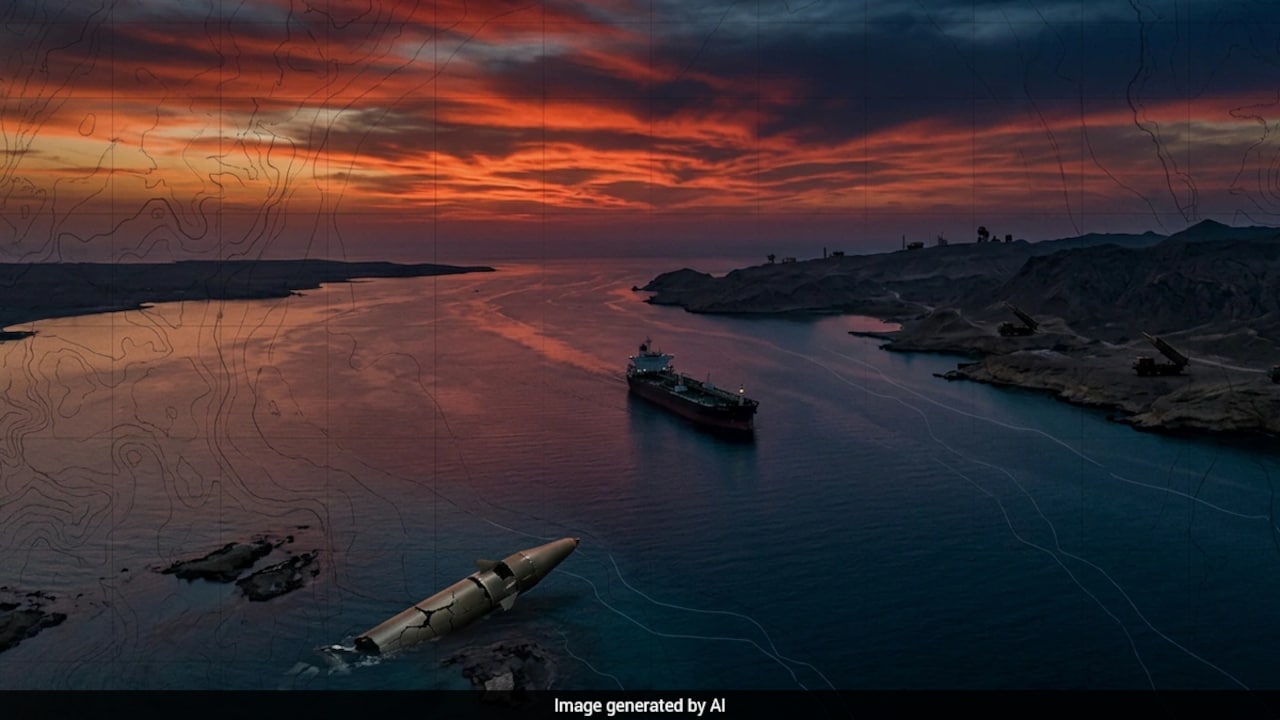
Breaking maritime alerts never tell the full story. When headlines flash that an oil tanker is burning after being struck by an "unknown projectile" in the Strait of Hormuz, markets twitch, cable news panels spin up, and almost everyone misses the operational reality on the water.
I've spent years tracking maritime security incidents and energy transit bottlenecks across the Persian Gulf. Every single time a hull takes fire near the Hormuz chokepoint, the initial wire reports follow the exact same script. Authorities confirm a strike. Naval task forces dispatch a destroyer or patrol craft. Unnamed officials whisper about attribution before any forensic team has even boarded the vessel.
Meanwhile, the things that actually move crude prices, disrupt supply chains, and keep tanker crews alive happen far away from the press briefings.
Why "Unknown Projectile" Is Standard Maritime Protocol
People hear the phrase "unknown projectile" and immediately assume military secrecy or a cover-up. Honestly, it's usually much simpler than that.
When an incident occurs in contested waters, regional reporting hubs like the United Kingdom Maritime Trade Operations (UKMTO) operate under strict evidentiary rules. Watch officers on a commercial bridge rarely see what hits them. Most strikes happen at night, from miles away, or strike above the waterline behind the accommodation block where blind spots are massive.
Until ordnance disposal teams inspect the blast radius and recover shrapnel, calling the weapon a missile, a one-way attack drone, or a limpet mine is pure guesswork. A cruise missile leaves a specific entry profile and distinct fuel residue. A small unmanned aerial vehicle punches a smaller, jagged hole and often leaves commercial-grade electronics scattered across the deck.
If UKMTO or naval commanders name the munition too early and get it wrong, they hand hostile actors an instant propaganda win. So they stick to "unknown projectile" until metallurgical analysis proves otherwise.
The Chaos Inside the Bridge During a Strike
Commercial tankers aren't warships. They don't have radar operators watching the sky for low-flying threats or point-defense guns ready to shred incoming ordnance.
A Very Large Crude Carrier (VLCC) runs with a crew of roughly 20 to 25 seafarers. That's it. Two dozen people managing a floating steel city stretching over 1,000 feet long and carrying two million barrels of crude.
When something slams into the hull, the immediate priority isn't geopolitical attribution. It's survival. The captain has seconds to sound the general alarm, muster the crew in the citadel or on the bridge wings, and assess whether the engine room is taking on water. Fire aboard a tanker is a nightmare scenario, though not always for the reason most people think.
The Myth About Exploding Oil Tankers
Hollywood has convinced the public that one spark turns an oil tanker into a floating atomic bomb. In reality, modern crude carriers are built specifically to prevent catastrophic tank explosions.
Every modern tanker operates an inert gas system. As crude oil is pumped out or shifts during transit, the empty space at the top of the cargo tanks fills with volatile hydrocarbon vapors. Left alone, that vapor plus oxygen equals a massive explosion risk. To neutralize it, ships pump treated exhaust gas from their boilers directly into the cargo tanks, keeping oxygen levels below 8 percent. Without oxygen, the cargo tanks simply cannot ignite.
That's why so many struck tankers burn for days without blowing apart. The fires you see on satellite imagery or naval reconnaissance photos usually come from three places:
- Ruptured bunker fuel tanks powering the ship's own engines
- Damaged accommodation blocks filled with plastics, wiring, and bedding
- Pool fires on the water caused by leaked crude igniting outside the hull
Don't get me wrong—a fire on a tanker is lethal. Toxic smoke kills faster than flames, and extreme heat can warp structural steel until a bulkhead fails. Still, knowing how inert gas systems work explains why a burning tanker stays afloat long enough for salvage tugs to reach it.
Geography Makes the Strait of Hormuz Impossible to Bypass
You can't talk about an attack in these waters without looking at a nautical chart. The Strait of Hormuz isn't just another shipping lane. It is the single most critical energy artery on the planet.
At its narrowest point between Oman's Musandam Peninsula and Iran, the strait is only about 21 nautical miles wide. Within that gap, international maritime law establishes a Traffic Separation Scheme. Inbound vessels use a two-mile-wide lane. Outbound vessels use another two-mile-wide lane. A two-mile buffer zone separates them.
Think about that geometry for a second.
Every supertanker hauling oil out of Saudi Arabia, Iraq, Kuwait, and the United Arab Emirates has to thread a needle just two miles wide. Ships can't zigzag to dodge threats. Deep-draft tankers need plenty of water under their keels, which locks them into predictable, narrow channels. Anyone sitting on the coastline or operating fast-attack craft from nearby islands knows exactly where those ships will be, down to the minute, simply by pulling up public AIS tracking data.
According to the U.S. Energy Information Administration (EIA), roughly 20 percent of global petroleum liquids consumption passes through this exact chokepoint every day. Pipeline alternatives exist—like Saudi Arabia's East-West Pipeline to the Red Sea and the UAE's Fujairah pipeline—but their spare capacity covers only a fraction of daily Hormuz volume. If traffic stops here, global energy markets feel it within hours.
What Happens behind the Scenes After a Strike
Once the distress call goes out over VHF Channel 16, a complex chain reaction kicks off across multiple continents. Most observers watch the naval warships steaming toward the smoke. Insurance underwriters and charterers are watching something else entirely.
War Risk Insurance Spikes Overnight
Maritime insurance runs on cold, hard math. The Joint War Committee in London monitors global conflict zones and designates high-risk areas. The Persian Gulf and the Gulf of Oman sit permanently under intense scrutiny.
When a tanker catches fire from a kinetic strike, underwriters immediately reprice the risk for every other vessel scheduled to transit the strait that week. Owners have to pay an additional war risk premium calculated as a percentage of the hull's total value. On a $100 million tanker, even a 0.5 percent jump adds half a million dollars to a single voyage.
Charterers—the oil majors and commodity trading houses renting the ships—often pause bookings for 24 to 48 hours while their risk teams recalculate whether the freight economics still make sense.
AIS Transponders Go Dark
If you open a marine traffic map right after an attack, you'll notice ships suddenly vanishing from the screen. Captains aren't sinking; they're turning off their Automatic Identification System (AIS) transponders.
International regulations require commercial vessels to broadcast their identity, position, course, and speed via AIS to prevent collisions. In a conflict zone, broadcasting your exact coordinates is like wearing a neon target. Masters routinely switch off AIS when entering high-threat corridors, relying instead on marine radar and visual lookouts. While "going dark" reduces the risk of targeted strikes, it dramatically increases the danger of ship-to-ship collisions in congested waters.
Salvage Companies Race the Clock
You can't just tow a burning supertanker into the nearest commercial port. Port authorities in Fujairah, Muscat, or Dubai won't let a crippled, blazing vessel anywhere near their terminals or desalination plants. One major oil spill doesn't just ruin beaches—it can shut down the coastal desalination facilities that supply drinking water to millions of people across the Gulf.
Specialized marine salvage firms like Smit Salvage or Tsavliris have to mobilize firefighting tugs equipped with high-capacity water and foam monitors. They cool the hull from a safe distance, wait for the blaze to die down, and then negotiate a Lloyd's Open Form salvage contract before putting personnel aboard. Only after the fire is completely out and the hull is stabilized will any port grant refuge for ship-to-ship oil transfer.
How to Read Future Hormuz Incident Reports Like an Insider
The next time a breaking news alert pops up about a stricken vessel in the Persian Gulf, ignore the breathless commentary for the first six hours. Look at the hard operational indicators instead:
- Check the vessel's AIS status and draft. If a tanker was hit while laden (deep draft), environmental and salvage risks skyrocket compared to a ship sailing in ballast (empty).
- Watch the Joint War Committee and P&I Club circulars. Protection and Indemnity clubs publish rapid advisories for shipowners. Their wording tells you far more about the real threat level than diplomatic statements.
- Track freight rates on the TD3C route. This benchmark measures the cost of shipping crude from the Middle East Gulf to China. If TD3C rates spike sharply, shipowners are actively pulling vessels back from the strait.
- Look for naval boarding confirmations. Attribution doesn't matter until coalition naval forces—such as Combined Maritime Forces (CMF) units—confirm they have recovered physical debris from the vessel.
Verify the source of every maritime alert directly through official channels like UKMTO or the U.S. Maritime Administration (MARAD) before acting on market rumors, because in the Strait of Hormuz, the first report is almost always incomplete.