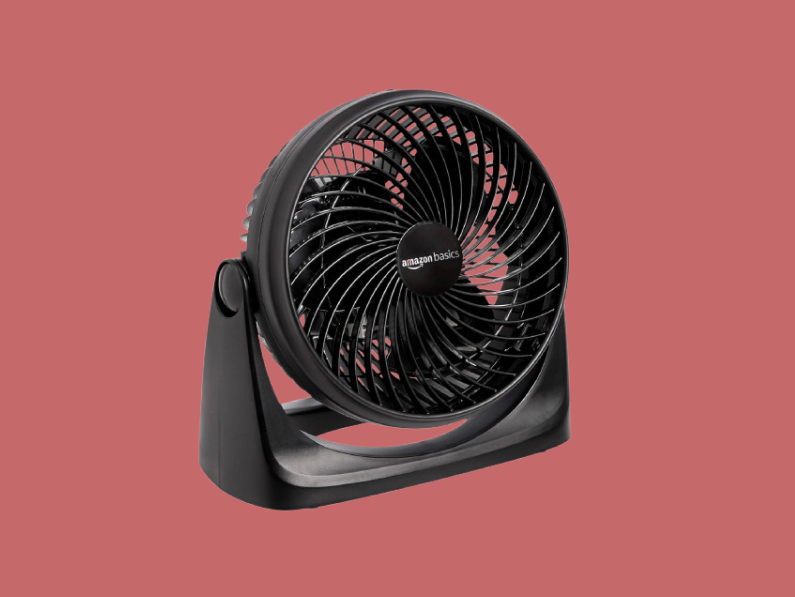
Every June, the same parade of copycat buying guides marches across the internet. They all tell you to spend $400 on a sleek, bladeless cylinder or $150 on a smart fan that syncs with your phone. They talk about "whisper-quiet aerodynamics" and "ambient room cooling."
It is all a lie.
I have spent fifteen years analyzing home climate tech, testing everything from commercial HVAC systems to cheap plastic box fans. Here is the hard, physics-backed truth that manufacturers spend millions to hide: fans do not cool rooms. Fans cool people. Buying a premium fan to lower a room's temperature is like turning on a flashlight to make a room warmer. You are fundamentally misunderstanding the thermodynamics of your home.
The industry wants you trapped in a cycle of overpaying for features that have zero impact on how comfortable you actually feel. Let us dismantle the marketing fluff and look at how airflow actually works.
The Thermodynamics Fraud: Fans vs. Air Conditioning
The lazy consensus among lifestyle bloggers is that a "premium" fan possesses some magical ability to chill the air. You see reviews praising high-end models for "lowering the temperature of a stuffy bedroom."
They are suffering from a placebo effect.
A fan moves air. That is it. When that air moves across your skin, it accelerates the evaporation of sweat, which carries heat away from your body. This process is called convective cooling. However, the ambient air temperature in the room remains exactly the same. In fact, due to the law of conservation of energy, the electric motor powering the fan actually introduces a small amount of heat into the space. If you leave a fan running in an empty, sealed room, the temperature in that room will go up, not down.
[Fan Motor Electricity] ---> [Kinetic Energy/Airflow] + [Waste Heat]
Result: Room gets fractionally warmer, not cooler.
When you pay $300+ for a high-end air mover, you are not buying better cooling. You are buying status, aesthetic design, and a quieter motor. If your goal is purely to survive a heatwave without spiking your electric bill, a $20 box fan from a hardware store provides the exact same thermodynamic benefit as a luxury tower fan.
Dismantling the "People Also Ask" Fluff
If you search for home cooling advice, the internet feeds you sanitized, useless answers. Let us answer the actual questions people have with some brutal honesty.
Does keeping a fan on all night dry you out?
Yes, but not for the reasons people think. It is not because the fan is "sucking moisture out of the air." The moving air accelerates evaporation from your eyes, mouth, and nasal passages. If you sleep with your mouth open, a high-velocity fan will make you wake up feeling like you swallowed sand. The fix isn't buying a fan with a "sleep mode"—it is simply angling the fan so it bounces air off a wall rather than blowing directly at your face.
Can a fan cool a room if you put ice in front of it?
This is the ultimate budget hack popularized on social media. It actually works, but only on a microscopic scale. You are creating a rudimentary swamp cooler. As the ice melts and evaporates, it absorbs heat from the air (latent heat of fusion).
But here is the catch: where did you get the ice? Your freezer. To freeze that water, your refrigerator's compressor had to pump heat out of the water and into your kitchen. Unless your fridge is in a completely different building, the net thermal energy of your home stays exactly the same, or actually increases due to the inefficiency of the fridge motor. You are just moving heat from your bedroom to your kitchen.
Which is better: Tower fans or pedestal fans?
Pedestal fans win every single time on pure physics, yet tower fans dominate the market because they look nicer. Tower fans use tangential blower wheels. They have to push air through narrow, restrictive plastic grilles, which creates friction and restricts volume. Pedestal fans use large, open axial blades. They move significantly more air (measured in Cubic Feet per Minute, or CFM) using less power. Choosing a tower fan over a pedestal fan means prioritizing living room aesthetics over actual airflow velocity.
The Bladeless Fan Scam
We cannot talk about modern cooling without addressing the giant, expensive elephant in the room: the bladeless fan.
Marketing departments love to use words like "air multiplier technology" to justify exorbitant price tags. They claim these devices draw in air and amplify it 15 times over, creating a seamless stream of uninterrupted wind.
Here is what happens inside those units. There is a motor hidden in the base. It is not bladeless; it uses a small, high-speed impeller—essentially a hairdryer motor without the heating element. This impeller forces air up into the hollow ring and out through a tiny slit, creating a low-pressure zone that pulls surrounding air forward (the Coandă effect).
Does it work? Sure. But it is wildly inefficient.
To push that much air through such a narrow slit, the tiny motor in the base has to spin at incredibly high RPMs. This creates a high-pitched, whining frequency that many people find far more irritating than the low-frequency hum of a traditional 12-inch blade. Furthermore, you are paying a 500% premium for a physical phenomenon that a standard industrial floor fan achieves for a fraction of the cost. You are paying for a sculpture, not a superior cooling machine.
How to Actually Cool Your House Without Buying a New Fan
Stop looking for the perfect product to buy. Comfort is about managing fluid dynamics and solar radiation, not spending money on gadgets. If you want to keep your living space liveable without running an air conditioner 24/7, use these three unconventional tactics instead.
1. The Dual-Fan Pressure Differential
Most people put a single fan in a window blowing inward, hoping to suck in cool night air. This is useless if the room is sealed, because you are trying to force air into a space that is already pressurized.
Instead, open two windows. Put one fan in the window on the leeward side of your house (the side facing away from the wind) blowing outward. Put another fan in a window on the windward side blowing inward. By exhausting the hot air out of one side, you create a low-pressure vacuum that forcefully pulls the crisp night air through the other side of the house.
2. Micro-Cooling the Body, Not the Brick
Your house is made of wood, drywall, and brick. These materials have high thermal mass—they absorb heat all day and radiate it back into your rooms at night. A fan cannot stop a drywall wall from radiating heat.
Stop trying to cool the structure. Focus entirely on your body's thermal zones. Place a small, low-powered USB desk fan directly at the foot of your bed, aiming beneath your top sheets. By constantly replacing the humid air trapped under your blankets, you optimize your body’s natural heat dissipation without needing to move the air in the entire room.
3. The Basement Siphon
If you live in a multi-story home with a basement, stop running fans on the top floor with the windows open during the heat of the day. Cold air settles at the lowest point of your home. Set a heavy-duty air mover at the top of your basement stairs, angled upward into the main living space. Pull that dense, naturally cooled air up into the rest of the house instead of trying to fight the midday heat coming through your upstairs windows.
The Hard Truth About Smart Fans
The latest trend is the "smart" cooling fan. These devices feature Wi-Fi connectivity, integration with voice assistants, and algorithmic wind modes that mimic a natural breeze by constantly changing speed.
Think about the user experience here. You are sitting on your couch. You want air blowing on you. Do you really want to open an app on your phone, wait for it to connect to your local network, and adjust a slider? Or do you just want to reach out and press a physical button?
The "natural breeze" mode is even worse. By constantly cycling the motor up and down to simulate outdoor wind, the fan continuously changes its acoustic pitch. Human brains are highly adaptive to steady white noise; we easily tune out a constant hum. What we cannot tune out is a motor that constantly alters its frequency every four seconds. It ruins sleep, disrupts concentration, and adds failure points to a machine that should last for decades.
A mechanical switch rarely breaks. A circuit board tied to a cloud server will eventually become a brick when the manufacturer stops supporting the app.
Stop falling for the annual consumer electronics trap. If you need to lower the temperature of your home, buy an air conditioner or install radiant barriers in your attic. If you just need to feel cooler while sitting at your desk or sleeping, go to the store and buy the simplest, ugliest, highest-CFM metal fan you can find. Leave the sleek, expensive plastic status symbols to the people who prefer looking comfortable over actually being comfortable.
/i.s3.glbimg.com/v1/AUTH_08fbf48bc0524877943fe86e43087e7a/internal_photos/bs/2019/P/r/H0WXMYRCqA0DLD2N894g/4.png)