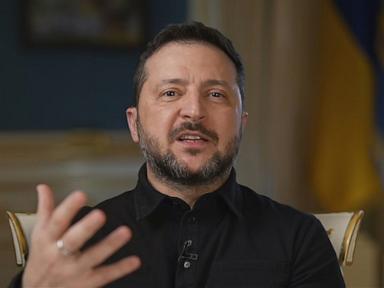
When Abdul El-Sayed brushed off his historic, razor-sharp criticisms of Barack Obama as the product of an "angry" and "younger" mindset, he offered a masterclass in modern political survival.
The narrative is clean, digestible, and built for a 24-hour news cycle. A youthful, left-wing firebrand pens a scathing 2012 essay calling Obama’s re-election a vote for the "rock" over the "hard place", pointing to civil liberties violations, economic stagnation, and hawkish foreign policy. Fourteen years later, that same firebrand—now a seasoned politician stepping onto national debate stages—shares a campaign platform with the very man he once excoriated.
Magic words fix everything. I was younger. I was angry.
Yet, reducing substantive ideological divergence to the biological inevitability of aging treats the electorate like amnesiacs. It avoids the harder, more pressing question of how political identity transforms when ambition meets institutional reality.
The Architecture of Pragmatic Amnesia
To understand why El-Sayed’s 2012 critique matters, one must look at what he was actually arguing against. Long before he became a fixture of progressive electoral politics in Michigan, El-Sayed wrote from the vantage point of a frustrated leftist observing the compromises of the first Obama administration. His complaints were not trivial slights or petty insults. They centered on the expansion of executive drone warfare, record-setting deportations, and an economic recovery that rescued Wall Street while leaving Main Street to shoulder the burden of foreclosure crises and stagnant wages.
These were not the fever-dream rants of an unhinged partisan. They were structural critiques shared by a large swath of the progressive coalition that felt betrayed by a centrist White House.
When reporters drag these texts into the light during high-stakes Senate cycles, the reflex is immediate minimization. Candidates must unify the party. Coalition-building requires looking forward, not backward. But political evolution is rarely a neat line drawn from youthful radicalism to mature pragmatism. More often, it is an accommodation with power.
To win statewide office in a swing state, an ambitious Democrat cannot afford the ideological purity of a graduate student or a young medical professional writing for online outlets. The party apparatus demands cohesion. Icons must be protected, or at least strategically embraced.
The Utility of Historical Erasure
There is an inherent utility in blaming youth for ideological clarity. It implies that wisdom equals capitulation. It suggests that seeing the flaws in a corporate-friendly Democratic establishment is a phase one outgrows, much like bad haircuts or experimental music tastes.
If El-Sayed’s past critiques were merely a symptom of youthful hot-headedness, then the underlying policy failures he identified—drone strikes, weak labor protections, inadequate healthcare restructuring—must also be written off as youthful distractions. That is the ideological trap of the "young and angry" defense. It de-radicalizes history. It sanitizes the record to make room for campaign stops and joint rallies.
The reality is that El-Sayed’s early assessments diagnosed real tensions within the Democratic Party that persist today. The tension between technocratic centrism and transformative populism did not vanish just because a charismatic former president agreed to share a stage in Detroit.
The Cost of Political Realignment
When politicians perform this ritualistic softening of their past positions, they signal to the establishment that they can be trusted within the club. They learn the vocabulary of institutional preservation. They discover that a carefully calibrated soundbite about personal growth defangs a controversy faster than a detailed policy defense ever could.
Yet, this dynamic exposes a deeper cynicism in American political culture. Voters are expected to accept that convictions are fluid, that principles are provisional, and that yesterday's scathing indictment is today's youthful indiscretion.
El-Sayed survived the scrutiny because the party machinery requires winners, and ideological consistency is a luxury few victorious campaigns can afford. But the ease with which a trenchant systemic critique is reframed as an emotional outburst reveals how little room remains for institutional memory in modern politics.
The anger of youth is often nothing more than reality perceived without the benefit of a career strategy. When that anger is discarded for the sake of political alignment, what replaces it is rarely wisdom. It is simply accommodation.
Fubu Toy review
This video provides the primary broadcast interview where the remarks regarding past political disagreements were addressed directly on national television.