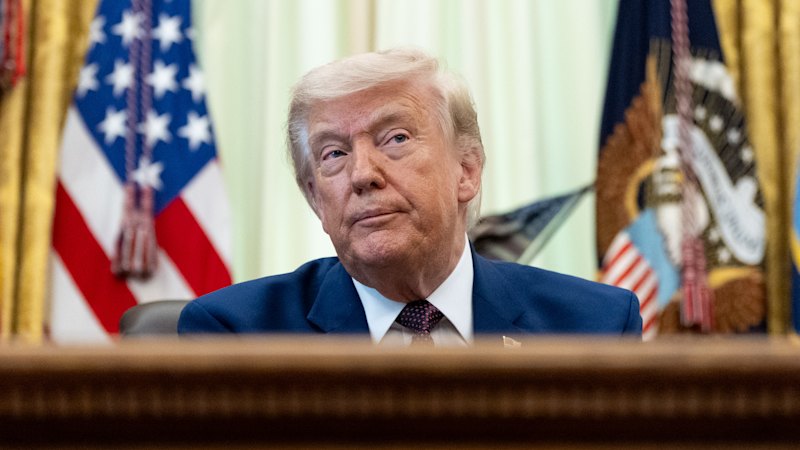
Donald Trump thought he had congressional Republicans completely figured out. He assumed that by packing his cabinet with loyalists and treating Capitol Hill like an extension of his executive branch, lawmakers would simply nod along. But the cracks are finally showing, and they're wider than the White House cares to admit.
A growing faction of Republican lawmakers is pushing back against the administration's chaotic governing style. This isn't just standard political friction. It's a fundamental collision between an aggressive executive branch and legislators who are suddenly realizing that their own political survival is on the line. With the high-stakes midterm elections looming in November, the cost of blind loyalty has officially become too high.
The Breaking Point on National Security and Personnel
The internal fury spilled into the open following the nomination of Bill Pulte to a prominent administration role. For senior lawmakers like Senator Thom Tillis, the choice represented a breaking point. Tillis didn't hold back, explicitly stating that he was "tired of amateur hour" and accusing administration handlers of advising the president as if the upcoming elections didn't exist.
This anger isn't just about a single cabinet pick. The frustration runs deeper, directly impacting critical legislative priorities. The controversial nomination actively jeopardized a high-profile debate over a expiring warrantless surveillance law. For institutional Republicans, sacrificing vital national security tools for the sake of an eccentric personnel choice is a terrible trade. They're realizing that the White House's erratic strategy is actively harming their ability to govern.
War Powers and the Venezuela Backlash
The pushback is spreading far beyond personnel disputes. Capitol Hill is wrestling for control over foreign policy, an area Trump long considered his personal playground. Following a dramatic nighttime military raid where U.S. forces captured Venezuelan leader Nicolás Maduro, the Senate sent a clear signal of disapproval.
A coalition of Democrats and five key Republicans voted 52-47 to advance a war powers resolution designed to restrict further military operations in Venezuela. While the resolution faces a steep uphill climb to ever become law, the symbolic defiance is massive.
The raid, coupled with aggressive actions like seizing sanctioned oil tankers in the North Atlantic, has forced lawmakers to reassess their hands-off approach. Republicans who tolerated eccentric tweets are drawing a hard line at unilateral military entanglements that skip congressional approval entirely.
The Foreign Policy Friction Over Iran
The administration’s aggressive stance against Iran is triggering identical alarms in the House. Four House Republicans recently broke ranks to side with Democrats, demanding that the administration either withdraw U.S. forces from conflicts tied to Iran or formally seek congressional authorization.
The White House strategy of maximum pressure and escalatory military action is hitting an institutional wall. Lawmakers are openly comparing these sudden interventions to the slow, painful trickles of past foreign policy failures. They're deeply uncomfortable with the lack of structural planning coming from the West Wing.
The Survival Instinct of a Restive Party
Why are these fractures opening up right now? It comes down to self-preservation. In the past, Trump boasted that passing a single major tax and social spending package meant he wouldn't need anything else from Congress for four years. He expected lawmakers to step aside and let him run the country by executive decree.
But Congress doesn't work that way. Lawmakers have local constituencies to answer to, and facing voters with nothing to show but a string of chaotic administrative controversies is a losing strategy. When White House spokespeople dismiss congressional concerns as partisan politics, they miss the reality. Republican lawmakers aren't trying to destroy the administration; they're trying to save their own seats.
The era of total compliance is over. By challenging executive overreach on war powers, demanding input on surveillance laws, and rejecting questionable nominations, congressional Republicans are asserting their constitutional authority. They're forcing a necessary recalibration of power in Washington, demonstrating that even the most dominant presidents eventually hit a limit.
To see how this power struggle unfolds, watch the upcoming senate votes on surveillance legislation and foreign policy funding. The results will tell you exactly how much leverage Capitol Hill has managed to claw back.