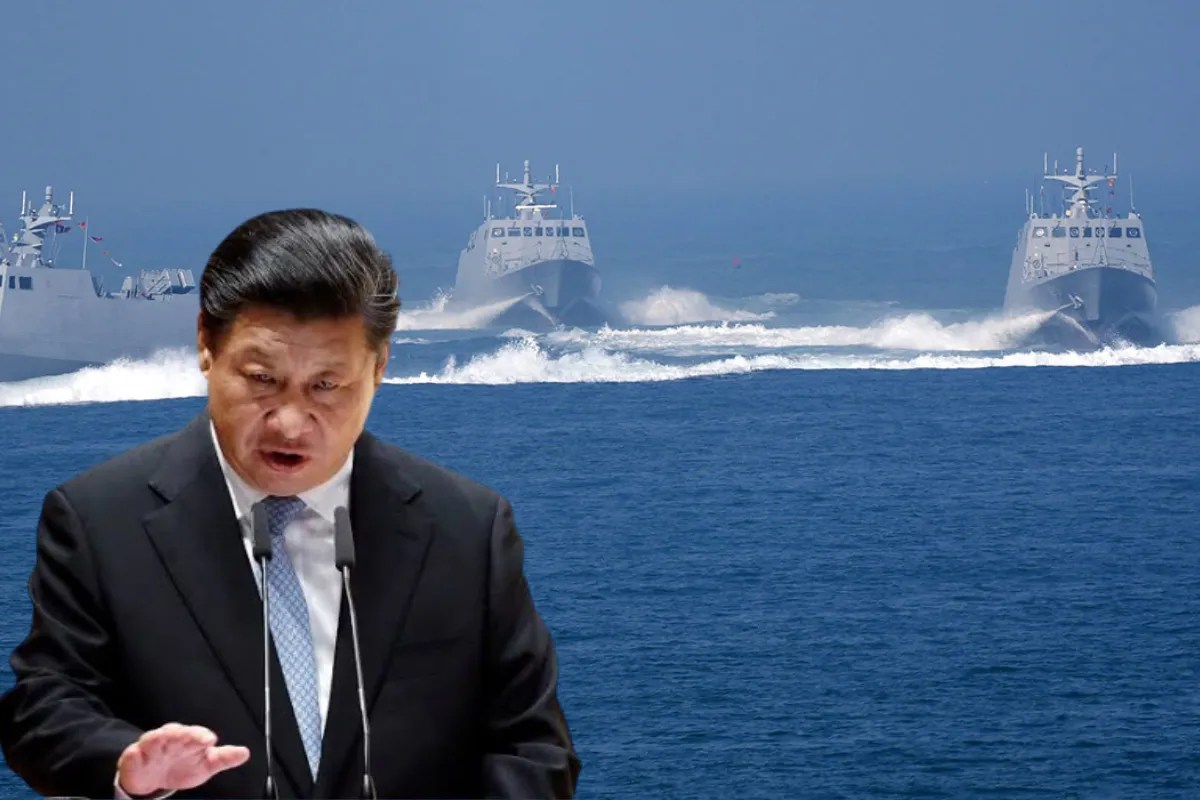
The House just voted 214 to 208 to end unauthorized military action in Iran for the second time in two months. Four Republicans broke ranks, Democrats cheered, and news chaptioners ran bold banners across live broadcasts.
Then everyone went back to work while airstrikes continued over the Middle East.
If that sounds like political theater, it's because it largely is. But brushing off this latest vote as meaningless misses why Capitol Hill is suddenly obsessing over the War Powers Resolution of 1973. The House isn't acting because it thinks President Donald Trump will pull troops out tomorrow. Lawmakers are voting because the domestic political cost of this war is rapidly outstripping its strategic value, and nobody wants to be left holding the bag when midterm voters head to the polls this fall.
The Limits of Concurrent Resolutions
Understanding why this latest vote won't stop a single airstrike requires looking at the actual tool Congress used.
The House passed a concurrent resolution (H. Con. Res. 89), introduced by Washington Representative Pramila Jayapal. Unlike a joint resolution, a concurrent resolution doesn't go to the president's desk for a signature. That means President Trump can't veto it, but it also means the measure carries no binding legal force.
It’s essentially a high-profile, recorded opinion piece written by the House of Representatives.
"From the beginning, this war has had no clear mission, no strategy, no end goal. Congress has not been consulted."
— Rep. Pramila Jayapal (D-Wash.)
When the War Powers Resolution was originally passed over Richard Nixon’s veto in 1973, Congress included a rule allowing them to force a troop withdrawal using concurrent resolutions. But the Supreme Court struck down that type of legislative veto back in 1983 with INS v. Chadha. The court ruled that if Congress wants to create a binding legal obligation on the executive branch, it has to pass a bill through both chambers and present it to the president.
So why use a non-binding resolution? Because passing a joint resolution requires 60 votes to break a filibuster in the Senate, plus a two-thirds majority in both chambers to override an inevitable presidential veto. Capitol Hill simply doesn't have those numbers.
Instead, lawmakers use privileged concurrent resolutions to bypass committee leadership, skip line-item debates, and force every member of Congress onto the public record.
Four Republicans Cross the Aisle
The 214-208 tally wasn't a strict party-line split. Four House Republicans voted with Democrats to rein in the administration:
- Thomas Massie (Kentucky)
- Tom Barrett (Michigan)
- Warren Davidson (Ohio)
- Brian Fitzpatrick (Pennsylvania)
These four represent two distinct factions inside the modern GOP. Massie and Davidson lean heavily libertarian, consistently holding that military actions without an explicit Congressional declaration of war violate Article I of the Constitution. Fitzpatrick, a co-chair of the Problem Solvers Caucus, approaches it from a rule-of-law perspective.
"The law is the law," Fitzpatrick noted during earlier debates. "You either follow the law or you change the law. You can't violate the law."
For Barrett, who represents a swing district in Michigan, the vote reflects a growing exhaustion among voters over open-ended foreign conflicts. The political danger for these Republicans isn't just taking on their own party leaders—it's drawing the ire of the White House. After a similar House vote in June, Trump publicly blasted GOP defectors on social media, calling them "unpatriotic" and "grandstanders."
Yet, the defectors held firm. That tells you the political calculus in key districts is shifting faster than party leadership would like to admit.
Escalating Casualties and Rising Economic Costs
Congressional frustration isn't happening in a vacuum. The conflict, which began in late February, has dragged on past its original timelines, and the domestic consequences are mounting fast.
Defense Secretary Pete Hegseth recently disclosed to senators that the war effort has already consumed $37.5 billion. At the same time, casualty numbers continue to rise. Eighteen U.S. service members have died since fighting broke out, with four killed in mid-July alone. Over 500 American troops have suffered injuries, with roughly 100 of those coming in a recent two-week stretch.
At the same time, the broader economic fallout is reaching consumers back home:
- Energy Markets: Global oil prices have spiked as conflict persists around the Strait of Hormuz, a choke point for global energy transit.
- Red Sea Blockades: Attacks on commercial shipping, including recent strikes on oil tankers, have forced cargo ships into long, expensive detours around Africa.
- Gas Prices: Driver costs at U.S. pumps are climbing steadily, creating an immediate political vulnerability for incumbents running for re-election.
House Foreign Affairs Committee Chairman Brian Mast (R-Fla.) defended the administration's stance on the House floor, reading out the names of fallen service members and arguing that pulling back now would render their sacrifices meaningless. But Democrats counter that sustained strikes without an Authorized Use of Military Force (AUMF) simply risk endless escalation.
The 60-Day Clock and Executive Arguments
The core legal fight boils down to the 60-day statutory limit built into the 1973 War Powers Resolution. The law explicitly states that if the president deploys troops into hostilities, military action must terminate within 60 days unless Congress declares war or grants a specific statutory exemption.
That initial 60-day clock ran out on May 1.
The White House sidestepped the deadline using a novel legal argument: executive officials claimed that a brief, fragile ceasefire in early April effectively reset the 60-day timer. Critics across both parties called that interpretation legal acrobatics, arguing that sporadic skirmishes and ongoing naval blockades meant hostilities never truly ceased.
By treating the conflict as a series of distinct, temporary defensive actions rather than an ongoing war, the administration has maintained that it doesn't need formal Capitol Hill authorization. That stance frustrates lawmakers who feel the executive branch is systematically eroding Congress's constitutional privilege to declare war.
What Needs to Happen for Real Change
Symbolic votes signal rising political pressure, but they don't change troop deployments on their own. If Congress wants to force an end to unauthorized operations, symbolic measures won't do it. Lawmakers would need to take concrete legal steps:
- Pass a Joint Resolution: Both the House and Senate must pass an identical Joint Resolution under Section 5(c) of the War Powers Act, forcing a formal presidential veto.
- Build Veto-Proof Majorities: Leaders would need to rally two-thirds majorities in both chambers (67 votes in the Senate, 290 in the House) to override that veto—a steep climb given current party divisions.
- Use Power of the Purse: Congress's most potent weapon is funding. Lawmakers can attach binding riders to defense appropriations bills that explicitly ban federal funds from being spent on offensive operations in Iran.
Until Congress moves beyond non-binding concurrent resolutions and starts leveraging the federal budget, the administration retains full operational authority on the ground. These votes serve as a clear temperature check on Capitol Hill, but as long as executive power remains unchecked by the purse, the military strategy remains unaltered.