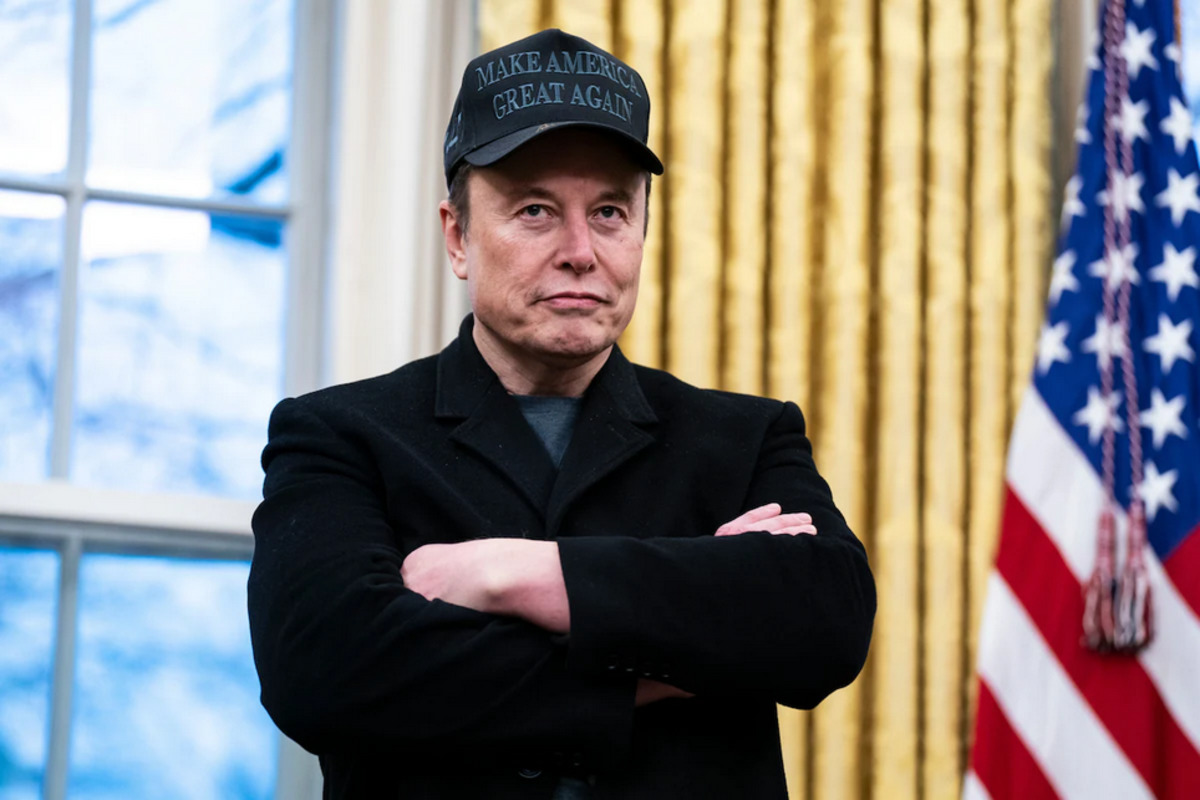
The financial media loves a good historical comparison. Every time Elon Musk's net worth ticks up by ten billion dollars, a flurry of articles inevitably follows, claiming his wealth is actually pocket change compared to Mansa Musa, John D. Rockefeller, or Augustus Caesar. The premise is always the same: modern tech titans are rich, but historical figures were unimaginably richer.
This narrative is completely wrong. It relies on lazy economic math, fundamentally misunderstands liquidity, and ignores how the nature of value has transformed over the last millennium. Comparing a 21st-century tech founder’s paper wealth to an ancient monarch’s absolute control over a geographical region is not just comparing apples to oranges; it is comparing a software algorithm to a physical piece of fruit.
I have spent years analyzing corporate valuations and capital structures. I have watched founders watch their net worth swing by nine figures in a single trading session based on nothing but market sentiment. The obsession with ranking historical wealth reveals a deep ignorance about how wealth actually functions in a globalized, fiat-driven economy.
The Flaw of GDP-Relative Math
The standard argument for the supremacy of historical wealth relies on a metric called "wealth as a percentage of GDP." Writers love to point out that John D. Rockefeller’s fortune peaked at roughly $1.5 billion in the early 20th century, which equated to nearly 2% of the total US economic output at the time. They argue that for Elon Musk to match that, he would need to control over $500 billion.
This math is deeply flawed.
First, GDP measurements for the 19th and early 20th centuries are notoriously imprecise retrofitted estimates. Second, and more importantly, economic output is not a fixed pie. A primitive economy with a low GDP means that a single monopolist controlling a vital commodity—like oil or steel—can easily capture a massive percentage of the total economic activity.
Rockefeller controlled Standard Oil during a period of industrialization when energy options were binary: you used oil, or you stayed in the dark. His wealth was a reflection of structural centralization, not infinite scalability.
Modern wealth operates on an entirely different plane. A tech entrepreneur’s net worth reflects the discounted future cash flows of a global enterprise serving billions of people instantaneously. Musk’s valuation isn't captured from a static national economy; it is priced by a global financial system that manufactures liquidity out of thin air.
The Sovereignty Myth: Wealth vs. Ownership
The absolute worst offenders in this historical wealth debate are those who cite ancient rulers like Mansa Musa of Mali or Akbar the Great of the Mughal Empire. The common claim is that Mansa Musa was "richer than anyone could describe" because he controlled the trans-Saharan gold trade.
Let's break down the mechanics of absolute monarchy versus modern property rights.
Mansa Musa did not have a bank account. He did not own shares in Mali Corp. He was the state. To conflate the total economic output of an empire with the personal wealth of its ruler is an amateur economic error.
If a king owns everything in his kingdom, he effectively owns nothing that can be valued by a market. There is no counterparty to buy his empire. There is no secondary market for the 14th-century Malian state.
- Historical Wealth: Defined by physical coercion, geographic limitation, and absolute control over scarce raw materials. It was illiquid, impossible to transfer without war, and highly unstable.
- Modern Wealth: Defined by fractional ownership, global liquidity, and intellectual property. It can be moved across borders at the speed of light and borrowed against without triggering a tax event.
Imagine a scenario where Mansa Musa wanted to liquidate 10% of his wealth to fund an infrastructure project without crashing the value of gold. He couldn't. In fact, historical records show that his famous pilgrimage to Mecca, where he distributed gold freely, single-handedly devastated the local economies of the Mediterranean by causing massive inflation. His wealth was so blunt, so unrefined, that using it actively destroyed its own purchasing power.
Conversely, a modern billionaire can use equity as collateral to secure billions in low-interest loans from global syndicates, deploying capital anywhere on earth within hours, all while their core asset remains untouched and compounding. That is actual economic power, not an abundance of yellow metal.
The Liquidity Illusion
People look at the Bloomberg Billionaires Index and assume the number next to a name represents cash in a vault. It does not. It represents the perceived value of a specific equity stake at a specific second in time.
The contrarian truth here cuts both ways: modern billionaires are both poorer and far richer than the public realizes.
They are poorer because they cannot actually cash out. If a founder attempted to dump $100 billion of their company's stock onto the open market tomorrow, the share price would crater before the first 5% of the order cleared. The market relies on the assumption that the insider will not sell. Therefore, the total net worth figure is a mathematical fiction.
However, they are far richer in terms of systemic leverage. The modern financial system allows individuals to weaponize paper wealth through derivatives, debt, and corporate structures in ways that would make historical tycoons dizzy.
Andrew Carnegie sold Carnegie Steel to J.P. Morgan in 1901 for $480 million. It was paid in physical gold bonds that had to be stored in a specially built vault in New Jersey. That wealth was static. It was safe, but it was dead weight. It could not be leveraged to control industries outside of its immediate cash value.
A modern billionaire with $100 billion in stock can control a trillion-dollar ecosystem through dual-class voting shares, board appointments, and political lobbying networks. They do not need to own the underlying physical assets to dictate how those assets are deployed globally.
The Cost of Living the Billionaire Life
To truly understand why modern wealth eclipses historical wealth, look at purchasing power parity and quality of life. This is where the "historical billionaires were richer" argument completely falls apart.
What could John D. Rockefeller buy with his billions in 1910?
- He could buy the finest horse-drawn carriages or early automobiles that topped out at 40 miles per hour.
- He could buy a massive mansion that was freezing in the winter and stifling in the summer.
- He could buy the best medical minds of his era, who would likely treat his ailments with bloodletting, mercury, or basic aspirin.
Rockefeller died in 1937. He could not buy an antibiotic. He could not buy a flight across the Atlantic. He could not access the sum total of human knowledge on a handheld slab of glass.
A middle-class individual today has access to a level of medical care, communication, and transportation that the richest men of the Gilded Age could not procure with all the gold in Fort Knox. A modern billionaire doesn't just have more money than historical figures; they live in a completely different technological reality. Their wealth buys them access to life-extension technologies, private aerospace travel, and global influence that renders historical wealth comparisons utterly meaningless.
The Downside of Modern Capitalization
To be fair, this modern system of hyper-financialization has a massive vulnerability. Historical wealth, for all its inefficiency, was grounded in the physical world. If you owned the land, the silver mines, or the oil wells, you owned something tangible that survived political upheavals and market crashes.
Modern wealth is fragile. It is built on a foundation of faith, interest rates, and regulatory goodwill.
If the global financial system experiences a systemic liquidity crisis, or if a tech company's core algorithm is rendered obsolete by a sudden shift in technology, hundreds of billions of dollars of "wealth" can vanish from the ledger in days. We saw this during the dot-com crash, the 2008 financial crisis, and the crypto meltdowns of the early 2020s.
Historical titans faced the risk of palace coups and peasant revolts. Modern titans face the risk of a shifting decimal point on a server in New York or Tokyo.
Stop Asking Who Is Richer
The premise of comparing these eras is fundamentally broken. Stop trying to figure out if Elon Musk has surpassed Marcus Licinius Crassus.
Crassus owned a private fire brigade in ancient Rome and bought burning buildings for pennies on the denarius before ordering his slaves to put out the fire. It was a brutal, localized, physical racket. Modern billionaires run abstract, globalized, digital rackets.
The value of modern wealth is not measured by the weight of the metal or the acreage of the estate. It is measured by the velocity of the capital and the scale of the network it controls. On those metrics, the tycoons of antiquity are not even in the same league. They were playing checkers in a sandbox; modern capital is playing chess across dimensions they didn't even know existed.