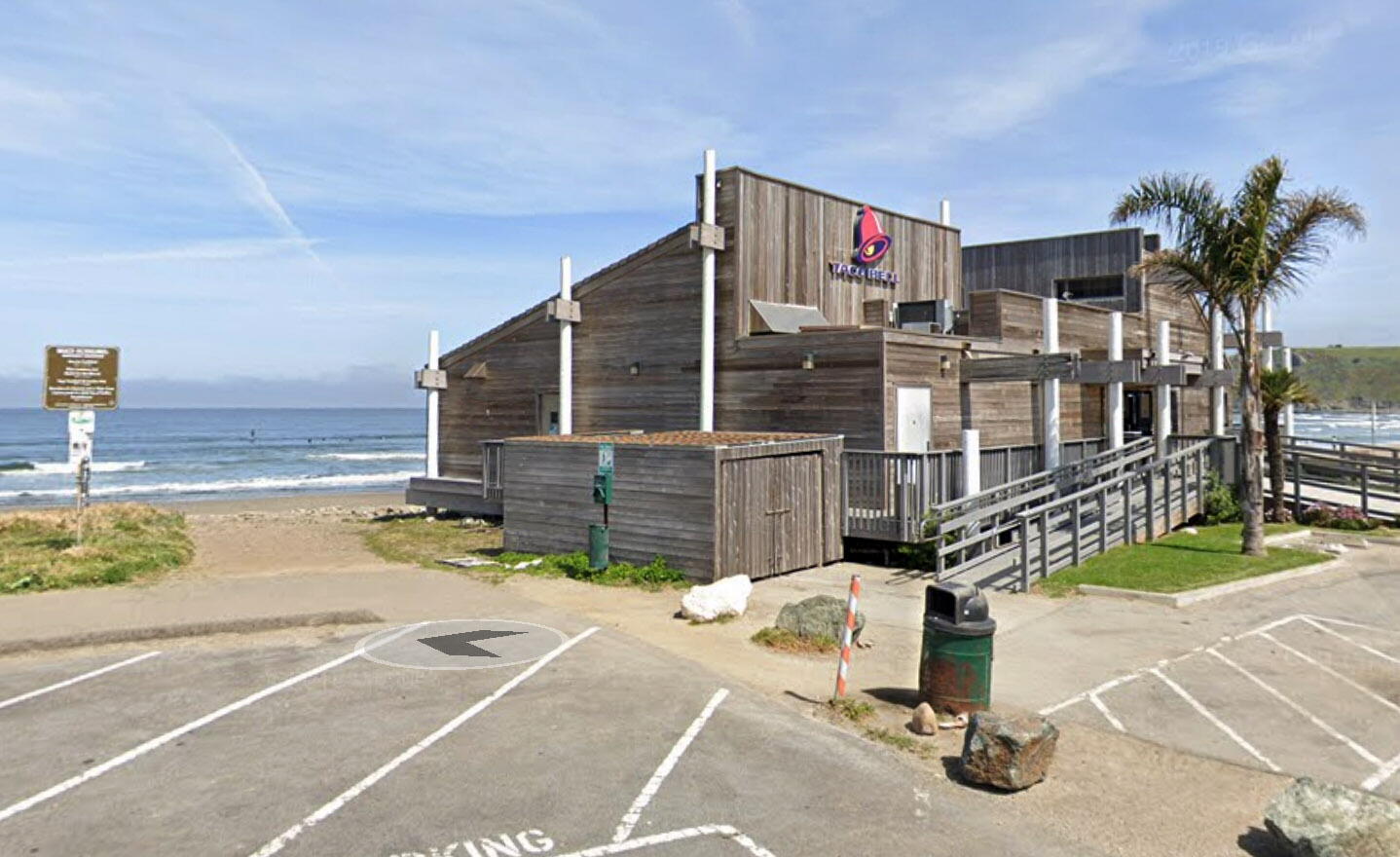
The Pacifica, California Taco Bell Cantina, situated directly on the sand at 5200 Coast Highway, operates as a case study in extreme experiential retail. While casual observers focus on the novelty of high-surf events crashing against the patio retaining wall, the underlying mechanics involve a calculated trade-off between catastrophic physical risk and disproportionate brand equity. Standard quick-service restaurant (QSR) unit economics rely on drive-thru throughput, standardized real estate footprints, and predictable maintenance schedules. The Pacifica location abandons these fundamentals in favor of a high-variance, high-visibility operating model where environmental volatility directly fuels consumer demand.
The Experiential Arbitrage of Extreme Location
In traditional retail real estate, proximity to dynamic natural hazards reduces property valuation due to insurance premiums, structural depreciation, and operational downtime. At Pacifica State Beach, this relationship inverts through a mechanism known as experiential arbitrage. The physical vulnerability of the structure—sitting meters from the high-tide line of the Pacific Ocean—transforms a commoditized fast-food transaction into a destination event.
Consumer behavior during high-surf advisories demonstrates this inversion. Under normal meteorological conditions, severe coastal weather depresses foot traffic across standard retail corridors. At this specific storefront, large swell events act as an organic customer acquisition engine. Swell energy generated by North Pacific winter storms travels thousands of miles, shoaling abruptly against the bathymetry of Linda Mar Beach. When wave heights exceed standard thresholds, the visual spectacle of whitewater impacting the seawall draws spectators, surfers, and social media users to the exact point of sale.
This dynamic relies on three distinct operational pillars:
- Zero-Cost Media Generation: Every major swell event triggers user-generated content across short-form video platforms. The contrast between a mass-market menu and violent ocean energy creates immediate visual friction, driving algorithmic distribution without corporate advertising spend.
- Brand Halo Effect: The location functions as a physical billboard for the broader parent corporation. Even if the individual store's net operating income (NOI) suffers from elevated capital expenditures, the positive brand association transfers to thousands of inland, high-margin drive-thru locations.
- Menu Premiumization: Unlike standard suburban units, the Cantina format introduces high-margin alcoholic beverages—specifically beer, wine, and frozen twisted freezes—alongside exclusive merchandise. This shifts the average ticket size upward, offsetting lower transaction volumes during inclement weather.
Hydrodynamic Stressors and Structural Realities
Understanding why the building remains standing during winter storm surges requires examining the physical forces at play. Linda Mar Beach is a crescent-shaped bay, partially sheltered from direct northwest swells by Pedro Point to the south, yet fully exposed to west and west-northwest groundswells. When high tides coincide with long-period swells—often exceeding 15 to 20 seconds between wave crests—the water level at the shoreline rises significantly due to wave setup and storm surge.
The restaurant structure itself does not sit directly on loose beach sand; it is anchored to a reinforced concrete foundation and protected by an engineered riprap revetment and vertical seawall. However, repeated hydrodynamic loading creates specific failure points that facility managers must continuously mitigate.
- Scour and Undermining: As waves reflect off the vertical seawall, downward-directed energy erodes the sand at the base of the structure. If scour depths exceed the footing depth of the seawall, the barrier risks tilting or collapsing seaward.
- Saltwater Intrusion and Corrosion: Airborne salt spray penetrates HVAC systems, electrical conduits, and structural steel reinforcements. Standard commercial kitchen equipment—fryers, walk-in condensers, and digital point-of-sale terminals—experiences accelerated oxidation, shortening replacement cycles from ten years to fewer than four.
- Overtopping and Drainage Failure: When waves overtop the patio wall, seawater floods the exterior deck. If the scuppers and trench drains are clogged with kelp, sand, or debris carried by the surge, water pools against the sliding glass doors, testing the hydrostatic seals of the building envelope.
The operational response to these stressors follows a strict preventative maintenance protocol rather than reactive repair. During forecasted king tides or high-surf warnings, site management deploys temporary flood barriers, secures exterior furniture to prevent projectile damage, and shifts staffing models to accommodate sudden surges in spectator foot traffic paired with potential utility interruptions.
The Psychological Mechanism of "High Vibes" During Hazard Events
The persistence of positive consumer sentiment—colloquially described as high vibes—during hazardous weather events is rooted in behavioral psychology, specifically the concept of benign masochism and controlled risk. Coined by psychologist Paul Rozin, benign masochism describes the enjoyment of negative or threatening stimuli when the brain recognizes that no actual bodily harm will occur.
Customers standing behind the glass partition or on the elevated deck experience the sensory inputs of an approaching ocean swell: the low-frequency acoustic rumble of breaking water, the vibration of the foundation, and the visual scale of the wave face. Because the reinforced architecture separates the consumer from the lethal kinetic energy of the ocean, the brain processes the threat as thrilling rather than terrifying.
This psychological framing alters standard customer service metrics. In a conventional QSR environment, a twenty-minute wait time during a rush generates negative sentiment scores and order cancellations. At the Pacifica location during a major swell event, wait times become secondary to the environmental spectacle. The queue transforms into an observation deck. Customers tolerate delays, wet floors, and crowded conditions because the primary product being consumed is the proximity to the ocean, not the caloric intake.
Regulatory Constraints and Coastal Commission Dynamics
Operating a commercial food-service establishment on the California coast involves navigating one of the strictest land-use regulatory frameworks in the United States. The California Coastal Commission (CCC), established under the California Coastal Act of 1976, holds jurisdiction over development, shoreline armoring, and public access along the coast.
The Pacifica Taco Bell benefits from a critical regulatory advantage: legacy status. Built prior to the strictest modern interpretations of coastal setback mandates, the structure is grandfathered into its current footprint. Under current CCC guidelines, constructing a new commercial retail building directly on an active sandy beach would face near-certain rejection due to projected sea-level rise and coastal erosion models.
This regulatory environment creates significant operational constraints for the existing site:
- Prohibition of Expansion: The footprint cannot expand seaward. Any structural modifications must occur within the existing building envelope or retreat landward.
- Armoring Restrictions: While emergency repairs to the existing seawall are generally permitted to protect an established structure, upgrading or expanding shoreline armoring requires extensive environmental impact reports and mitigation fees, as vertical walls accelerate the loss of public sandy beach down-coast.
- Public Access Mandates: The operator cannot restrict public access to the beach adjacent to the property. Even during dangerous surf conditions, the patio perimeter must coexist with public coastal trails and beach access points, creating complex liability boundaries when spectators cross from public sand onto private commercial decks.
The Cost Function of Coastal Flagship Operations
To evaluate whether this business model is replicable or strictly an anomaly, analysts must examine its specific cost function. A traditional QSR model optimizes for low capital expenditure (CapEx) and predictable operating expenditure (OpEx). The coastal flagship model inverts this structure, accepting elevated costs across multiple line items in exchange for unquantifiable marketing returns.
The primary financial variables include:
- Property and Casualty Insurance: Commercial policies for structures in FEMA Special Flood Hazard Areas—specifically Zone VE, which denotes coastal high-hazard areas with velocity wave action—carry massive deductibles and strict coverage caps. Self-insurance pools at the corporate level frequently absorb the risk that third-party underwriters refuse to price competitively.
- Labor Allocation and Training: Staff turnover in coastal service markets is compounded by seasonal traffic volatility. A sunny weekend in July requires maximum kitchen throughput, while a stormy Tuesday in January might see zero walk-in traffic until a midday swell spike triggers a sudden rush of surfers and spectators. Managers must schedule labor dynamically, relying on cross-trained staff capable of shifting from food preparation to facility maintenance and crowd management.
- Supply Chain Logistics: Highway 1 along the San Mateo County coast is prone to landslides, rockfalls, and closures during the exact winter storm systems that generate massive surf. Delivery trucks supplying frozen goods, produce, and carbon dioxide tanks face frequent rerouting through inland corridors, increasing freight costs and requiring larger on-site buffer inventories despite limited storage square footage.
Limitations of the Experiential Flagship Strategy
While the Pacifica location succeeds as a cultural touchstone, attempting to replicate this strategy across a broader retail portfolio introduces severe diminishing returns and operational hazards.
First, the novelty is strictly finite. A brand can sustain one or two extreme-location flagships before the concept shifts from an authentic anomaly to a contrived corporate stunt. If a chain opens twenty beachfront locations, none of them command singular algorithmic attention during storm events.
Second, climate volatility is accelerating the baseline rate of coastal erosion. Engineered seawalls have finite design lifespans. As sea levels rise and North Pacific storm intensity increases, the frequency of wave overtopping will transition from an occasional winter spectacle to a routine operational disruption. Eventually, the structural maintenance costs and municipal liability pressures will cross a threshold where the physical building becomes uninsurable and structurally unviable.
Third, reliance on spectator traffic introduces acute safety liabilities. While corporate messaging celebrates high vibes, the reality of rogue waves—known locally as sneaker waves—poses a fatal threat to untrained visitors standing near the seawall. If a wave overtops the barrier and injures a customer on the patio, the resulting litigation and regulatory scrutiny would instantly erase years of positive brand equity.
Strategic Execution for High-Risk Experiential Assets
For operators managing legacy coastal assets or evaluating extreme experiential retail locations, survival requires decoupling brand marketing from physical facility management. Corporate leadership must treat the location not as a standalone restaurant expected to meet regional P&L benchmarks, but as a dedicated media production facility with a food-service revenue offset.
Facility managers must implement automated hydrological monitoring, linking local buoy data—such as readings from the National Data Buoy Center stations off Half Moon Bay—directly to store-level operational protocols. When swell height and period metrics cross predetermined thresholds, the store should automatically transition to a restricted service mode: closing exterior decks, locking down non-essential equipment, and deploying trained safety personnel to manage the perimeter before the first wave impacts the wall. By systematizing the response to environmental volatility, operators can capture the cultural and commercial upside of extreme weather without compromising structural integrity or human safety.



