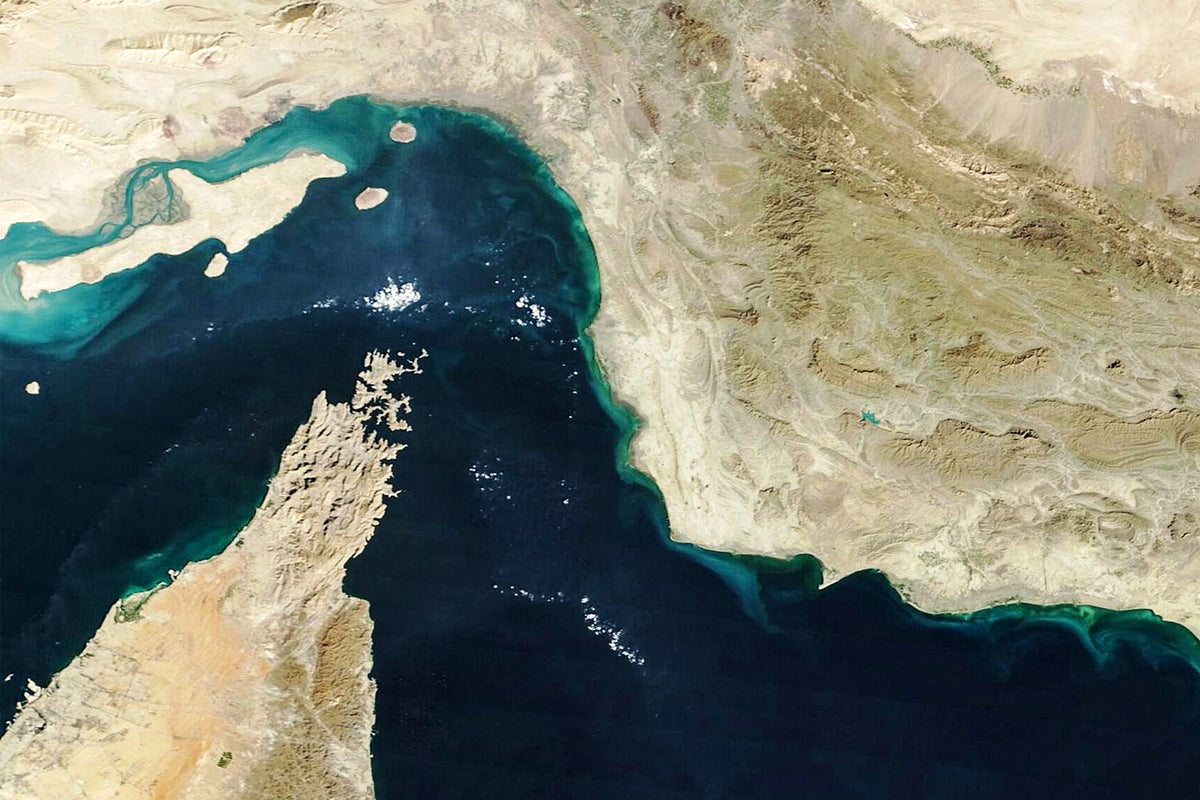
A single rusty tanker sits low in the water, its hull scarred by salt and years of service. It carries nothing but crude oil, yet as it maneuvers through a twenty-one-mile-wide strip of turquoise water, it carries the weight of global stability. This is the Strait of Hormuz. To a navigator, it is a narrow passage between the Persian Gulf and the Gulf of Oman. To a politician, it is a geopolitical chess square. But to the person filling a gas tank in Ohio or the factory manager keeping the lights on in Shanghai, it is the carotid artery of the modern world.
When the Iranian military recently labeled a rumored U.S. plan to blockade this passage as "piracy," they weren't just trading insults in a press release. They were pointing at a pressure point that, if squeezed, could send the global economy into a seizure.
Imagine a merchant sailor named Elias. He is fictional, but his reality is shared by thousands. He stands on the bridge of a vessel longer than three football fields. He knows that nearly thirty percent of all sea-borne oil traded globally passes exactly where he is floating. He looks at the horizon, not for storms, but for the gray silhouettes of fast-attack boats or the shadow of a hovering drone. For Elias, a "blockade" isn't a legal term discussed in Washington or Tehran. It is the sudden, terrifying realization that the water he relies on for his livelihood has become a cage.
The Geography of Anxiety
The Strait is a geographical quirk with outsized consequences. At its narrowest, the shipping lanes are only two miles wide in either direction. Think of it as a ten-lane highway that suddenly narrows into a single-track dirt road, except the cars are carrying millions of gallons of flammable liquid.
The Iranian army’s rhetoric centers on a simple, jagged claim: any attempt by the United States to intercept or redirect ships in these waters constitutes an act of international theft. By calling it "piracy," they aren't just using colorful language. They are invoking a specific legal status that justifies a violent response. If you are a pirate, you are an outlaw of all nations. If the U.S. behaves like one, Iran argues, the rules of engagement vanish.
This isn't just about ships. It’s about the invisible threads of the supply chain. When a threat is leveled at Hormuz, insurance premiums for cargo ships don't just rise; they verticalize. Banks hesitate to issue letters of credit. Energy speculators in London and New York start buying futures, driving up the price of bread in countries thousands of miles away because the cost of transporting wheat just spiked.
The Echo of the Tanker War
We have been here before, though the memory has faded for many. In the 1980s, during the Iran-Iraq War, the "Tanker War" turned these waters into a graveyard of steel. Hundreds of merchant vessels were attacked. The U.S. eventually launched Operation Earnest Will, the largest naval convoy operation since World War II, to protect Kuwaiti tankers.
Back then, the technology was blunt. Today, the stakes are sharpened by precision. We are no longer talking about just sea mines and deck guns. We are talking about swarming autonomous boats, anti-ship missiles that can be hidden in the back of a standard commercial truck, and cyber-attacks that can blind a ship’s navigation system before a single shot is fired.
Consider the irony of the modern blockade. In the past, you needed a massive fleet to stop trade. You needed "Great Walls of Steel." Now, you only need the threat of disruption to achieve the same result. If a single drone strike occurs, the commercial world treats the Strait as closed, even if the water is physically clear. The psychological blockade is often more effective than the physical one.
The Energy Paradox
The tension feels different this time because the world is in the middle of a messy, complicated energy transition. We are told we are moving away from fossil fuels, yet our vulnerability to this specific strip of water has never been higher.
- The Eastward Shift: Most of the oil moving through Hormuz isn't headed for the U.S. anymore. It’s headed for China, India, Japan, and South Korea.
- The LNG Factor: It isn't just oil. Massive quantities of Liquefied Natural Gas (LNG) from Qatar move through the Strait. Without it, the heating systems of Europe and the power grids of Asia flicker.
- The Global Price: Even if a country produces its own oil, it is tethered to the global price. If Hormuz closes, the price of a barrel doesn't care if you drilled it in Texas or Riyadh. It goes up for everyone.
The U.S. military presence in the region is often framed as a stabilizing force, a "policeman of the sea." But from the perspective of the Iranian leadership, that policeman is standing in their front yard with a shotgun. They see the U.S. presence not as a protector of trade, but as a mechanism of strangulation. When they use the word "piracy," they are attempting to flip the script, casting the global superpower as the rogue actor.
The Human Cost of High-Stakes Poker
Behind the "piracy" accusations and the naval maneuvers are people who have no say in the conflict but bear all the risk. There are the fishermen in the port of Bandar Abbas who find their waters restricted. There are the port workers in Dubai who watch the horizon for delays. There are the families in developing nations who will see their food costs double because a tanker was turned around.
The reality is that a blockade of the Strait of Hormuz is the "nuclear option" of economic warfare. It is a move that both sides know would likely trigger a catastrophic spiral. If Iran closes the Strait, they cut off their own economic lifeline as well. If the U.S. attempts to blockade Iranian exports, they risk a regional conflagration that could draw in every major power.
So, why the escalating language? Because in the world of high-stakes diplomacy, words are the only thing you can fire without starting a war. By calling a blockade piracy, Iran is setting a "red line." They are telling the world that they view such a move as an existential threat.
The tension is a constant, low-frequency hum. It’s the sound of a world that has built its entire civilization on a foundation of cheap, moving energy, only to realize that the most important valve in the system is located in a place where trust has run dry.
As the sun sets over the Musandam Peninsula, the shadows of the mountains stretch across the water, reaching toward the Iranian coast. The tankers keep moving, their engines thrumming with a rhythmic, heavy pulse. Each one is a gamble. Each one is a testament to a global order that is held together by nothing more than the hope that nobody actually pulls the trigger.
The water remains calm, but beneath the surface, the current is pulling hard toward a future that no one knows how to navigate.