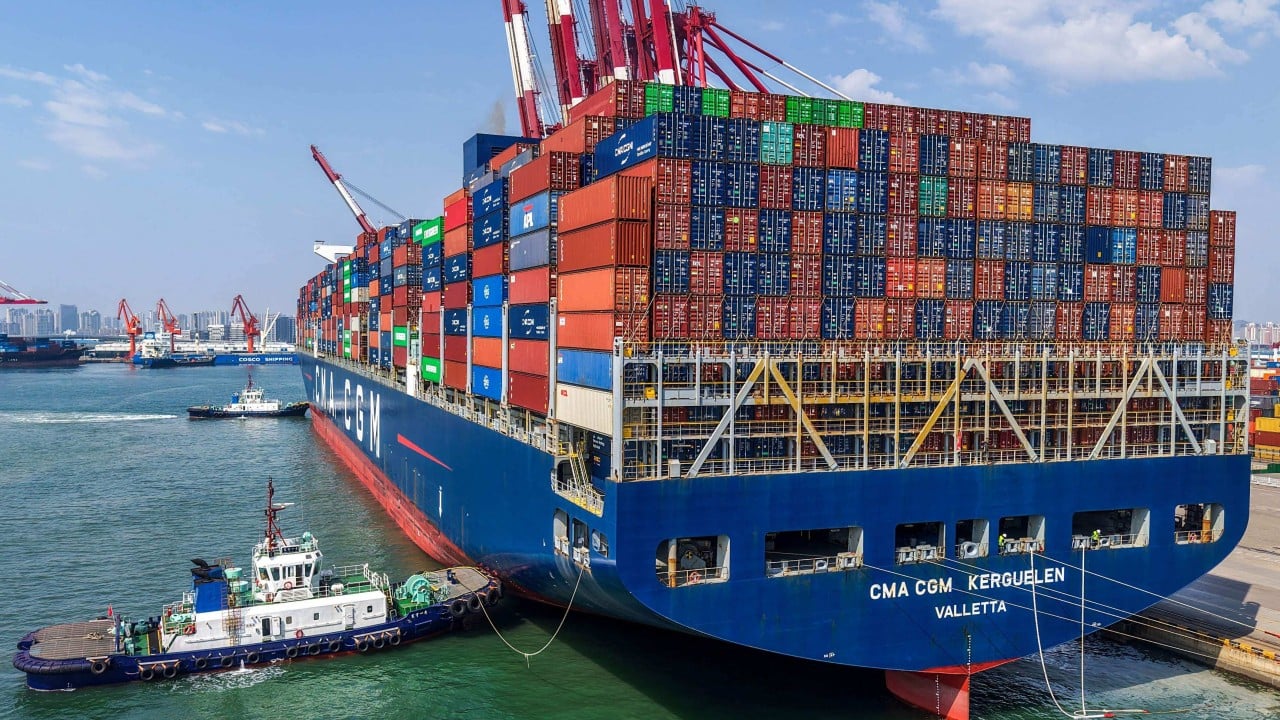
The shipping industry has a dirty little secret. Most ports are painfully slow, and it is costing you money. Every extra hour a massive container ship sits idling at a dock adds thousands of dollars in operational costs. Those costs trickle down to everything you buy. If you want to know who has actually figured out how to move cargo without tearing their hair out, look at East Asia.
The latest Container Port Performance Index, published jointly by the World Bank and S&P Global Market Intelligence, highlights an undeniable reality. Chinese ports are absolutely dominating global supply chains. They aren't just winning; they are leaving Western gateways in the dust. Meanwhile, you can explore other events here: The Anatomy of Space Exploration Technologies Corp: A Capital-Intensive Valuation Breakdown.
The Data Behind the Dominance
Let's skip the vague corporate fluff and look at the actual numbers. The World Bank report evaluates over 400 ports worldwide based on a single, brutal metric: total vessel time in port. This isn't based on self-reported, polished spreadsheets from port authorities. It uses automated AIS tracking data and hard port call records. It tracks the exact minute a ship hits the anchorage or pilot station to the moment it leaves the berth.
The global leaderboard shows China occupying four of the top five spots. Fuzhou sits at the absolute top as the number one most efficient container port in the world. Dalian claims second place. Mawan and Chiwan secure the fourth and fifth spots. Even China's older or more crowded hubs like Ningbo and Xiamen comfortably rank in the global top 16. To explore the complete picture, check out the recent report by Bloomberg.
Compare that to major Western entry points. You won't find Los Angeles, Long Beach, or New York anywhere near the top. They routinely clog up the bottom half of the index.
Global Port Efficiency Top 5 (World Bank Data)
1. Fuzhou (China)
2. Dalian (China)
3. Salalah (Oman)
4. Mawan (China)
5. Chiwan (China)
The Real Reason China Beats the West
Western analysts love to blame labor unions or regulations for their own port delays. While those matter, they miss the bigger picture. China treats its ports like critical infrastructure networks, while the West often treats them like isolated commercial properties.
I've watched how these terminals operate. It comes down to automated systems and relentless infrastructure investment. Chinese ports rely heavily on automated guided vehicles and automated gantry cranes. When a 20,000 TEU mega-ship docks in Fuzhou or Dalian, crane operators often sit miles away in air-conditioned offices using joysticks and screens. The system calculates the most efficient order to stack, move, and load containers. There's very little human error or hesitation.
Western ports often struggle with older layouts and fragmented data sharing. If a truck driver arrives at a US port to pick up a container, they might wait hours just because the port's internal software doesn't talk properly to the trucking company's app. In China, real-time data sharing across the entire logistics chain is mandatory.
Surviving the Burst Congestion Era
The World Bank report highlights a dangerous trend shaping global trade: "burst congestion." This doesn't happen because a port suddenly gets more cargo over a year. It happens because geopolitical crises, bad weather, or Red Sea diversions force ships to arrive out of sequence.
Instead of a smooth, predictable schedule, ports experience sudden, massive clusters of delayed ships arriving simultaneously. Think of it like a highway during rush hour after an accident. It is a short, sharp shock that stretches capacity to the breaking point.
This is where the difference in efficiency becomes a matter of economic survival. The World Bank notes that ports act as either shock absorbers or amplifiers.
- The Amplifiers: When burst congestion hits an inefficient port, the gateway chokes. Ships back up at anchor, delays drag on for weeks, and the chaos ripples through local factories and retail stores.
- The Shock Absorbers: Efficient ports handle the sudden surge. Because their turnaround times are incredibly fast, they process the clumped ships, clear the yards, and reset the system before the next wave hits.
By keeping turnaround times low, Chinese terminals act as global shock absorbers. They prevent local hiccups from becoming full-blown international supply chain meltdowns.
What Shippers Need to Do Next
If you manage logistics, sourcing, or supply chains, you can't just look at manufacturing costs anymore. You have to calculate the hidden cost of port delays.
First, stop relying on single-routing strategies. If your goods only flow through traditional, slow Western gateways, you're exposed to massive volatility. Diversify your arrival points. Look at ports that showed major structural improvements in the World Bank index, like South Africa's Port Elizabeth or Ecuador's Posorja, which are actively tackling their local bottlenecks.
Second, demand data transparency from your freight forwarders. If your logistics partners aren't using real-time tracking to predict burst congestion events, you're flying blind.
The global trade landscape isn't getting any calmer. Geopolitical tensions and unpredictable weather mean schedule reliability will stay messy. Relying on highly automated, hyper-efficient hubs isn't just a competitive advantage anymore. It's the baseline requirement for keeping your business moving.