China's state-backed financial machinery is quietly redrawing the map of global economic power. While the world watches Beijing's manufacturing muscle and technological strides, a much bigger shift has happened under the hood of the global financial system.
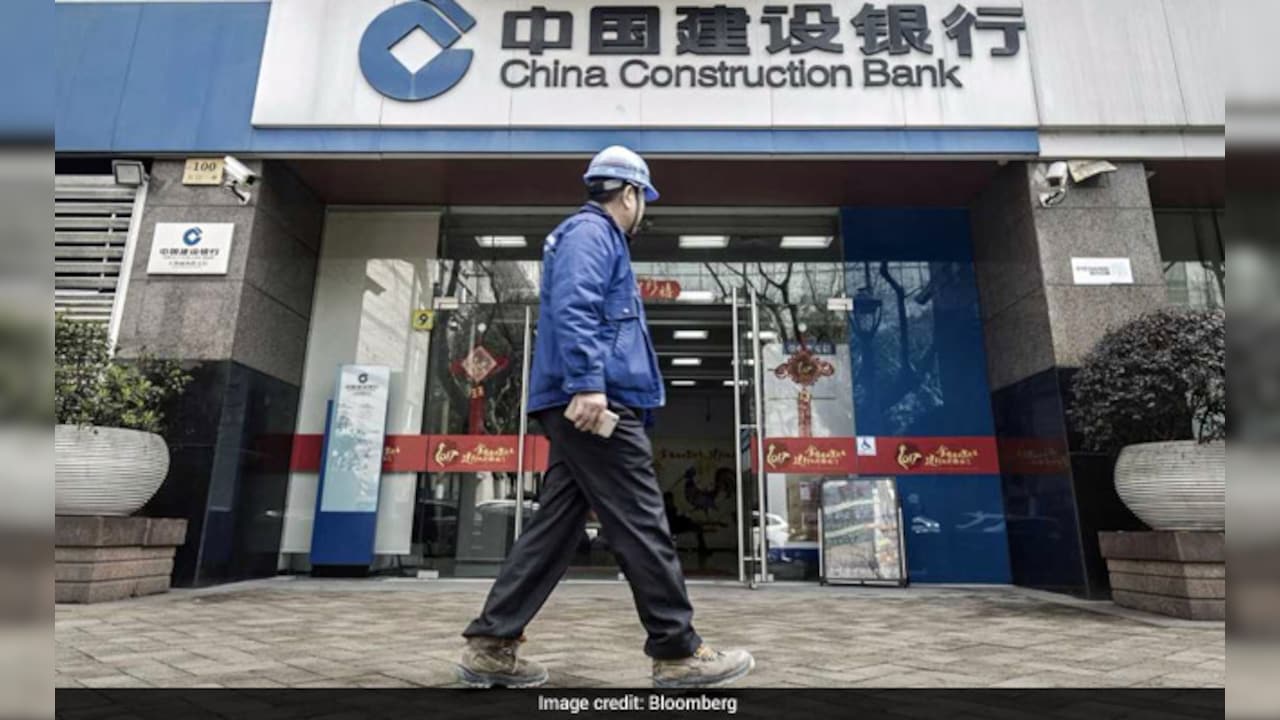
According to the latest global bank rankings by The Banker and S&P Global, Chinese financial institutions now hold seven of the top ten spots globally based on Tier-1 capital. Leading the pack are the undisputed "Big Four"—Industrial and Commercial Bank of China (ICBC), China Construction Bank, Agricultural Bank of China, and Bank of China. These behemoths are joined by other state-controlled giants like the Postal Savings Bank of China, which recently pushed its way into the elite top ten.
Collectively, Chinese banks in the top global rankings hold over $54 trillion in assets. That is more than double the assets held by US banks in the same tier.
Meanwhile, India, the world’s fastest-growing major economy, is nowhere to be seen at the top of this ladder. The State Bank of India (SBI) sits way down, struggling to break past the top 45 by assets, while HDFC Bank lags even further behind.
This is not just a vanity metric. If you think bank rankings are merely spreadsheet gymnastics for Wall Street analysts, you are missing the point. This massive disparity in financial scale is a direct threat to India’s geopolitical and economic ambitions.
The True Power of Giant Banks
To understand why this is a problem for New Delhi, we have to look beyond simple balance sheets. Huge banks do not just store money. They are the primary engines of geopolitical influence.
When a country has banks of this scale, it possesses a domestic financial super-weapon. They can fund massive infrastructure projects, underwrite national champions on the global stage, and absorb economic shocks that would crush smaller banking systems.
Look at how Beijing operates. Its banking giants do not function like Western commercial banks that are beholden only to quarterly shareholder returns. They operate as strategic arms of the state.
- Global Infrastructure Control: Through initiatives like the Belt and Road, these giant banks fund ports, railways, and energy grids across Asia, Africa, and Europe. This builds deep, long-term geopolitical leverage.
- Funding Industrial Champions: When a Chinese firm wants to buy a foreign tech company or build a massive battery plant in Europe, these state banks provide virtually limitless, low-cost capital.
- Weathering Domestic Crises: Even as China faces property market slowdowns, Beijing can deploy its massive banking system to absorb bad debts and pump targeted liquidity into high-tech manufacturing.
India simply does not have this capability. If an Indian enterprise wants to execute a multi-billion-dollar global acquisition, it cannot rely solely on domestic lenders. It is forced to knock on the doors of Wall Street or European investment banks.
Why India is Trapped in a Liquidity Bottleneck
The Indian economy is growing at a rapid clip, but its financial sector is not keeping pace with its industrial ambitions.
India's banking system remains deeply fragmented. We have a handful of large public sector banks and a few highly valued private lenders like HDFC and ICICI. But on a global scale, they are middleweights. SBI, India's largest lender, has assets worth under $900 billion—a fraction of ICBC’s staggering $7.6 trillion.
This structural size deficit creates three critical vulnerabilities for India:
1. The Cost of Capital Disadvantage
Indian businesses face much higher borrowing costs than their Chinese counterparts. Because Chinese banks are massive and heavily subsidized by state policy, they can lend at razor-thin margins. Indian companies, dealing with higher domestic inflation and a less capitalized banking sector, start every global race with a financial weight tied to their ankles.
2. Limited Underwriting Capacity
When a country tries to build high-tech manufacturing ecosystems, from semiconductor fabs to defense manufacturing plants, the capital requirements are staggering. India's banks are highly conservative. Their smaller balance sheets mean they cannot easily underwrite multi-billion-dollar, high-risk industrial projects without exposing themselves to systemic risk.
3. The Yuan Internationalization Threat
Beijing is aggressively using its banking network to bypass the US dollar and internationalize the yuan. As Chinese banks open branches worldwide, they settle trade directly in RMB. If India wants to project power in the Global South, it must compete against a financial system that offers bilateral trade settlement in a currency backed by the world's largest lenders.
The Illusion of Valuation
A common counterargument from Indian market enthusiasts is that Indian banks are incredibly profitable and highly valued. HDFC Bank, for instance, boasts a massive market capitalization relative to its actual asset size.
This is a dangerous comfort.
Market capitalization reflects investor optimism and private profitability. It does not reflect raw, industrial-scale lending capacity. In a geopolitical crisis or a global infrastructure race, the size of your balance sheet matters infinitely more than your price-to-earnings ratio. A high stock price cannot build a deep-water port in the Indian Ocean; cold, hard capital does.
While US banks like JPMorgan Chase still lead in terms of pure profitability and investment banking sophistication, China's state-owned banks are designed for a different purpose: building national power. India is caught in the middle—lacking both the Wall Street-style financial depth of the US and the state-driven scale of China.
Scaling Up India's Financial Defense
If India wants to be a true global superpower, it cannot rely on a banking system designed for domestic retail lending. Structural changes are required to build financial muscle that matches its geopolitical weight.
First, India needs to accelerate the consolidation of its public sector banks. Having dozens of small, competing state banks makes no sense. We need three or four massive, well-capitalized public lenders that can compete internationally.
Second, the government must actively support the creation of specialized development finance institutions. These entities should focus solely on funding long-term strategic infrastructure and high-tech manufacturing, freeing commercial banks from taking on risky long-term debt.
Finally, Indian regulators must encourage domestic banks to aggressively expand their physical footprints in Southeast Asia, Africa, and the Middle East. If Indian banks are not present in these emerging markets, Indian exporters will always be at the mercy of foreign financial networks.
The gap between Chinese and Indian banking power is not just wide; it is widening. Until India builds financial institutions that can move global markets, its ambitions of becoming a global manufacturing hub and a counterweight to Beijing will remain severely constrained.