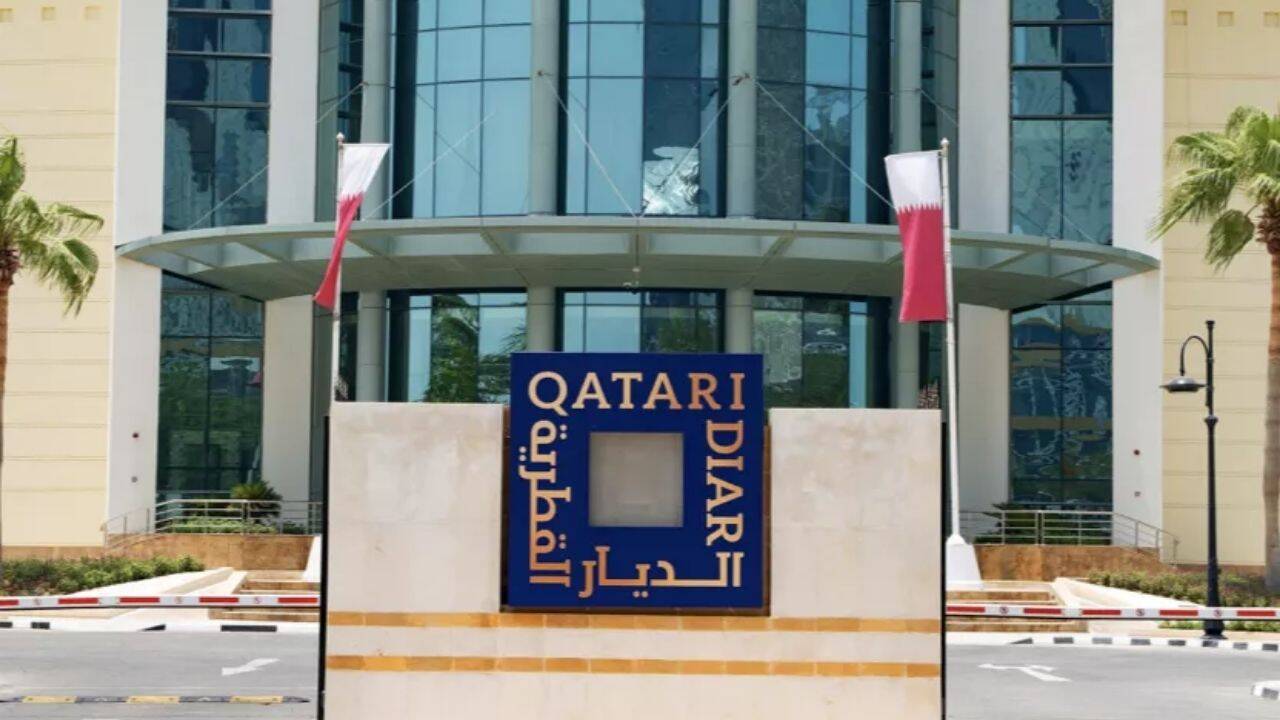
When Qatari Diar pinned a fifty-million-pound price tag—roughly sixty-four million dollars—on a penthouse at the redeveloped Chelsea Barracks, real estate market watchers nodded knowingly. They called it a milestone. They called it proof of resilience. They were wrong.
That staggering figure is not a sign of unstoppable market health. It is a monument to a defensive strategy, erected in a zone where ultra-prime London real estate has stopped behaving like an investment asset and started acting like a secure offshore vault.
Let us look past the marketing gloss of private gardens, bespoke joinery, and views over Belgravia. The decision by Qatari Diar—the real estate investment arm of the Qatar Investment Authority—to market this specific asset right now reveals acute shifting pressures in global wealth preservation.
The Mechanics of the Belgravia Fortress
Chelsea Barracks was never going to be a normal neighborhood development. When the British Ministry of Defense sold the 12.8-acre former army barracks site in 2008 for roughly one billion pounds, it set a benchmark for land value that demanded astronomical returns. Qatari Diar spent more than a decade transforming the historic site into a heavily landscaped, fortress-like enclave of ultra-luxury residences.
Yet, luxury alone does not dictate a fifty-million-pound valuation in the current macro environment. Central London prime residential property has faced relentless headwinds: successive stamp duty hikes, shifting non-dom tax regulations, elevated interest rates, and a global tightening of illicit capital flows through opaque shell companies.
When you list a penthouse at this price point in this climate, you are fishing in a very shallow pool. You are targeting the global ultra-high-net-worth individual who views capital safety as more critical than yield. Traditional rental yields in prime central London sit at a meager two to three percent. Nobody is buying a Chelsea Barracks penthouse for the rental income. They are buying it because a square foot of concrete in Belgravia remains one of the few internationally recognized certificates of financial survival.
The Sovereign Wealth Factor
To understand why this listing matters, look at who owns the asset. Sovereign wealth funds operate on multi-decade horizons. They do not panic-sell. When Qatari Diar posts a headline-grabbing figure, they are anchoring the valuation of the entire remaining portfolio.
Real estate analytics firms often track asking prices as leading indicators. In the ultra-prime sector, asking prices are tactical weapons. By establishing a fifty-million-pound benchmark for the penthouse, the developer puts a floor under the valuation of the townhouses and smaller apartments within the same development.
It is a psychological game played with balance sheets worth billions. If the penthouse clears at or near its asking price, every other property owner in the development feels secure. If it lingers on the market for eighteen months before taking a twenty percent haircut, the contagion spreads to the developer's broader financing terms.
Liquidity Choke Points in the Luxury Tier
The broader market narrative insists that foreign buyers are returning to London in droves. The data tells a more nuanced, cynical story. Transaction volumes for properties priced above ten million pounds have decoupled from the mainstream UK housing market, but they are far from robust.
Buyers at this level are older, more liquid, and hyper-sensitive to geopolitical shifts. They are weighing London against Dubai, Singapore, and Miami.
- Tax Uncertainty: The UK political landscape remains volatile regarding wealth taxes and non-domicile status reforms. Every time a finance minister hints at closing tax loopholes for foreign residents, viewings in Maybell, Knightsbridge, and Chelsea dip.
- Financing Realities: Even billionaires finance portions of their acquisitions when interest rates favor leverage over liquidating productive equity portfolios. At current debt costs, parking fifty million pounds in a non-yielding asset requires serious justification to family offices and boardrooms.
- Oversupply of Starchitect Real Estate: Chelsea Barracks is competing against a crowded field of ultra-prime masterplans, including One Hyde Park, Mayfair Park Residences, and various conversions across the Grosvenor and Cadogan estates.
When every developer builds wellness spas, private members' clubs on-site, and concierge services staffed by former luxury hotel managers, differentiation becomes nearly impossible. Price becomes the only megaphone left.
The Brutal Math Behind the Brickwork
Let us dissect what fifty million pounds actually buys you in terms of square footage and construction cost at Chelsea Barracks. While exact floor plans for the premier penthouse are guarded by strict non-disclosure agreements typical of private client sales, historical phasing data for the development gives us a clear window into the economics.
Prime central London construction costs have soared due to supply chain friction, labor shortages, and stringent sustainability mandates. Achieving the rigorous environmental standards required for a modern masterplan of this scale means utilizing cutting-edge geothermal heating, specialized glazing, and proprietary materials.
[Development Cost] + [Land Premium (2008 Baseline)] + [Holding Costs] + [Sovereign Margin] = Listing Price ($64M+)
The developer is not just pricing the bricks and mortar. They are pricing the invisible infrastructure of exclusivity: private security details, biometric access points, subterranean parking networks designed to keep paparazzi and protestors at bay, and acres of private green space in the heart of zone one.
The Broader Signal for Global Capital
Why should anyone outside the global one percent care about a luxury penthouse in West London? Because these mega-listings act as pressure gauges for global capital mobility.
When sovereign wealth entities double down on trophy domestic real estate assets, it signals a lack of attractive alternatives in industrial or productive sectors globally. It represents a flight to absolute tangibility. In an era marked by regulatory crackdowns, currency fluctuations, and shifting trade blocs, physical land in a stable legal jurisdiction remains the ultimate hedge.
Qatari Diar's listing is not an invitation to celebrate the vibrancy of the London property market. It is a calculated stress test. It measures whether the world's remaining fortunes are still willing to pay top dollar for a slice of traditional British aristocratic geography, or if the fortress gates are finally closing on an era of unchecked luxury hyper-inflation.
The market will give its answer not in press releases, but in the quiet, unannounced closure of a notary ledger behind closed doors in Mayfair.