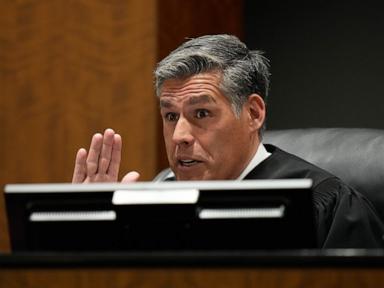
lawyers love to talk. They love it even more when the cameras are rolling and the stakes are impossibly high. But a Utah judge just gave a harsh reality check to the state attorneys handling the high-profile Charlie Kirk murder case.
Judge Tony Graf Jr. found Deputy Utah County Attorney Christopher Ballard in civil contempt on Friday. Why? Because Ballard apparently forgot that the Constitution guarantees a defendant the presumption of innocence until a jury says otherwise. You can't just go around telling reporters there is ample evidence to convict someone before the trial even starts.
It is a massive blunder. It exposes a growing, ugly trend in high-stakes criminal justice where the court of public opinion matters just as much as the actual courtroom. But while the defense team wanted this slip-up to kill the death penalty option for Tyler Robinson, the man accused of killing the conservative activist, the judge didn't blink. The death penalty stays. The prosecutor gets a slap on the wrist. The legal circus rolls on.
The Media Circus and the Gag Order Violation
The whole mess started because neither side can stop spinning the narrative. Back in September 2025, conservative political activist Charlie Kirk was shot in the neck while addressing a massive crowd at Utah Valley University. It was a chaotic, public assassination. Authorities quickly arrested 23-year-old Tyler Robinson and charged him with aggravated murder.
Because of the explosive political nature of the victim, Judge Graf issued a strict pretrial publicity order almost immediately. The rules were simple. Don't try the case in the press. Don't say things that could taint the local jury pool.
Ballard blew right past those boundaries. The defense team accused the prosecution of embarking on a full-blown media tour. They weren't completely wrong. Ballard spoke to multiple media outlets, explicitly commenting on the strength of the state's case and asserting that the evidence against Robinson was overwhelming.
Utah County Attorney Jeff Gray actually took the stand during the virtual hearing to defend his office. He claimed they were just trying to set the record straight. He said the media was running wild with misleading stories. That might be true, but it doesn't excuse a prosecutor discarding professional ethics to win a PR war.
The ATF Ballistics Report Spin War
To understand why the prosecutor started talking to reporters in the first place, you have to look at the battle over an ATF ballistics analysis. This is where the case gets incredibly muddy.
Robinson's defense attorneys filed public court documents revealing that initial federal testing on a bullet fragment recovered from Kirk's body was inconclusive. They tried to frame this as bombshell exculpatory evidence. They essentially implied that because the Bureau of Alcohol, Tobacco, Firearms and Explosives couldn't definitively match the damaged fragment to the rifle found by police, Robinson might be innocent.
The media took that narrative and ran with it. The Daily Mail blasted a headline screaming that the bullet did not match the murder weapon. That single headline ignited a firestorm of online conspiracy theories. People on social media started claiming there was a second shooter or that the entire assassination was staged.
Naturally, the prosecution panicked. Ballard started talking to journalists to explain how ballistics testing actually works. He pointed out that while the bullet was too damaged for a definitive match, the ATF could not exclude the rifle either. He noted the caliber was an exact match.
Judge Graf actually ruled that Ballard's technical explanations about the ballistics report were permissible. Prosecutors have a right to correct outright misinformation. But Ballard didn't stop there. He tacked on extra commentary about Robinson's clear guilt and the overall pile of evidence the state holds. That was the exact point where he crossed the legal line into civil contempt.
Why the Death Penalty Stays on the Table
Robinson's defense attorneys thought they had a golden ticket. They argued that Ballard's comments had already poisoned the minds of potential jurors in Utah County. Their solution was radical. They asked Judge Graf to completely bar the state from seeking the death penalty if Robinson is convicted.
It was a smart tactical play, but it completely failed.
Judge Graf ruled that tossing out the death penalty would be an unconstitutional overreach into prosecutorial discretion. Judges don't get to choose the charges or the maximum punishments; prosecutors do. Stripping away a capital sentence because a lawyer talked too much to a reporter would set a dangerous legal precedent.
Instead of dropping the death penalty, Graf chose a logistical fix. The court will now issue a massive wave of extra jury summonses. They will use aggressive, highly specific questionnaires to weed out anyone who watched the prosecutor's media appearances or fell down a rabbit hole of online conspiracy theories.
It means the jury selection process is going to be an absolute nightmare. It will take weeks longer than originally planned. Taxpayer money will be burned to clean up a mess that the Utah County Attorney's Office created themselves.
The DNA Evidence the Prosecution Wants You to Focus On
Let's look at what the state actually has on Robinson, because despite the inconclusive bullet fragment, the rest of the file looks incredibly heavy. This isn't a circumstantial case built on whispers.
According to court filings, investigators found DNA consistent with Robinson's profile on the trigger of the suspected murder weapon. They found his DNA on the fired cartridge casing left at the scene. They found it on two separate unfired cartridges. They even found it on a towel used to wrap up the rifle.
The defense is already trying to poke holes in this. They argue that forensic reports show multiple people's DNA on some of these items. They want a jury to believe the forensic mix means the science is unreliable. It is a classic defense strategy, but it faces a steep hill when you look at Robinson's text messages.
Prosecutors revealed that Robinson texted his former roommate, who was also his romantic partner, stating he targeted Kirk because he had enough of his hatred. That text message is a devastating piece of evidence for the defense. It establishes intent, motive, and premeditation in a single sentence.
The Battle Over Witness Testimony
The legal sparring isn't just about the press. The two sides just went to war over how the preliminary hearing will function. That crucial hearing is set for July 6, 2026. It will decide if the state has enough probable cause to push this case to a full criminal trial.
Robinson's defense team fought hard to force his former roommate to testify live and in person during this upcoming hearing. They wanted the chance to grill the roommate on the stand, challenge their credibility, and dissect the context of those incriminating text messages.
Judge Graf shut that down too. He denied the request, ruling that a preliminary hearing is not a trial on the merits of the case. It is just a gateway. Under Utah law, prosecutors can use recorded statements from key witnesses at this stage rather than forcing them to stand in front of a crowded courtroom before the real trial even begins.
Graf noted that the defense will have plenty of time to confront witnesses and challenge their credibility later, assuming the case proceeds to a jury trial. For now, the recorded statements are more than enough to establish probable cause.
Legal Ethics Matter Even in High Profile Cases
The contempt finding against Christopher Ballard should serve as a stark warning to prosecutors everywhere. When a high-profile figure is killed, the pressure to look competent and controlled in front of the public is immense. But the rules of criminal procedure exist for a reason.
When prosecutors use the media to bolster their cases, they jeopardize the integrity of the entire judicial system. If a jury pool becomes too corrupted, convictions get overturned on appeal. Trials get moved to distant counties at immense cost. Sometimes, guilty people walk free because a fair trial becomes literally impossible.
Ballard wanted to fight back against a dishonest Daily Mail headline, which is understandable. The spread of misinformation surrounding the Kirk assassination is a legitimate problem. But a seasoned prosecutor must know where the line sits. You explain the science, you reference the public filings, and you shut your mouth about the defendant's guilt.
What Happens on July 6
The focus now shifts entirely to the July 6 preliminary hearing. Robinson has still not entered an official plea of guilty or not guilty. That will happen after the judge reviews the core evidence and officially sends the case to trial.
If you are following this case, ignore the social media noise about secondary shooters and hidden ballistics reports. Focus on the DNA profiles and the text messages. That is the battlefield where this case will actually be won or lost.
The defense will continue to use every procedural error by the state to push for a plea deal or a reduction in charges. The prosecution will have to operate under an intense microscope, knowing that Judge Graf has zero patience left for media stunts.
Expect a tense, heavily secured environment at the Fourth District Court in Provo. Cameras will be allowed in the courtroom, meaning the public will finally see the real evidence instead of the sanitized versions leaked to reporters. Keep your eyes on how the defense handles the roommate's recorded statements, because that will hint at their long-term strategy for the trial.