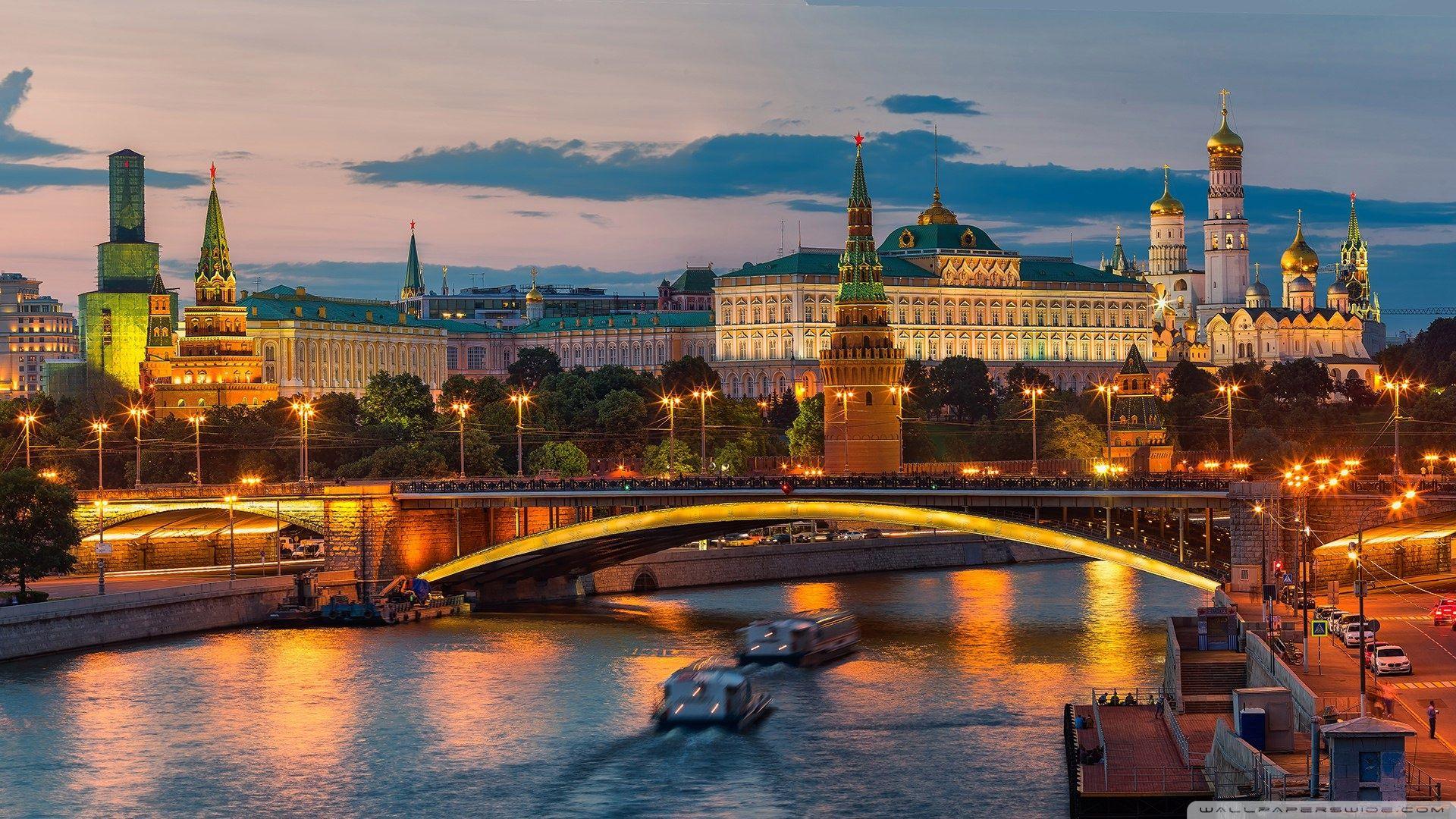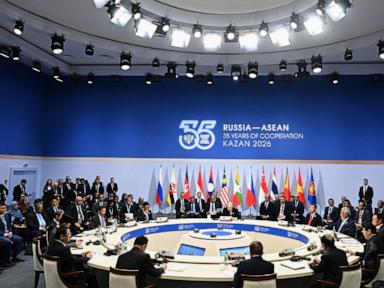
The rain in Sochi does not fall like the rain in Jakarta. In the Russian resort town, it comes down cold and sharp, slicking the black asphalt outside the grand congress halls where the heating is cranked high enough to make the tropical delegations sweat through their wool suits. Inside, the air smells of heavy carpets and dark coffee.
For the leaders of Southeast Asia, this is a long way from home.
Geopolitics is often written about as a series of chess moves, cold and calculated, played by bloodless figures on a map. We see the handshakes on television. We read the joint communiqués packed with sterile diplomatic phrasing. But behind the heavy oak doors of the Russia-ASEAN summit, the reality is far more human. It is about survival. It is about a group of rapidly growing nations looking at a rapidly fracturing world and trying to figure out how to keep the lights on for their combined 600 million citizens.
Russia, isolated by the West and seeking new anchors for its economy, looked East. Southeast Asia, wary of becoming collateral damage in the escalating tug-of-war between Washington and Beijing, looked for balance. When they met, the true currency on the table wasn’t just rubles or dollars.
It was energy. It was security. It was the quiet anxiety of the future.
The Quiet Geography of Interdependence
Consider a hypothetical shopkeeper in Manila or an underpaid tech worker in Hanoi. They do not think about maritime borders or defense treaties when they wake up at five in the morning. They think about the cost of electricity. They think about whether the grid will hold during the next heatwave.
That is where the abstract agreements signed in Sochi touch the ground.
Southeast Asia is hungry. Its factories are humming, its cities are expanding at a breathless pace, and its digital infrastructure is exploding. To feed that growth, it needs raw power. Russia happens to possess it in abundance. For decades, the relationship between these two regions was defined by old Soviet-era military ties—Vietnamese officers training in Russian academies, Indonesian generals buying Sukhoi jets. But military hardware is a luxury. Energy is a necessity.
During the summit, the conversation shifted from the hardware of war to the architecture of peace.
The delegates talked about oil, liquefied natural gas, and the silent promise of civilian nuclear technology. For a country like Vietnam, which has faced looming energy crunches as its manufacturing sector balloons, the prospect of Russian state-backed nuclear energy isn't an ideological statement. It is a lifeline. It is the difference between a functional economy and rolling blackouts that shutter factories and leave millions in the dark.
The Balancing Act on a High Wire
Walking into a room with Vladimir Putin requires a specific kind of diplomatic acrobatics, especially for nations that rely heavily on Western markets to sell their microchips, sneakers, and agricultural goods.
The tension in the summit rooms was palpable.
Every leader from the Association of Southeast Asian Nations (ASEAN) knew that every smile, every signed memorandum of understanding, and every joint statement would be scrutinized by analysts in Washington. The risk of secondary sanctions hangs over Asian banks like a persistent fog. One wrong step, one overly enthusiastic embrace of a sanctioned Russian entity, and a domestic bank could find itself cut off from the global financial system.
Yet, they came anyway.
They came because Southeast Asian diplomacy operates on a fundamental principle: never close a door. In the West, international relations are frequently viewed through a moral lens—alliances of shared values, coalitions of the willing. In Southeast Asia, geography dictates a more pragmatic approach. You do not choose your neighbors, and you cannot afford to ignore a superpower, no matter how distant or controversial.
But the real problem lies elsewhere. It is not just about avoiding Western anger; it is about managing Chinese dominance.
For nations bordering the South China Sea, Beijing’s shadow is massive and constant. By strengthening ties with Moscow, these countries are subtly diversifying their portfolio. It is a quiet message to China that Southeast Asia has other phone numbers to call, other partners who can provide maritime security training, satellite data, and defense equipment. It is balance, maintained on a razor's edge.
Beyond the Oil Fields: The Digital Frontier
The most profound shifts, however, occurred away from the oil pipelines. They happened in the quiet world of servers and data streams.
We often forget that security in the modern era is no longer just about infantry or naval patrols. It is about the integrity of a nation’s cyber networks. At the summit, the discussions took an unexpected turn toward cybersecurity and technological cooperation. Russia, facing a massive cutoff from Western software and digital infrastructure, has been forced to develop its own domestic tech alternatives.
Southeast Asia, currently caught in a tech cold war where they must choose between American software and Chinese hardware, views a third option with immense curiosity.
Imagine a regional government trying to secure its national database without wanting to give the keys to either Washington or Beijing. A partnership with Russian cybersecurity firms offers a strange kind of neutrality. It is a specialized expertise forged in the fires of intense geopolitical conflict. During the sessions, agreements were quietly hammered out to share intelligence on cyber threats and to train Southeast Asian tech specialists in threat mitigation.
This is the hidden architecture of the summit. It is less dramatic than a missile defense sale, but far more consequential for the daily governance of the region.
The Echoes in the Marketplace
When the summit concluded and the motorcades sped away through the damp Sochi streets, the immediate results looked like standard bureaucratic victories. A list of working groups established. A series of declarations on economic cooperation published.
But look closer at what happens next.
In the months following these high-level agreements, the real work begins in the ministries of finance and the ports of destination. The challenge is no longer political; it is logistical. How do you pay for Russian grain or energy when the standard global payment routes are blocked? The answer lies in the creation of alternative financial networks—using local currencies, exploring digital roubles, and bypassing the traditional Western financial highway altogether.
This shift is slow, tedious, and largely invisible to the average citizen. But it is happening.
Every time an Indonesian state enterprise settles an energy contract using rupiah and rubles instead of dollars, the global financial landscape alters just a fraction. It is a quiet erosion of the status quo, driven not by a desire to destroy the existing system, but by the practical need to bypass its obstacles.
The region is not choosing sides. It is choosing itself.
As the delegates boarded their flights back to the humid, bustling capitals of Manila, Bangkok, and Kuala Lumpur, they carried with them a complex reality. They had managed to secure promises of energy and technological cooperation without triggering the diplomatic landmines that Western capitals had laid out. They had maintained their neutrality in a world that increasingly demands conformity.
The rain in Sochi eventually stopped, leaving the streets clean and cold under the grey Russian sky. Thousands of miles away, the sun beat down on the crowded markets of Jakarta, where the neon signs flickered against the twilight, powered by an intricate, invisible web of global compromise.