The coffee at London’s Olympia exhibition centre is hot, but the air carries a distinct chill. Outside, the familiar June drizzle slicks the pavement. Inside, the atmosphere feels heavy with a strange, quiet friction. It is the sound of thousands of people whispering about the end of the world as we know it.
They call it the Alliance for Responsible Citizenship, or Arc. But to the journalists scribbling in the back and the protesters gathering near the gates, it has a simpler name: the anti-woke Davos.
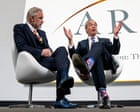
To understand why this room matters, you have to look past the velvet ropes and the heavy security. You have to watch the people. In one corner stands Nigel Farage, grinning his familiar, performative grin, surrounded by a tight huddle of advisers and backroom staff. Not far from him, a British crypto billionaire moves through the crowd with the quiet confidence that only four million pounds in political donations can buy.
This is not a fringe gathering of internet contrarians. It is a highly organized, staggeringly wealthy coalition. Over 4,000 delegates from 85 different countries have descended on London.
For decades, the global elite met in the snowy peaks of Switzerland to map out a globalist, liberal future. That old consensus is cracking. This weekend in London is the physical manifestation of the hammer.
The Network Behind the Curtain
The abstract terms used in political commentary—words like populism or cultural conservatism—often obscure the raw human machinery driving them. This summit was co-founded by Jordan Peterson, the Canadian psychotherapist whose lectures on personal responsibility became a lifeline for millions of disaffected young men, alongside Philippa Stroud, a veteran British Tory peer. They built a bridge. On one side are the voters who feel left behind by a rapidly shifting culture. On the other side are the billionaires willing to fund their resentment.
Consider how power actually shifts. It does not happen overnight in a sudden revolution. It happens in quiet rooms over three days of scheduled speeches. It happens when standard diplomatic boundaries simply dissolve.
This year, the presence of US state officials signals a massive shift in how international relations operate. Sarah B. Rogers, an undersecretary of state for public diplomacy, has become the visible face of an American administration that view European liberal democracies not as allies, but as relics of a dying order. Her presence here is an endorsement. When American officials sit privately with European populist figures to discuss systemic changes to abortion access and institutional censorship, the traditional diplomatic playbook is not just rewritten. It is burned.
The financial engine behind this cultural shift is vast. The funding does not come from small-dollar donations or grassroots raffles. It flows from major investment funds like the Dubai-based Legatum and media moguls who own significant stakes in alternative news networks. American fossil fuel interests and prominent donors have poured capital into this room, viewing the cultural struggle as directly tied to economic freedom.
To these donors, climate policies are not environmental safeguards. They view them as an ideological burden. At last year's event, major backers openly argued that modern civilization is sacrificing economic prosperity for fractional changes in atmospheric carbon. This year, that argument has moved from the radical fringe directly into the mainstream political conversation.
A Convergence of Fractured Factions
The true significance of the summit lies in who is sitting next to whom. The old guard of conservatism is no longer keeping the outer fringes at arm's length. Instead, they are sharing the same microphones.
European populist parties that were once treated as political outcasts are now integrated into a global network. Representatives from Germany’s Alternative für Deutschland, Belgium’s Vlaams Belang, Spain’s Vox, and the Netherlands’ Party for Freedom move through the halls of the Olympia. They are no longer isolated national movements. They are a coordinated international front.
Yet, the most telling dynamic is the tension between the conventional politicians and the populist insurgents. Kemi Badenoch, a prominent figure vying for the soul of the British Conservative Party, takes the stage as a keynote speaker. She is competing directly with Farage for the loyalty of the same crowd.
It is a high-stakes battle for relevance. The traditional right is terrified of being swallowed by the populist wave, so they are adopting its language, its grievances, and its venues. At least forty British Members of Parliament are walking these corridors, trying to figure out which way the wind is blowing.
The room operates on a shared language of existential threat. The guiding themes are clear: deep hostility toward net-zero targets, pervasive climate skepticism, and a traditional Christian evangelical approach to social policy. The legal advocacy groups responsible for major constitutional shifts in the United States, including the overturning of abortion protections, are actively expanding their operations into Britain. They are no longer just watching from across the Atlantic. They are in the room, advising British politicians on how to challenge domestic legislation like the Equality Act.
The Human Cost of the Culture War
Away from the main stage, the rhetoric has real, tangible consequences for ordinary people. When politicians debate the abolition of inheritance taxes or propose bans on foreign nationals accessing social housing, they are not just trading ideological points. They are shifting the boundaries of who belongs in a society.
The language used inside these halls is designed to sound reasonable, even comforting, to those who feel alienated by modern progress. They talk of meritocracy, individual talent, and character. But outside, that same rhetoric often translates into deep social friction. The rise of this coordinated international right coincides with a period of intense polarization on the streets of major British and European cities.
The strategy is brilliant in its simplicity. It connects the economic anxieties of the working class—rising energy prices, scarce housing, and job insecurity—with cultural grievances. By blaming these systemic economic problems on an "ideological zeal" or "woke institutions," the organizers of this summit offer a simple enemy.
The real struggle is not between different political parties. It is between two entirely different ideas of what the future should look like. The old globalist model promised that free markets and liberal values would eventually lift everyone up. That promise failed a lot of people. The crowd inside the Olympia is offering an alternative: a world built on national borders, traditional hierarchies, and a fierce rejection of global institutional control.
The rain outside the Olympia exhibition centre shows no signs of stopping. As the afternoon sessions conclude, attendees spill out into the London grey, checking their phones and adjusting their coats. They leave the building not as isolated activists, but as part of a global apparatus that has discovered its own strength, its own funding, and its own path to power. The old gatekeepers are no longer watching the gates. They are inside, trying to buy a ticket to the show.
Nigel Farage Slams ‘Anti-White Discrimination’ in Britain
This video provides essential context on the specific rhetorical strategies and policy positions that Nigel Farage is championing, directly mirroring the ideological arguments against institutional equality frameworks discussed at the London summit.