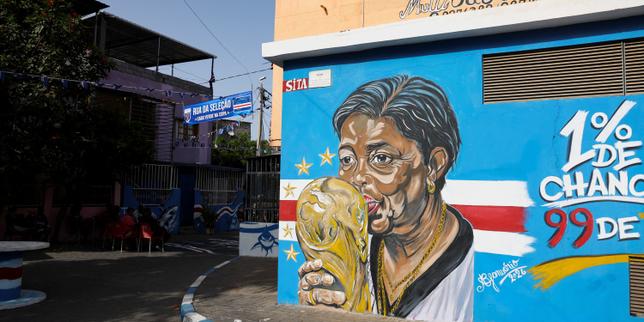
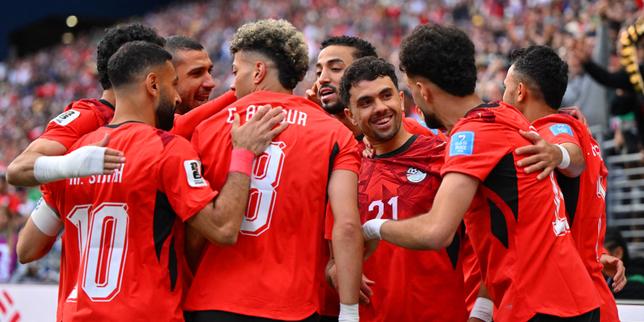
The international football press loves a cheap, feel-good narrative. Right now, they are gorging themselves on Cape Verde. As the tiny island nation prepares to face Lionel Messi’s Argentina, the football media is spinning a lazy yarn about a "fairytale" run built on pluck, magic, and romantic underdog spirit.
It is a beautiful story. It is also entirely wrong.
Calling Cape Verde’s rise a fairytale is not just lazy; it is an insult to the hyper-rational, cold-blooded, and highly sophisticated talent extraction operation the Blue Sharks have actually built. Having spent over a decade analyzing the structural mechanics of international football growth, I can tell you that what is happening in Praia has nothing to do with magic. It has everything to do with exploiting global migration data better than anyone else on Earth.
If you think this match is a David versus Goliath battle of destiny, you are asking the wrong questions. The real story is how a nation of 600,000 people engineered a squad capable of going toe-to-toe with the world champions through ruthless institutional design.
The Myth of the Romantic Underdog
Let us dismantle the premise immediately. When the mainstream media covers Cape Verde, they focus on the small stadiums, the domestic league’s lack of infrastructure, and the sheer statistical improbability of their success. They ask: How can a tiny volcanic archipelago compete with Argentina?
They ask this because they assume international football success requires a massive domestic population and a billion-dollar local league. It does not.
Cape Verde does not rely on its domestic population. They rely on the diaspora.
There are roughly 600,000 people living in Cape Verde. There are over one million people of Cape Verdean descent living abroad, primarily in Portugal, the Netherlands, France, and New England. The Cape Verdean Football Federation (FCF) did not build a traditional youth academy pipeline. They built a highly aggressive, European-wide scouting and recruitment agency.
The Reverse-Colonial Pipeline
Consider the mechanics. Players like Ryan Mendes, Garry Rodrigues, and the wave of talent that built this era were not discovered kicking a ball on the beaches of Mindelo. They were forged in the elite, cutthroat academy structures of the Portuguese Primeira Liga and the Dutch Eredivisie.
[European Academies: Benfica/Sporting/Rotterdam]
       │
       ▼ (Elite Tactical & Physical Education)
[Cape Verdean Diaspora Talent Pool]
       │
       ▼ (Targeted FCF Recruitment & Citizenship Processing)
[The Blue Sharks Senior Squad]
Cape Verde has effectively outsourced its youth development costs to Ajax, Benfica, and Sporting CP. They let Europe spend millions of euros developing raw talent, and then they swoop in with a compelling cultural pitch and a guaranteed passport to international football.
This is not a fairytale. It is a brilliant, highly corporate arbitrage strategy.
Why Argentina is Terrified of This Tactical Structure
The media treats Argentina as the absolute standard of footballing excellence. They look at Lionel Messi, Enzo Fernández, and Alexis Mac Allister and assume technical superiority translates to an easy victory.
But I have watched teams built like Cape Verde derail South American giants before. The blueprint is clear, and it is incredibly ugly for Argentina.
The Fragility of Argentina’s Control
Argentina thrives on rhythm, spatial control, and the genius of a declining but still lethal Messi operating in the half-spaces. They want a clean, predictable match where they can dominate possession and choke teams out through transition play.
Cape Verde is built to disrupt exactly that. Because their players are educated in European academies, they possess a tactical discipline that domestic African squads historically struggled to maintain due to fractured youth setups.
- The Midfield Press: Cape Verde does not park the bus. They employ a hyper-athletic, mid-block press designed to cut off the passing lanes to Messi.
- The Physical Disparity: On a pure physical and athletic metric, Cape Verde's backline and defensive midfield possess a recovery speed that Argentina’s aging attack struggles against.
- Tactical Flexibility: They can shift from a 4-3-3 to a compact 5-4-1 within a single phase of play without losing defensive cohesion.
If you believe Argentina will stroll through this match on pure talent, you are ignoring the tactical reality. Cape Verde is designed to turn football matches into chaotic, physical wars of attrition. And in a single-elimination environment, chaos favors the structured disruptor.
The Dark Side of the Diaspora Strategy
To be fair, this model is not without its severe flaws. If we are going to be brutally honest, the diaspora-first approach creates an institutional expiration date.
I have seen national associations put all their chips on foreign-born talent, only to watch the pipeline dry up when the third and fourth generations lose their cultural connection to the homeland.
| Metric | Domestic-Led Growth | Diaspora-Arbitrage (Cape Verde) |
|---|---|---|
| Development Cost | Extremely High (Millions in Infrastructure) | Near Zero (Outsourced to Europe) |
| Talent Consistency | Linear and Predictable | Volatile (Dependent on European Birth Rates) |
| Squad Cohesion | High (Players grow up together) | Low Initial, Requires Intense Man-Management |
| Sustainability | Permanent | Short-to-Medium Term |
When you rely on players born in Rotterdam or Lisbon, you are at the mercy of those countries' national team setups. If a diaspora player is truly elite, Portugal or France will cap them before Cape Verde can even get a meeting. The Blue Sharks are getting the tier-two elite—players who are phenomenal, but just a notch below UEFA national team standards.
It works spectacularly right now. But do not mistake a temporary market inefficiency for a sustainable, long-term football ecosystem.
Dismantling the Media Narrative
Let us answer the questions the media keeps butchering.
Can Cape Verde actually beat Argentina?
Yes. Not because of "heart" or "spirit," but because Argentina’s defensive transition has shown immense vulnerability against high-pace, direct counter-attacks. If Cape Verde can isolate Argentina's center-backs in wide areas, they will create high-value scoring chances.
Is this the blueprint for small nations?
Only if you have a massive, geographically concentrated diaspora in football-crazy nations. If you are a small island nation with a diaspora in a country that doesn't care about football, this model is completely useless to you. Cape Verde hit the geopolitical lottery with its migration history.
What happens when Messi plays?
You do not stop Messi; you stop the players trying to find him. Cape Verde's entire defensive game plan will not be a man-mark on Messi. It will be a brutal, physical press on the players triggering the transition passes. Cut off the supply line, and Messi becomes an isolated spectator.
Forget the Fairytale, Watch the Engineering
Stop buying into the romantic nonsense being peddled by broadcasters who only look at the map and the FIFA rankings. Cape Verde is not a miracle. They are a case study in modern, globalized sports management.
They have systematically weaponized European training, combined it with a fierce national identity, and executed a tactical identity that minimizes their weaknesses while maximizing their physical advantages.
When the whistle blows, Argentina will not be facing an idealistic group of underdogs happy to be on the big stage. They will be stepping onto the pitch against a cold, calculating, European-forged machine designed specifically to break them.
Expect a cagey, violent, tactically suffocating affair. And if Cape Verde wins, do not call it a miracle. Call it what it is: superior structural engineering.