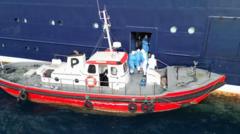
The arrival of a luxury cruise liner at the Port of Las Palmas under a Hantavirus alert is not merely a localized medical emergency. It is a loud, vibrating alarm for an industry that has spent decades perfecting the illusion of sterile luxury while ignoring the stubborn realities of rodent-borne pathogens. When the vessel docks in the Canary Islands, it carries more than just sick passengers; it carries the weight of a regulatory framework that is fundamentally unprepared for a virus that thrives in the very shadows of maritime infrastructure.
Hantavirus is not a standard cruise ship ailment. Unlike the Norovirus outbreaks that frequently make headlines for causing stomach distress across entire decks, Hantavirus Pulmonary Syndrome (HPS) is a severe respiratory disease with a mortality rate that can climb toward 40 percent. It is traditionally associated with rural landscapes and abandoned buildings, spread through the inhalation of aerosolized droppings, urine, or saliva from infected rodents. Its presence on a modern passenger vessel suggests a catastrophic breakdown in integrated pest management and a terrifying oversight in the ventilation standards of the cruise industry.
The Rodent Logistics of Luxury
To understand how a virus typically found in the American Southwest or rural Europe ended up on a mid-Atlantic cruise, you have to look at the belly of the beast. Cruise ships are massive, floating warehouses. On a standard seven-day voyage, a single ship might load over 100,000 pounds of food and drink. This supply chain is the primary vector.
Rodents are masters of hitchhiking. They enter through palletized cargo, dry stores, and even the thick mooring lines that tether the ship to the pier. Once inside, a ship provides the perfect habitat: endless crawl spaces, consistent temperatures, and a labyrinth of wiring and insulation that provides both nesting material and a highway system between decks.
Industry veterans know that "zero-rodent" policies are often more aspirational than actual. While ships employ bait stations and pheromone traps, the sheer volume of incoming supplies makes total exclusion nearly impossible. The crisis in the Canary Islands indicates that an infestation reached a critical mass where human-rodent interaction—or at least the proximity to concentrated waste—became unavoidable. This is a failure of the "behind the scenes" operations that no amount of gold-leafed railings or midnight buffets can mask.
Ventilation Systems as Viral Superhighways
The most chilling aspect of Hantavirus is its transmission via air. When rodent waste is disturbed, the virus particles become airborne. In a household setting, this happens when someone sweeps a dusty garage. On a cruise ship, the risk is magnified by the centralized HVAC systems.
Modern ships rely on sophisticated air filtration, but these systems are designed primarily to manage temperature and common odors, not to neutralize specific viral threats originating within the ductwork itself. If rodents established a colony near a primary air intake or within a ventilation shaft, the ship’s own climate control system effectively became a delivery mechanism for the pathogen.
Questions are now being directed toward the maintenance logs of the vessel in question. Were the HEPA filters serviced on schedule? Was there an unexplained spike in "dust" complaints from passengers in specific cabin blocks? In investigative journalism, the "smoking gun" is often found in the maintenance closet. If a technician disturbed a nest during a routine filter change without proper respiratory protection, they could have inadvertently seeded the air with a lethal dose of Hantavirus.
The Canary Islands Pressure Cooker
Choosing the Canary Islands as a docking point is a decision rooted in both geography and Spanish medical infrastructure, but it presents a massive logistical nightmare. The archipelago is a premier tourist destination. Bringing a "plague ship" into one of the world’s busiest vacation hubs creates a public relations tension that pits the local economy against global health security.
Spanish authorities are now forced to implement a dual-layer containment strategy. They must treat the infected without allowing the pathogen to enter the local ecosystem, and they must oversee a deep-cleaning process that is far more rigorous than a standard turnaround day.
The Quarantine Protocol
- Aerosol Mitigation: Specialists must enter the ship with specialized equipment to stabilize dust and waste before it can be removed.
- Vector Mapping: Determining exactly where the rodents entered and which decks are compromised.
- Genetic Sequencing: Testing the virus to determine its origin, which will tell investigators exactly which port of call provided the infected stowaways.
This isn't just about bleach and scrub brushes. It is about a forensic deconstruction of the ship's sanitation history.
A History of Hidden Infestations
The maritime industry has a long, documented history of "managing" pest problems quietly. While international health regulations require ships to maintain a Ship Sanitation Control Certificate (SSCC), the inspections are often brief and focused on the galley and public areas.
Deep-tier storage areas—the places where a Hantavirus-carrying mouse would actually live—are rarely inspected with the same rigor. Analysts have pointed out for years that the turnaround time between cruises has shrunk. Ships that once spent two days in port now spend eight hours. This "sprint" mentality leaves no time for the deep-tissue inspections required to find a hidden nest behind a bulkhead or inside a cable run.
The Canary Islands incident is the inevitable result of this efficiency-first model. When you prioritize the speed of the guest experience over the slow, tedious work of industrial pest exclusion, you eventually hit a wall. In this case, that wall is a viral outbreak with a high body count.
The Economic Fallout of Bio-Insecurity
Investors in the cruise sector often focus on fuel costs and cabin occupancy, but the real threat to the bottom line is "bio-insecurity." A ship that is pulled from service for a Hantavirus scrub isn't just losing a week of revenue. It is losing its reputation as a safe environment.
The legal ramifications are equally staggering. Personal injury law in the maritime sector is notoriously complex, governed by the Athens Convention and various national laws, but a Hantavirus case is a different animal. It is difficult for a cruise line to argue that a rodent infestation is an "Act of God." It is a controllable environmental hazard.
We are likely to see a wave of litigation that focuses on the "unseaworthiness" of the vessel. A ship that circulates lethal rodent-borne pathogens through its air ducts is, by any reasonable definition, not fit for its intended purpose. This could force a radical shift in how cruise lines design their interior spaces, moving away from porous materials and inaccessible voids toward "clean-room" styles that offer rodents no place to hide.
The Blind Spot in Global Health Monitoring
This crisis also exposes a gap in how we track zoonotic diseases. Most global health surveillance is focused on bird flu, swine flu, or the next respiratory syndrome originating in a wet market. Very few people are looking at the cargo holds of five-star cruise ships.
The international community needs a standardized, mandatory reporting system for shipborne rodent sightings. Currently, these incidents are often handled internally by private pest control contractors. By the time a government health agency hears about it, the ship has moved through three different jurisdictions and several thousand people have already been exposed.
The Canary Islands are now the front line of a battle that should have been fought in the shipyards and during the loading of dry stores months ago. The medical teams in Las Palmas are cleaning up a mess created by a global industry that has become too big, too fast, and too complacent about the small, furry stowaways that have shared our ships since the days of sail.
Rebuilding the Wall of Defense
To prevent the next Canary Islands scenario, the industry must move beyond reactive cleaning. It requires a fundamental shift in maritime architecture and logistics.
Hardened Supply Chains are the first requirement. Every pallet of food must be shrink-wrapped and inspected in a sterile environment before it even nears the pier. This adds cost and time, two things the industry hates, but the alternative is the total loss of a billion-dollar asset to a quarantine order.
Smart Monitoring must be integrated into the ship's infrastructure. We have sensors for smoke, heat, and water leaks. We should have infrared and acoustic sensors in the voids and storage rooms to detect rodent activity in real-time. Waiting for a passenger to see a mouse in the corridor is a failure of 20th-century proportions.
Ventilation Overhauls are non-negotiable. If Hantavirus can be distributed via the AC, then the AC is a weapon. Installing UV-C light arrays and higher-grade filtration within the internal ducting—not just at the intake—is a necessary expense for any vessel carrying more than a thousand souls in a closed environment.
The ship currently sitting in the Canary Islands is a testament to the fact that we cannot outrun biology. We can build bigger engines, taller water slides, and more opulent suites, but we are still operating within an ecosystem where a single infected mouse can bring a titan to its knees.
The immediate task for the authorities in Las Palmas is to save lives and sanitize the vessel. The task for the rest of the world is to stop treating cruise ships as isolated floating palaces and start seeing them for what they are: highly connected, high-risk environments that require a level of bio-security that, until now, has been completely absent from the brochure.
There is no room for the current "wait and see" approach to maritime health. Every day a ship operates without advanced rodent detection and air sterilization is a day it gambles with the lives of everyone on board. The gamble failed in the Canary Islands. It is time to change the rules of the game before the next ship leaves port.
Inspect the logs. Seal the voids. Scrub the air.
If the industry won't do it for the passengers, they will eventually be forced to do it for the insurers, as the cost of a Hantavirus quarantine begins to outweigh the cost of doing things right. This isn't just a health crisis; it's a structural failure of a global travel model that forgot that nature doesn't care about your five-star rating.