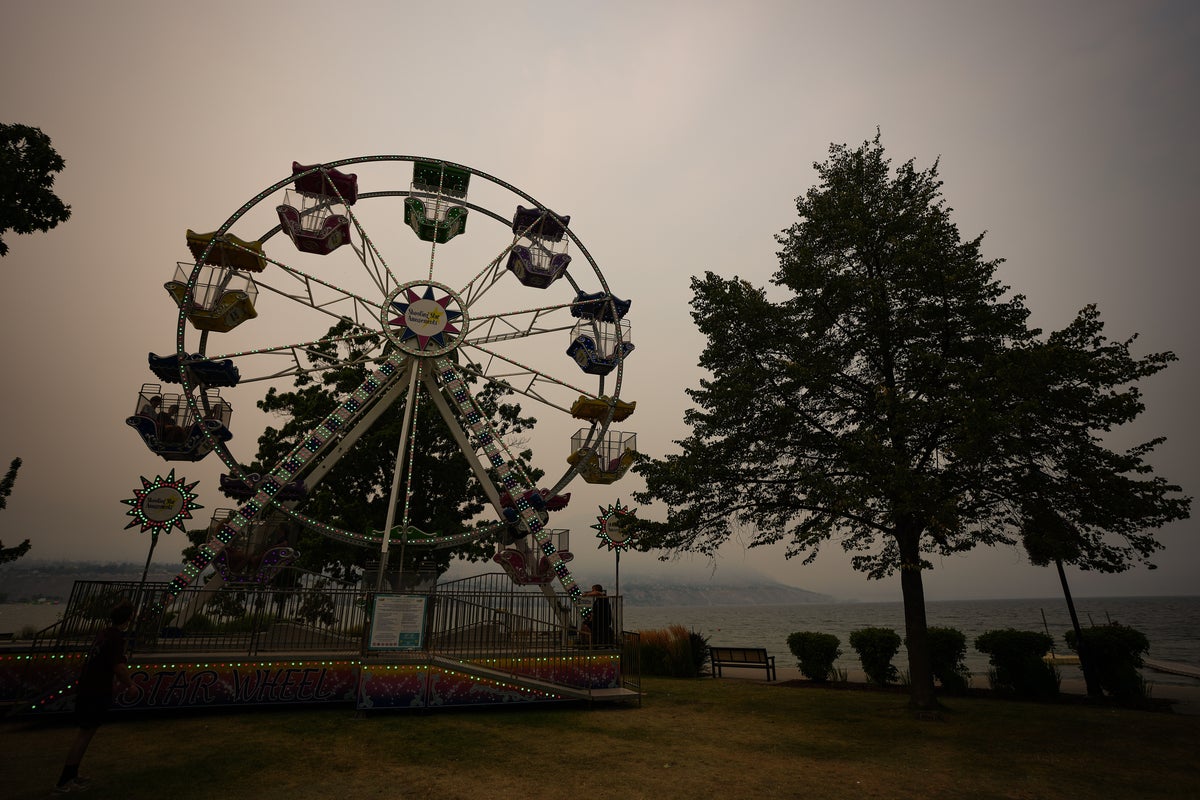
Every time a match gets struck in the Canadian timberlands, cable news anchors start dusting off their gas masks. We get the same breathless panic porn. Maps drenched in toxic neon orange. Dramatic warnings about apocalyptic hazes rolling down from the north. The lazy consensus is simple and terrifying: Canadian weekend fires are turning American skies into a gas chamber, and we are helpless victims of an atmospheric drift.
It is garbage.
The breathless coverage of cross-border smoke relies on a fundamental misunderstanding of fire ecology, air quality metrics, and atmospheric mechanics. I have spent two decades looking at how environmental risk gets packaged for television ratings, and I have watched millions of dollars in panic-driven policy get built on bad data. The media wants you to believe that a hazy Tuesday in Chicago means the ecosystem is collapsing. The reality is far more mundane, deeply misunderstood, and entirely detached from the manufactured crisis you see on your phone.
The Air Quality Index Is Lying To You
Let us start with the numbers everyone loves to quote. When the Air Quality Index spikes because of distant smoke, the public treats the metric like a Geiger counter at Chernobyl. That is a mistake.
The AQI measures fine particulate matter, specifically PM2.5. These are microscopic particles smaller than two and a half micrometers. When smoke rolls in from five hundred miles away, the PM2.5 count goes up. Sensors flash red. Panic ensues.
Here is what the standard reporting leaves out: distance alters particle toxicity.
By the time wood smoke travels hundreds of miles across the border, the most volatile, chemically aggressive compounds have long since oxidized, settled, or reacted with ambient moisture. What hits the American Midwest or Northeast is largely aged, weathered carbon. It reduces visibility. It smells like a distant campfire. It looks dystopian on local weather broadcasts. But treating aged, long-range particulate matter with the same hazard profile as standing twenty feet from an active crown fire is scientifically illiterate.
Air quality agencies measure total mass concentration, not chemical speciation in real time for the general public. They lump aged, inert carbon particles into the same bucket as fresh diesel exhaust or industrial soot. This creates a massive alarmist distortion. You are looking at a visibility problem masquerading as a toxic disaster.
The Fire Suppression Industrial Complex
Why do we get these massive panic cycles every single summer? Follow the incentives.
For a century, forest management across North America operated under a disastrous dogma: put every fire out immediately. Smokey Bear was a great mascot, but he was an ecological saboteur. By suppressing every natural, low-intensity ground fire, agencies effectively stockpiled kindling across millions of acres of boreal forest and timberland.
Imagine a scenario where a homeowner refuses to ever take out the trash, throwing every wrapper, box, and old newspaper into the living room corner for fifty years. Then, when a single match drops, everyone acts shocked that the house explodes into an inferno.
Canadian and American forestry services spent decades treating nature like a pristine museum exhibit rather than a dynamic, fire-dependent system. When those overloaded forests finally ignite—which they must, because fire is an ecological necessity—the resulting blazes are orders of magnitude larger and hotter than historical norms.
The media loves to blame climate change in a vacuum, ignoring the active human policy failures that turned thousands of square miles into a tinderbox. Climate provides the match, but human arrogance supplied the gasoline.
The Uncomfortable Truth About Indoor Air Hermetics
When the smoke arrives, the standard playbook tells you to lock your doors, seal your windows, and run three HEPA filters at maximum blast.
This approach creates a completely different set of problems. Modern buildings are engineered to be airtight boxes. When you seal a home tight against external smoke, you trap indoor air pollutants—VOCs from cleaning products, off-gassing from furniture, cooking particulates, and carbon dioxide buildup—at concentrations that often rival or exceed the diluted wildfire haze outside.
I have seen offices spend small fortunes on commercial-grade air scrubbing systems during a smoke event while employees sit in environments with stagnant, hyper-concentrated indoor toxins. The obsessive focus on external smoke blinds us to the toxic stew we brew inside our own sealed boxes.
If you want to protect your health, obsessing over a hazy horizon while ignoring your home ventilation system is backward. The body handles transient, low-concentration environmental particulate remarkably well. It struggles far more when trapped indoors breathing recycled chemical runoff for a week straight.
What You Should Do Instead of Panicking
Stop checking the hourly AQI updates like stock tickers. The weather apps are calibrated to trigger anxiety because anxiety drives engagement.
If you are a healthy adult, a few days of hazy skies from Canadian timber fires requires zero lifestyle disruption. The human respiratory tract is an evolutionary marvel designed to filter out particulate matter through mucus membranes, cilia, and macrophage activity. It is not made of spun glass.
For vulnerable populations—those with chronic obstructive pulmonary disease or severe cardiovascular conditions—precaution is warranted, but it should be targeted and calm. Use a proper N95 mask if you must spend hours outside during a heavy local inversion. Otherwise, stop letting distant wood smoke dictate your schedule.
The sky is not falling. The trees are just burning, the way they have burned for ten thousand years before local news anchors decided to monetize the wind.
Let the smoke clear. Or better yet, look right through it.