Ottawa expects you to trust the math, even when they won't show you the balance sheet.
Right now, Canada's federal government is making massive promises about rearming the country. Prime Minister Mark Carney told the CANSEC defence conference that Canada will fast-track spending to hit four per cent of GDP on defence by the end of this decade. That is a massive leap. It goes way beyond the previous NATO targets.
But when anyone asks for the actual ledger, the doors slam shut.
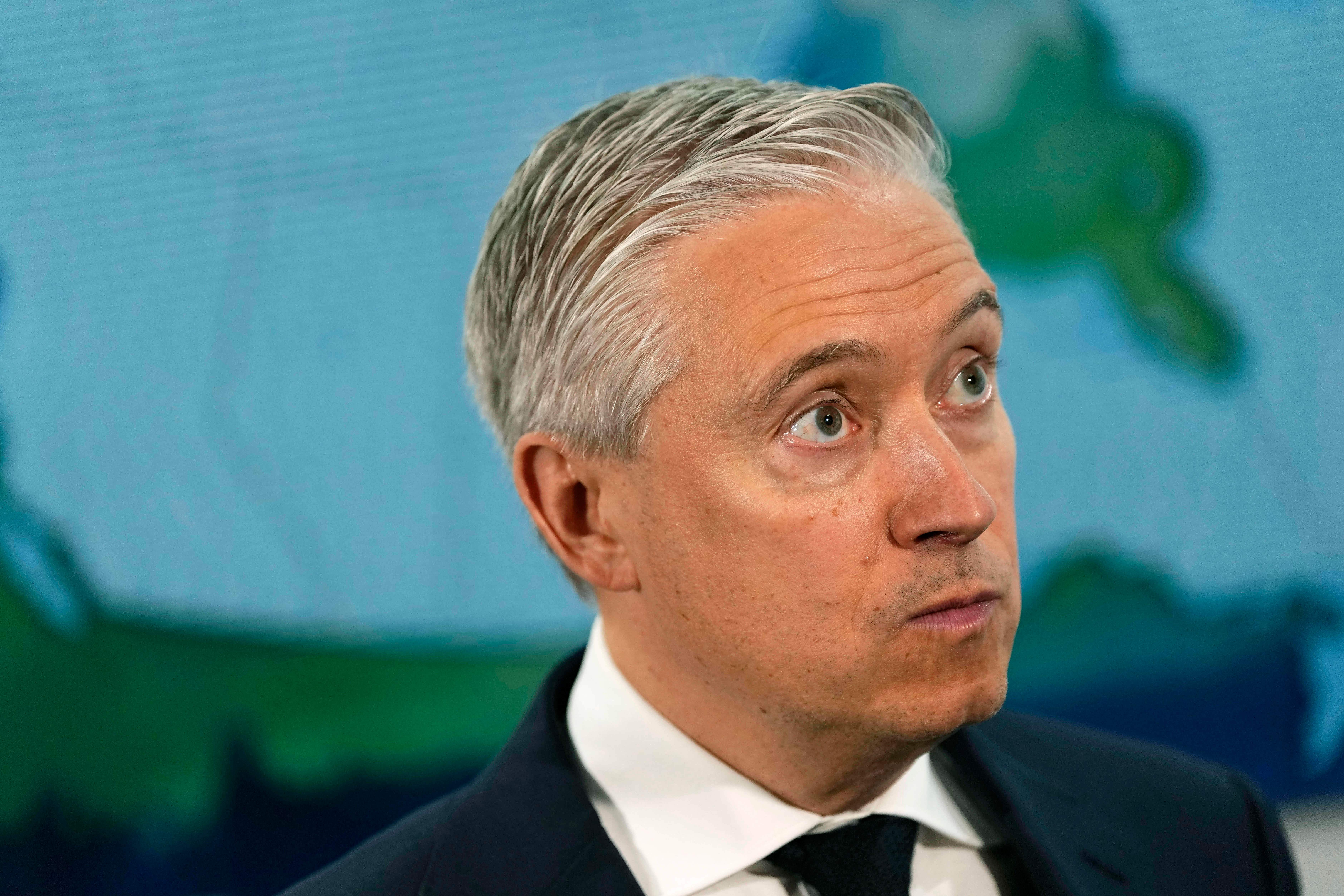
Finance Minister François-Philippe Champagne just kicked off pre-budget consultations for Budget 2026. Naturally, reporters asked him why his department refuses to release the specific annual breakdown of this planned military spending. His response was a classic political pivot, promising that "more details" are coming later.
The Missing Billions in the Fiscal Framework
This isn't just a minor bureaucratic delay. It is a fundamental accountability problem.
The Prime Minister's Office, the Finance Department, and Champagne's team have repeatedly blocked requests to provide data supporting these accelerated spending claims. When pushed for proof after the Spring Economic Statement, Champagne’s office claimed they weren't in a position to "scoop forthcoming announcements."
That excuse doesn't hold water when the government has already claimed the money is provisioned in the fiscal framework. If the money is accounted for, the tracking numbers exist.
The Parliamentary Budget Officer (PBO) has been hitting the exact same stone wall. The PBO asked the Department of National Defence for specific details on how Canada plans to scale its spending to meet these ballooning NATO targets. They got nothing back.
Champagne insists that Budget 2025 already provided a "fair amount of detail" and claims the government has been transparent from the start. But broad goals aren't a plan. They're a wishlist.
The Trillion Dollar Reality Check
Let's look at what hitting these targets actually requires.
In March 2026, NATO confirmed that Canada finally hit the old two per cent of GDP target, spending over $63 billion in the 2025-26 fiscal year. That was a huge, historic single-year bump. But the new targets are a completely different beast.
Under recent agreements, NATO members are pushing toward a five per cent GDP target by 2035. This goal is split into two buckets:
- 3.5 per cent on core military spending (troops, weapons, hardware).
- 1.5 per cent on dual-use infrastructure (roads, bridges, Arctic ports).
The PBO previously estimated that just moving core defence spending from two per cent to 3.5 per cent of GDP means adding roughly $33.5 billion every single year for a decade. That move alone adds an extra $63 billion to the federal deficit by the 2035-36 fiscal year.
Moving the needle to four or five per cent requires an astronomical amount of cash. Economists are already sounding the alarm that massive tax hikes will be completely unavoidable if the government tries to finance this without driving the deficit into the stratosphere.
Shifting from Expenses to Capital Investments
Champagne’s core argument is that borrowing for these massive upgrades isn't waste. He views it as economic fuel. The strategy relies heavily on the newly formed Defence Investment Agency (DIA) and a reworked Buy Canadian procurement policy, which recently dropped its minimum threshold from $25 million to $5 million to let smaller local businesses pitch for military contracts.
The government wants to use these massive defence injections to scale up domestic manufacturing, aiming to increase Canada's defence exports by 50 per cent over the next decade. They talk about rebuilding sovereign capacity and creating skilled trades jobs.
But you can't run an industrial strategy on vague estimates. Defence procurement in this country is notoriously slow and complicated. Ships, submarines, and fighter jets take over a decade to buy and build. If the government refuses to publish the annual cost curve, it's impossible to know if they are actually buying hardware or just moving money around on paper to satisfy allies in Washington and Brussels ahead of international summits.
What Needs to Happen Next
If you want to see if the government is serious or just talking big, keep a close eye on the pre-budget consultations that started this week. Budget 2026 will be the real test.
Look for whether the Finance Department finally releases a clear, year-by-year spending schedule for the Department of National Defence through 2035. Watch out for any hidden tax changes or structural adjustments designed to pay for the $33-billion-plus annual shortfall. Without those hard numbers, the government's grand defence strategy remains a rough sketch.