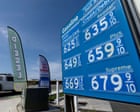
You pull up to the pump, look at the price per gallon, and feel your stomach drop. It hits $5.58. Sometimes it even flirts with $7. You probably blame state taxes, refinery maintenance, or just standard corporate greed. But the real culprit behind that recent, painful spike might be an automated algorithm working behind the scenes.
A massive class-action lawsuit just hit the Sacramento federal court. California drivers sue gas stations for allegedly using AI to inflate prices, targeting retail giants like BP, Marathon Petroleum, 7-Eleven, Walmart, Circle K, and Albertsons. They are not just accusing these corporations of being expensive. They are accusing them of using an automated pricing engine to systematically kill off local competition at the pump.
This is not a conspiracy theory. It is a legal battle over how fuel giants set their numbers. If the plaintiffs are right, software is stripping away your ability to shop around for a better deal.
The Software Coordinating Your Local Pump Prices
At the center of this legal firestorm sits a software company called Kalibrate Fuel Systems. Kalibrate provides pricing software used by thousands of gas stations across the United States. The lawsuit alleges that instead of stations looking across the street and manually dropping their prices to win your business, they all plugged into the same AI platform.
The mechanism is simple yet incredibly effective. The software ingests massive amounts of competitor pricing data, market conditions, and historical trends. It then spits out optimized pricing recommendations. When multiple gas stations in the exact same neighborhood use the exact same software, they stop acting like competitors. They start acting like a cartel.
The lawsuit claims that in areas where a high concentration of stations adopted Kalibrate, gas prices jumped by as much as 30 cents a gallon. That sounds like pocket change. It is not. In a massive market like California, every single extra penny costs drivers a staggering $134 million annually. When you multiply that by 20 or 30 cents, you are talking about billions of dollars funneled directly from working families into corporate pockets.
The traditional gas war is dead. AI killed it. Stations no longer have an incentive to undercut each other when an automated system tells everyone to hold the line at a higher price point.
Why This Violates New California Law
This lawsuit is not just throwing mud at the wall to see what sticks. It is one of the very first major legal tests of a brand-new state law designed specifically to target this exact behavior.
On January 1, 2026, California Assembly Bill 325 went into effect. AB 325 explicitly cracked down on algorithmic price-fixing, expanding the state's traditional antitrust framework to cover shared software models. Before this law, proving price-fixing required a smoking gun. You needed an email, a text message, or a recorded phone call showing that executives from competing companies met in a back room and agreed on a price.
The software era changed that. Executives do not need to meet in secret anymore. They just buy the same software subscription.
The lawsuit argues that this setup violates California's primary antitrust law, the Cartwright Act, alongside the new provisions of AB 325. The legal theory relies heavily on what antitrust experts call a hub-and-spoke conspiracy.
- The Hub: Kalibrate acts as the central hub, collecting data and managing the pricing logic.
- The Spokes: The individual gas station brands act as the spokes, feeding data in and executing the high prices out in the real world.
- The Result: A coordinated market where true competition ceases to exist, even if the spokes never talk to each other directly.
Federal regulators like the Department of Justice have been watching this setup closely across several industries, including rental housing and groceries. Now, California drivers are taking the fight straight to the fuel industry.
The Myth of the Independent Gas Station
Many people assume their local gas station owner is the one making the call to raise prices when oil values shift. That is rarely how it works anymore. The defendants named in this lawsuit operate more than 1,700 stations across California alone. They control massive networks.
When independent operators try to survive in this market, they face an impossible choice. They can try to undercut the corporate giants, or they can adopt the same software to keep their heads above water. The lawsuit argues that the widespread adoption of these tools forces the entire market upward.
This creates an artificial floor for fuel prices. True market forces of supply and demand are replaced by mathematical optimization meant to extract the absolute maximum amount of cash a driver is willing to pay before they stop driving entirely.
The companies involved have either declined to comment or stayed completely silent since the suit was filed. They usually argue that pricing software simply helps businesses respond to rapid market changes efficiently. They claim it is about logistics, not collusion. But for the person watching the meter click past $80 for a single tank of regular unleaded, that explanation feels incredibly hollow.
How to Protect Your Wallet Right Now
Do not wait around for a federal judge to settle a multi-year class-action lawsuit before you change how you buy gas. If you want to fight back against algorithmic pricing, you have to break their data models.
First, stop buying fuel at the exact same time and place out of habit. Algorithms thrive on predictable consumer behavior. If a software model knows that a specific neighborhood always fills up on Friday mornings regardless of a 10-cent hike, it will keep pushing that price higher.
Second, use crowd-sourced pricing apps like GasBuddy to find stations that are actively resisting the corporate baseline. Look for independent, unbranded stations that still rely on manual market matching rather than automated corporate feeds.
Third, keep an eye out for updates on this specific lawsuit. If you bought gas from BP, Marathon, 7-Eleven, Walmart, Circle K, or Albertsons in California recently, you might eventually be eligible for a payout. Save your digital receipts or credit card statements. Documenting your fuel costs is the only way to ensure you get your fair share if a settlement or judgment occurs down the line. The legal landscape is shifting fast, and keeping yourself informed is your best defense against an AI that wants to drain your bank account.