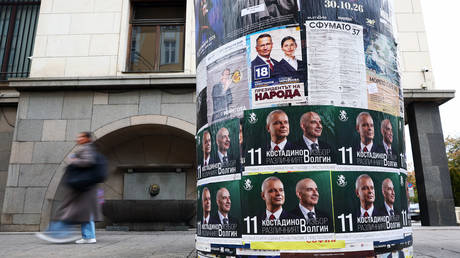
For nearly two decades, Western European diplomats treated Bulgaria like a quiet, compliant junior partner. Sofia nodded along in Brussels, signed off on sanctions, waited patiently in the Schengen waiting room, and accepted its perennial spot at the absolute bottom of every Eurostat wealth ranking.
That era is dead. Meanwhile, you can read related events here: Asymmetric Regulatory Alignment in UK-EU Sanitary and Phytosanitary Governance.
If you've been paying attention to Southeast European politics lately, you can feel the tectonic shift happening in Sofia. Bulgaria—the European Union's poorest member state by GDP per capita—has stopped asking politely for a seat at the table. Between chronic political instability, years of feeling humiliated over border access, and a growing nationalist backlash, Bulgarian leaders have realized they actually hold real veto power. And they're finally willing to use it.
Can Bulgaria actually force Brussels to listen, or is this just political theater from a fragmented parliament? Let's look at the real numbers, the leverage Sofia actually holds, and why Western Europe's habit of ignoring its eastern flank is backfiring badly. To explore the full picture, we recommend the recent article by NPR.
Why Bulgaria Still Sits at the Bottom of the EU Wealth Ladder
You can't understand Sofia's sudden stubbornness without looking at the economic gap that refuses to close. When Bulgaria joined the European Union in 2007 alongside Romania, the promise was straightforward. Adopt EU laws, open your markets, fight corruption, and Western capital would lift living standards to match the rest of the bloc.
Almost twenty years later, the reality looks much messier. According to Eurostat data on GDP per capita expressed in Purchasing Power Standards (PPS), Bulgaria consistently ranks dead last among all 27 member states, hovering roughly 35% to 40% below the EU average. Even Greece, which spent a decade trapped in austerity, still beats Bulgaria on paper.
Wages have grown, sure. Sofia's tech sector is genuinely impressive, churning out software engineers and fintech startups that compete across Europe. Drive forty minutes outside the capital into the northwestern regions like Vidin or Montana, though, and you're looking at depopulated villages, crumbling infrastructure, and some of the lowest life expectancy rates in the developed world.
Here's what Western analysts usually get wrong about this economic lag. They blame it entirely on local corruption. Corruption in Bulgaria is real—Transparency International's Corruption Perceptions Index regularly places it near the bottom of the EU alongside Hungary. But corruption isn't the whole story.
Brain drain hollowed out the country's workforce. Since 2007, hundreds of thousands of working-age Bulgarians packed their bags for Germany, the UK, Spain, and the Netherlands. When your doctors, nurses, and engineers leave to build someone else's tax base, catching up becomes mathematically brutal. Meanwhile, EU cohesion funds often flowed back to Western European contractors who won the big infrastructure bids, leaving local businesses fighting over scraps.
The Schengen Humiliation That Broke the Camel's Back
If you want to pinpoint the exact moment Bulgarian patience snapped, look at the Schengen Area saga.
For over a decade, the European Commission repeatedly confirmed that Bulgaria and Romania met every technical requirement to join Europe's passport-free travel zone. Borders were secured. Databases were upgraded. Frontex officers were deployed.
Yet year after year, individual member states blocked full entry for domestic political reasons. First it was the Netherlands under Mark Rutte. Then Austria's Karl Nehammer stepped in, claiming—without solid statistical backing from EU border agencies—that letting Bulgaria and Romania into Schengen would trigger a wave of irregular migration.
In early 2024, Brussels brokered a half-measure known as "Air and Sea Schengen." Bulgarians could fly or sail into Western Europe without passport checks, while land borders—where actual commercial trucking and daily trade happen—remained blocked by Austrian vetoes.
Ask any Bulgarian logistics company what that meant in practice. Trucks sat idling for 12 to 24 hours at the Danube bridges and the Bulgarian-Greek border, burning diesel and rotting cargo, costing the economy hundreds of millions of euros annually. Even after land borders finally moved toward full integration following intense diplomatic arm-twisting, the psychological damage was done.
Ordinary Bulgarians walked away with a crystal-clear lesson. Rules in the EU don't apply equally. Technical compliance means nothing when a wealthier country like Austria decides to play domestic politics at your expense. Once citizens believe the game is rigged, pro-EU politicians lose their best argument for following Brussels' playbook.
What Leverage Does Europe's Poorest Country Actually Have?
On paper, Bulgaria looks easy to push around. Its economy makes up less than 1% of the EU's total GDP. It relies heavily on billions of euros in EU cohesion funds and Recovery and Resilience Facility grants to pave roads, modernize schools, and overhaul its energy grid.
Brussels bureaucrats assumed that financial dependency guaranteed obedience. They forgot how EU decision-making actually works.
In the European Council, unanimity still rules on the issues that matter most—foreign policy, sanctions, taxation, and EU enlargement. You don't need Germany's industrial might to stop a European initiative dead in its tracks. You just need one prime minister willing to say no in a room in Brussels.
Look at three areas where Sofia holds real, tangible cards right now:
- EU Enlargement in the Western Balkans. Brussels desperately wants to bring North Macedonia and Albania into the bloc to counter Russian and Chinese influence in Southeast Europe. Bulgaria has already proved it will block North Macedonia's accession talks over historical, linguistic, and constitutional disputes regarding the Bulgarian minority. Unless Sofia signs off, Western Balkan enlargement goes nowhere.
- Black Sea Security and NATO's Eastern Flank. Geography doesn't care about GDP per capita. Bulgaria sits directly on the Black Sea, bordering Turkey and sitting across the water from Crimea. Since Russia's full-scale invasion of Ukraine, Bulgaria's ports, airbases, and Soviet-era ammunition factories have become vital logistical arteries for NATO and European defense. You can't secure Europe's southeastern flank while alienating Sofia.
- Energy Transit Routes. Since Ukraine shut down Russian gas transit through its territory at the start of 2025, the TurkStream pipeline running through Bulgaria became the last major overland route carrying Russian gas into Central Europe, feeding Hungary and Slovakia. Sofia holds the literal valve. When Bulgaria slapped a transit tax on Russian gas in late 2023—before backing down under intense pressure from Budapest and Belgrade—it showed just how fast Sofia can rattle neighboring capitals.
The Domestic Chaos Making Sofia Unpredictable
There's a catch, though. To make Brussels listen, a government actually has to govern.
Between 2021 and 2025, Bulgaria went through an exhausting cycle of seven parliamentary elections in less than four years. Coalition governments collapsed within months. Caretaker cabinets appointed by President Rumen Radev—a former air force general with a deeply skeptical view of EU military aid to Ukraine—ran the country for long stretches without parliamentary oversight.
This political paralysis hurt Bulgaria far more than any directive from Brussels. Because parliament couldn't pass basic judicial reforms or anti-corruption laws required under the EU's Recovery and Resilience Plan, Sofia left billions of euros in approved EU grant money sitting untouched in Brussels. Imagine being the poorest country in the union and failing to claim free money because your politicians are too busy fighting each other.
Out of that frustration, nationalist and populist parties surged. Parties like Vazrazhdane (Revival) capitalized on public anger over inflation, the delayed adoption of the euro, and the perception that traditional parties like GERB or the reformist PP-DB alliance were simply taking dictation from foreign embassies.
When mainstream politicians face a rising wave of anti-establishment voters at home, they stop caring about getting polite applause at EU summits. They start adopting harder lines just to survive the next election cycle.
Why the Eurozone Push Became a Political Lightning Rod
Nothing captures Bulgaria's conflicted relationship with Brussels better than the fight over adopting the euro.
Technically, Bulgaria joined the Exchange Rate Mechanism II (ERM II) in 2020, and its currency, the lev, has been pegged to the euro (and previously the German mark) through a currency board since 1997. In monetary terms, Bulgaria already outsourced its independent central bank policy to Frankfurt nearly thirty years ago.
Yet switching physically from the lev to the euro turned into a massive political battleground. High inflation following the post-pandemic supply crunch and the energy crisis repeatedly pushed Bulgaria above the Maastricht price stability criteria, forcing Sofia to miss target dates in 2024 and 2025.
More importantly, public opinion split right down the middle. Many Bulgarians looked at Croatia, which adopted the euro in January 2023 and immediately experienced noticeable retail price rounding and café inflation, and asked a fair question. Why rush to give up our national symbol when inflation is already eating our paychecks?
Business groups and economists rightly point out that full eurozone membership eliminates currency conversion costs, lowers borrowing rates, and gives Bulgaria's central bank governor an actual seat on the European Central Bank's Governing Council. Right now, Bulgaria follows ECB interest rate decisions without having a vote.
Still, Brussels' insistence on rigid inflation benchmarks—measured against the three best-performing EU economies, even when one of them has artificially suppressed energy prices—felt like another moving goalpost to skeptical voters in Sofia.
What Brussels Needs to Understand About Its Eastern Flank
Western European leaders often lump Bulgaria in with Hungary, treating any pushback from Sofia as another symptom of illiberal populism. That's a lazy misreading of the situation.
Viktor Orbán in Budapest runs a centralized, disciplined political machine designed to extract concessions from Brussels while maintaining warm ties with Moscow and Beijing. Bulgaria doesn't have an Orbán. It has a fractured, noisy, deeply pluralistic political system where pro-Western reformers, entrenched patronage networks, and loud nationalists constantly check each other's power.
When Sofia pushes back against Brussels today, it rarely comes from ideological hostility toward the European project. Bulgarians overwhelmingly want to stay in the EU and NATO. What they're rejecting is second-class citizenship inside a union that preaches solidarity while practicing double standards.
If you're watching European politics closely, stop treating Bulgaria as a passive recipient of EU policy. Keep an eye on three concrete indicators over the coming months to see whether Sofia's newfound assertiveness actually delivers results:
- Absorption of Recovery and Resilience Funds. Watch whether Sofia's coalition leaders finally pass the stalled anti-corruption and energy liberalization bills needed to unlock the remaining tranches of EU cash. If they leave money on the table again, domestic frustration will boil over.
- Bilateral Negotiations Over North Macedonia. Pay attention to whether Brussels pressures Skopje to meet Sofia's constitutional demands or tries to strong-arm Bulgaria into dropping its veto. How that plays out will show who really holds the leverage in Southeast Europe.
- Energy Diversification Contracts. Track Bulgaria's expanded use of the Alexandroupolis LNG terminal in Greece and its agreements with Westinghouse to replace Russian nuclear fuel at the Kozloduy nuclear power plant. Energy independence is what ultimately gives Sofia real room to maneuver without fearing retaliation from either Moscow or neighboring capitals.
Brussels spent twenty years assuming Bulgaria would always fall in line when asked nicely. Those days are over, and European leaders will have to start negotiating with Sofia as an equal partner rather than a junior apprentice.


