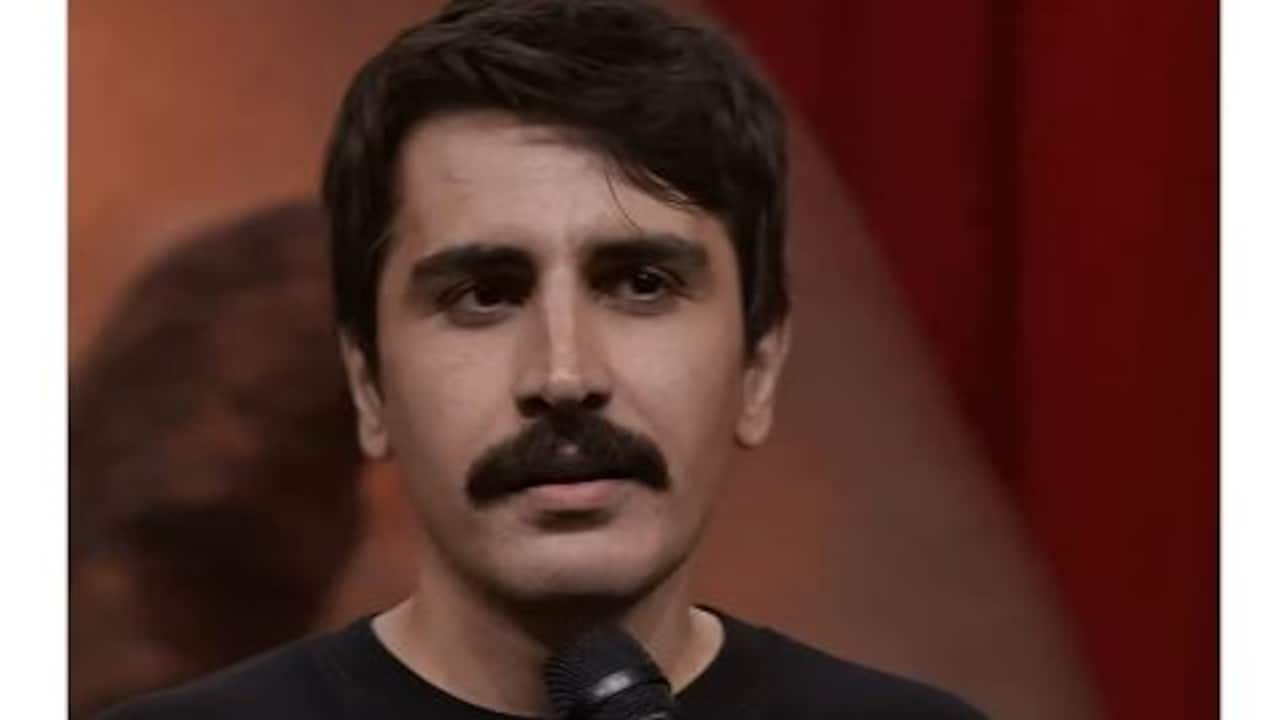
The recent arrest of a prominent Turkish comedian for allegedly insulting Islam is not an isolated incident of religious sensitivity. It is a calculated deployment of Turkey’s penal code designed to silence dissent under the guise of protecting public order. By weaponizing Article 216 of the Turkish Penal Code—which criminalizes "provoking hatred and hostility" or "insulting religious values"—the state has effectively drawn a shifting, invisible boundary around what can be said, laughed at, or criticized. This legal mechanism operates as a tool for political consolidation, turning stand-up stages into judicial minefields.
For decades, political satire served as a vital safety valve in Turkish civic life. Traditional shadow puppetry, late-night television sketch shows, and biting satirical magazines like Gırgır historically mocked the powerful, including prime ministers and religious authorities. That era is dead. What remains is a highly securitized cultural arena where a single punchline can transition a performer from a crowded comedy club to a pretrial detention cell within hours.
To understand how Turkey arrived at a point where a joke constitutes a state threat, one must look beyond the immediate outrage of the arrest and examine the structural machinery of the state's legal apparatus and the deliberate cultivation of judicial overreach.
The Legal Architecture of Modern Censorship
The core engine driving these arrests is Article 216 of the Turkish Penal Code (TCK). Nominally, the law exists to prevent hate speech and protect social harmony. In practice, prosecutors apply it asymmetrically to shield majority religious sentiments and state narratives from any semblance of mockery or critical inquiry.
The law is divided into distinct clauses that allow maximum prosecutorial flexibility. Clause 3 specifically penalizes the open degradation of religious values adopted by a part of the population if the act is deemed sufficient to disrupt public peace. The ambiguity of what constitutes "disrupting public peace" is the precise mechanism of control. Prosecutors do not need to prove that actual violence or unrest occurred. They only need to assert that the potential for unrest existed in the abstract minds of an offended audience.
This legal elasticity creates profound systemic uncertainty. Comedians, writers, and commentators cannot know which specific topics will trigger a prosecution because the threshold moves based on the political anxieties of the moment. The law does not function to protect citizens from harm; it functions to protect the state's preferred cultural hegemony from ridicule.
The Digital Lynch Mob as a Prosecutorial Trigger
The path from a comedy club performance to an official arrest warrant follows a predictable, highly coordinated trajectory in the current media ecosystem. It rarely begins with a police officer sitting in an audience. Instead, the process is decentralized and digital.
- Targeted Clipping: A short, out-of-context video snippet of a stand-up routine is uploaded to social media platforms, frequently by anonymous or hyper-nationalist accounts.
- Manufactured Outrage: Digital networks and state-aligned media outlets amplify the clip, utilizing specific hashtags to demand judicial action and state intervention.
- The Rapid Injunction: Sensing a political opportunity or acting under direct bureaucratic pressure, public prosecutors initiate an investigation, often citing the online outrage itself as evidence that "public peace" has been compromised.
This feedback loop creates a dangerous precedent. The judiciary effectively outsources its investigative priorities to internet mobs. By reacting to manufactured digital outrage, the legal system incentivizes the policing of speech by private citizens, turning everyday social media users into arbiters of criminal law. The comedian becomes a scapegoat in a larger performance of state vigilance, intended to reassure a conservative voting base that their values are being aggressively defended by the full weight of the law.
The Chilling Effect and Structural Self-Censorship
The true objective of these high-profile arrests is not the conviction of the individual comedian. The objective is the compliance of everyone else still holding a microphone.
When a well-known performer is detained, the entire creative industry experiences a chilling effect. Venues become hesitant to book artists known for provocative material. Booking agents rewrite contracts to include strict indemnity clauses regarding political or religious speech. Fellow comedians look at their setlists and quietly delete bits that touch on the presidency, the directorate of religious affairs, or the economic realities facing ordinary citizens.
This self-censorship is far more effective than direct state censorship. It requires no government censors to read scripts or preview shows. The fear of financial ruin, social ostracization, and indefinite pretrial detention forces the creative community to police itself. The humor that survives this process is sanitized, toothless, and entirely decoupled from the lived realities of the population. Comedy is reduced to slapstick and safe, domestic observational humor, while the vital social critiques that comedy is uniquely positioned to deliver are systematically erased.
The Global Context of Domestic Suppression
Turkey's crackdown on comedic expression does not occur in a geopolitical vacuum. It reflects a broader, global trend where illiberal democracies use the vocabulary of human rights and minority protection to suppress fundamental freedoms. By framing the prosecution of a comedian as a defense against islamophobia or an effort to maintain social cohesion, the state attempts to legitimize its authoritarian practices to international observers.
However, international human rights bodies, including the European Court of Human Rights, have repeatedly signaled that the right to freedom of expression includes ideas and expressions that offend, shock, or disturb. Satire, by its very nature, is designed to disturb. By criminalizing the uncomfortable, the state rejects the basic tenets of a pluralistic society. The ongoing purge of the comedic landscape is a stark indicator of an regime that views cultural pluralism not as a strength, but as a direct vulnerability to its centralized authority. The microphone is treated with the same suspicion as a political ballot, and under the current regime, both are subjected to rigorous, unforgiving state management.