The headlines are shouting about a breakthrough. According to the latest data from AAA, an unprecedented 72.2 million Americans are taking to the roads, skies, and rails during the expanded nine-day Independence Day holiday window. It looks like a roaring economy on the surface. But a closer look at the actual mechanics of this migration reveals a different story altogether. The American consumer is hitting a financial wall, stretching budgets to the absolute limit just to maintain a baseline of family tradition.
Look past the raw total. The year-over-year increase is a microscopic 0.5 percent. Growth has effectively flatlined. While industry executives celebrate a nominal record, the reality on the tarmac and the interstate is one of systemic gridlock and ballooning costs.
Families are refusing to surrender their summer vacations. Instead, they are radically altering how they travel, where they stay, and what they cut out of their budgets to afford the trip.
The Illusion of Consumer Strength
Mainstream reports treat these record volumes as a sign of unshakeable consumer confidence. That interpretation misses the underlying economic friction. For the average household, a holiday trip is no longer an effortless luxury. It is a highly calculated, often stressful financial compromise.
The data tells the story. Domestic airfares for top holiday destinations are averaging a staggering $830 per round-trip ticket. That represents a 5 percent increase from last year. For a family of four, simply buying plane tickets now requires a multi-thousand-dollar capital deployment before factoring in lodging, food, or ground transportation.
Car rentals are not providing an escape hatch either. Rental rates have jumped 10 percent compared to the same period last year. Hertz projects its single busiest fleet deployment day to hit right before the holiday, squeezing inventory and pushing costs higher for those who delayed booking.
The financial pressure has fundamentally changed consumer behavior. Travelers are choosing shorter stays. They are packing coolers to avoid restaurant markups. They are substituting expensive flights with grueling drives. The urge to travel remains, but the spending power is clearly fraying at the edges.
The Eighty Five Percent Driving Reality
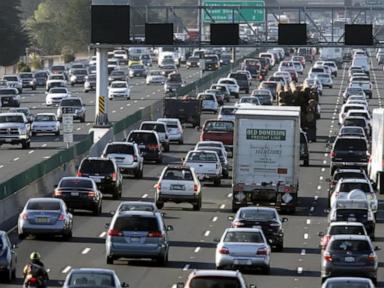
An overwhelming majority of holiday travelers are choosing the highway. Approximately 61.4 million people will drive to their destinations. This means 85 percent of all holiday travel is happening on an aging interstate network that was never built to handle this concentrated volume.
Drivers are hitting the road despite gasoline prices hovering near four-year highs. The national average has crept upward, making a simple tank refill a painful transaction. Yet, when compared to the reality of $830 plane tickets, driving remains the only viable mathematical alternative for middle-class families.
A road trip represents a controllable budget. You can choose where to stop, pack your own meals, and split the cost of fuel among multiple passengers. It is an economic defensive maneuver masquerading as a classic American tradition.
The consequence of this highway reliance is severe congestion. Transportation data firm INRIX indicates that specific metropolitan corridors are seeing massive delays. In cities like Los Angeles, Boston, and Philadelphia, peak holiday traffic hit days before the actual long weekend, turning routine commutes into multi-hour endurance tests.
The Sudden Migration to Structured Travel
The most telling statistic in the entire holiday forecast is the growth rate of alternative transportation. While automobile travel grew by a mere 0.2 percent and air travel rose by the same slim margin, alternative modes exploded. Cruises, trains, and buses saw a 5.3 percent year-over-year surge, translating to nearly 5 million travelers.
This is not a random trend. It is a direct response to unpredictable pricing.
+-----------------------------------------------------------+
|  Independence Day Travel Growth by Mode (2025 vs 2026)    |
+-----------------------------------------------------------+
|  Auto Travel:   +0.2%                                     |
|  Air Travel:    +0.2%                                     |
|  Mass/Cruise:   +5.3%                                     |
+-----------------------------------------------------------+
Cruises and all-inclusive packages have become an economic sanctuary. When a consumer books a cruise, the total cost is largely locked in from day one. Food, lodging, and entertainment are bundled together. This structure eliminates the anxiety of shifting restaurant prices, unexpected baggage fees, and hotel resort surcharges.
Alaska has emerged as the epicentre of this shift. Port cities like Seattle, Anchorage, and Fairbanks are experiencing historic levels of domestic tourism. The massive demand for summer cruises has turned these northern hubs into the most coveted destinations in the country, outstripping traditional warm-weather hot spots.
Systemic Risks on the Horizon
The sheer volume of vehicles on the road creates immediate operational vulnerabilities. Infrastructure is being pushed past its designed capacity. During the corresponding holiday period last year, AAA crews responded to more than 687,000 calls for roadside assistance. Battery failures, blown tires, and overheated engines are the predictable results of deferred vehicle maintenance meeting record summer heat.
There is a darker undercurrent to these travel windows. Safety statistics during the extended July 4th period are consistently grim. Holiday festivities lead to a predictable spike in impaired driving. Historical crash data shows that nearly one in three summertime traffic fatalities involves an alcohol- or drug-impaired operator.
The expansion of the official holiday window to a nine-day period was designed to spread out the traffic. It has instead lengthened the danger window. Law enforcement agencies are facing prolonged strain, attempting to police hyper-congested highways for over a week straight.
The Long Term Outlook for the Travel Sector
The travel industry cannot survive on nominal records alone. A 0.5 percent volume increase accompanied by soaring operational costs is a warning sign. Airlines are battling elevated jet fuel prices and labor costs, passing those expenses directly to passengers. Hoteliers are finding that travelers are pushing back against junk fees and inflated nightly rates by adjusting their trip durations downward.
The current model is unsustainable. If pricing continues its upward trajectory while household savings dwindle, the plateau we are witnessing this summer will inevitably dip into a decline. The industry is currently coasting on the momentum of deeply ingrained consumer habits. Traditions die hard, but they eventually break under the weight of persistent inflation.
The ultimate takeaway from this summer migration is that the American traveler is incredibly resilient, but profoundly tired. They will wake up at 4:00 AM to beat the traffic. They will pack their cars to the roof. They will swipe credit cards to cover $4-a-gallon gasoline and exorbitant regional tolls. They will do whatever it takes to get to the beach or the family barbecue. But the margin for error has vanished, leaving the entire travel ecosystem vulnerable to the next major economic shift.