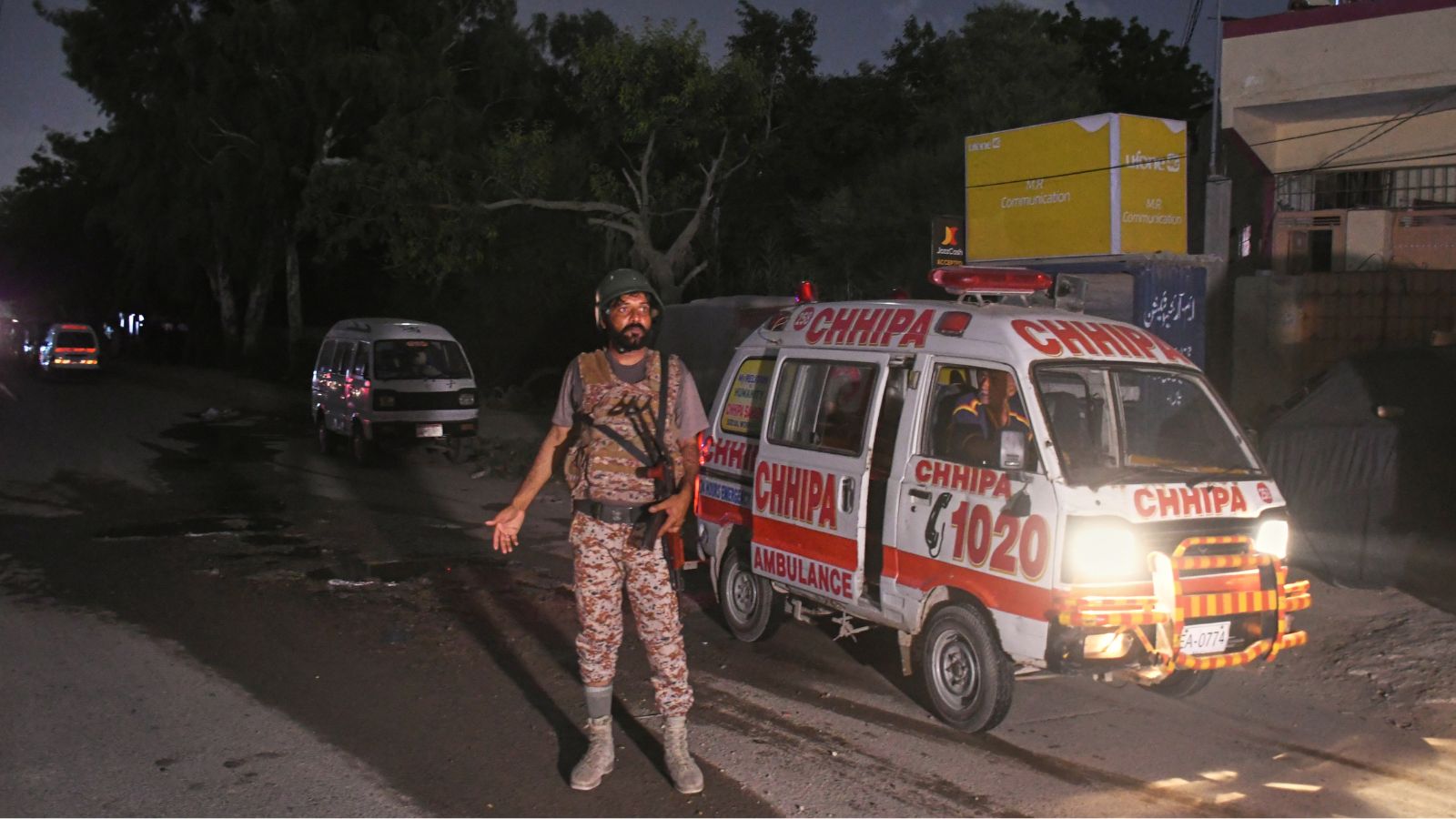
The Pakistani military's recent ground offenses and airstrikes along the Afghan border, which resulted in the deaths of 29 militants, signal a dangerous new chapter in a long-running proxy war. For decades, Islamabad treated the frontier as a strategic buffer. Now, that same frontier is actively bleeding the state. This sudden spike in kinetic operations is not a sign of absolute dominance. It is a reactive, high-stakes attempt to contain a security collapse that has been gathering momentum since the Taliban recaptured Kabul.
The official narrative coming out of Rawalpindi frames these border operations as a decisive victory against cross-border terrorism. State media broadcasts reports of precise intelligence-led raids and minimized collateral damage. Yet, anyone who has watched this theater for twenty years knows the official body counts rarely tell the whole story.
What the state presents as a localized counter-terrorism triumph is actually a frantic effort to put out fires on multiple fronts. The reality on the ground points to an intelligence failure of structural proportions. Militant groups are no longer just hiding in the mountains. They are governing local populations, extorting businesses, and operating with a degree of structural freedom that should be impossible given the massive military deployment in the region.
The Fiction of the Border Fence
Islamabad spent nearly three-quarters of a billion dollars and years of manual labor constructing a massive chain-link and barbed-wire fence along the 2,600-kilometer Durand Line. The strategic goal was simple. Stop the fluid movement of the Pakistani Taliban, known as the Tehreek-e-Taliban Pakistan (TTP), and their regional affiliates between their safe havens in Afghanistan and their target zones inside Pakistan.
The fence failed. It failed because a physical barrier cannot fix a political and ideological fracture.
Militants routinely cut through the wire, build hidden tunnels, or simply bribe underpaid border guards to look the other way. More importantly, the Afghan Taliban never recognized the Durand Line as an official international border. To them, the fence is an illegal partition of the Pashtun homeland. When Pakistani engineers try to repair breaches, they are frequently met with direct sniper and mortar fire from standard Afghan border posts.
This creates a tactical nightmare for Pakistani ground commanders. If they hunt militants too close to the line, they risk starting a conventional border war with a sovereign, heavily armed Afghan neighbor. If they hold back, the militants use the border zone as a safe zone where they can regroup, rearm, and plan the next ambush.
The Kabul Connection and the Broken Proxy Promise
When Kabul fell in August 2021, the celebratory mood in Pakistan’s intelligence offices was hard to miss. Senior officials openly mused that India's influence in Afghanistan had been wiped out, and that Pakistan had finally secured its western flank. It took less than six months for that illusion to shatter.
The Pakistani security establishment completely misjudged the nature of the relationship between the Afghan Taliban and the TTP. They expected the new rulers in Kabul to rein in the Pakistani militants as a favor for years of sanctuary. Instead, the Afghan Taliban did the exact opposite. They opened the gates of high-security prisons, releasing hundreds of hardened TTP fighters who immediately crossed back into Pakistan's northwestern districts.
The ideological bond between these groups is thicker than any diplomatic pressure Pakistan can apply.
- They shared the same trenches during the war against Western forces.
- They share the same strict interpretation of religious governance.
- They share a deep-seated resentment toward the Pakistani state's historical alliance with the West.
When Islamabad demands that Kabul hand over TTP leaders, the Afghan regime offers toothless mediation sessions or outright denies that the militants operate from their soil. Pakistan’s recent reliance on airstrikes deep inside Afghan territory is an admission that diplomacy has completely broken down. These strikes are desperate attempts to do what Kabul refuses to do, but they come at the cost of turning the Afghan population permanently hostile toward Pakistan.
The Changing Tactics of the New Insurgency
The militants holding out along the border are not the same raw recruits Pakistan fought during the operations of 2014. Today's insurgents are better equipped, highly trained, and tactically sophisticated.
When the US military pulled out of Afghanistan, it left behind billions of dollars in advanced military hardware. Night-vision goggles, thermal imaging scopes, M4 carbines, and encrypted communications gear flooded the black markets of the border provinces. The TTP bought this gear in massive quantities.
Insurgent Tactical Evolution:

[Pre-2021 Tactics]            --->   [Post-2021 Tactics]
- Daytime infantry ambushes          - Nighttime thermal-guided raids
- Heavy reliance on IEDs             - Long-range sniper operations
- Decentralized tribal units         - Integrated regional commands
This technological upgrade flipped the tactical dynamic on its head. Pakistani soldiers stationed at remote border checkpoints suddenly found themselves targeted at night by snipers using thermal optics, unable to see where the fire was coming from. The recent kill count of 29 militants must be viewed against this backdrop. It took an immense expenditure of heavy artillery, attack helicopters, and elite special forces to clear out positions that previously would have been handled by standard infantry units.
The Economic Cost of an Endless War
Pakistan is fighting this escalating border war while its civilian economy is on life support. The country is locked in a seemingly permanent cycle of IMF bailouts, runaway inflation, and a crippling foreign exchange crisis.
Kinetic military operations on this scale are incredibly expensive. Moving troops, maintaining aviation assets, and supplying remote border fortresses eats up a massive portion of the national budget. Every rupee spent on a Hellfire missile or a tank tread is a rupee carved out of failing public infrastructure, healthcare, or education.
The economic bleeding goes beyond direct military spending. The instability in the northwest has killed off any hope of foreign investment in the country's vast mineral and energy resources. Local businesses in Khyber Pakhtunkhwa province are shutting down because they cannot afford the "protection taxes" demanded by resurgent militant networks. The state can claim it killed 29 insurgents today, but if the economic conditions in those border towns continue to deteriorate, the militants will recruit 50 more by next week.
Local Alienation is the Ultimate Vulnerability
The military's heavy-handed approach along the border has created a massive internal security trap. To catch a handful of insurgents, security forces frequently lock down entire valleys, enforce strict curfews, and subject ordinary civilians to humiliating treatment at endless internal checkpoints.
This collective punishment has alienated the local Pashtun population. A massive grassroots movement, led by a younger generation that grew up in the shadow of the war on terror, is openly challenging the military's dominance. They argue that the state treats their homeland as a permanent battleground while denying them basic constitutional rights and economic development.
When local populations view their own army as an occupying force, the counter-insurgency effort is fundamentally doomed. Insurgents do not exist in a vacuum. They rely on local villages for food, information, and cover. If the local population refuses to share intelligence with state authorities because they distrust the uniform, the military will always be fighting blind, relying on blunt force rather than precision.
Real border security cannot be bought with chain-link fences or achieved through body counts. Until Islamabad completely abandons its old policy of using militant groups for foreign policy leverage, re-establishes absolute control over its own security apparatus, and treats the border populations as equal citizens rather than strategic collateral, these operations will remain a bloody, expensive exercise in running in place.