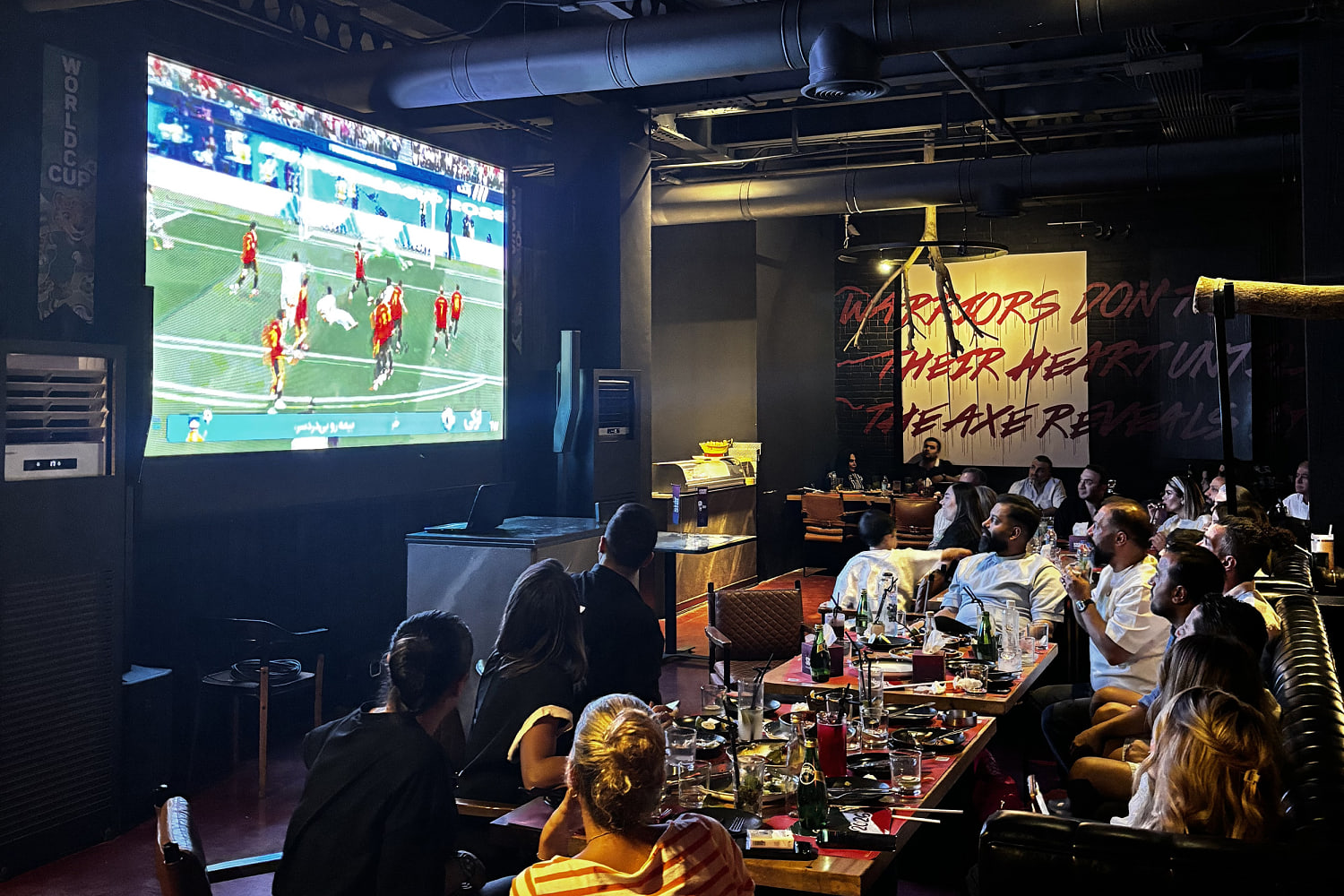
The intersection of football and geopolitics in Tehran has never been about simple distraction. When the Iranian national football team takes the pitch during high-stakes international tournaments, the matches serve as a high-pressure valve for a society caught between stifling economic isolation and stalled diplomatic negotiations with the West. It is a mistake to view the public celebration of a football victory as a sign of national contentment or a distraction from the reality of frozen nuclear accords. Instead, Team Melli—as the national squad is known—operates as a mirror to Iran's internal contradictions, where brief moments of collective joy exist alongside deep systemic frustration.
Western observers frequently misinterpret the scenes of jubilant fans in the streets of Tehran after a major victory. They see a population temporarily forgetting its troubles, or perhaps uniting under a banner of state-approved patriotism. The reality on the ground is far more fractured. For the average citizen enduring rampant inflation and the heavy weight of international sanctions, football is not an opiate. It is a rare, hard-fought claim on normal global participation.
The Anatomy of an Iranian Pitch
To understand why football carries such immense weight in the Islamic Republic, one must look at how sports infrastructure is managed. In Iran, major sports clubs and the national federation operate under the direct or indirect oversight of state apparatuses. This creates an immediate tension between the players, the governing bodies, and the fans.
When players step onto the grass, they carry the impossible burden of representing both a state structure they may quietly question and a populace that demands excellence as a point of national pride. During periods of heightened tension—such as the cyclical freezing and thawing of diplomatic channels regarding the Joint Comprehensive Plan of Action (JCPOA)—every gesture on the field is hyper-analyzed. A refused handshake, a muted celebration, or a specific wristband can become an overnight political symbol.
Consider the financial reality facing Iranian athletics. Due to banking restrictions tied to international sanctions, the Iranian Football Federation has historically struggled to receive its rightful payout allocations from international governing bodies like FIFA. Millions of dollars intended for grassroots development, stadium upgrades, and youth academies sit frozen in foreign bank accounts. This financial strangulation means that every victory achieved by the team is won despite the system, not because of it. The fans know this. When they celebrate, they are cheering the resilience of the athletes who overcame systemic neglect, which mirrors the citizens' own daily survival strategies.
The Illusion of the Distraction Narrative
State media outlets routinely attempt to co-opt sporting success to project an image of stability and unity to the outside world. They broadcast images of crowded squares to signal that life under sanctions is vibrant and unbothered by Western pressure. This is a deliberate narrative strategy designed to counter the pressure applied by Washington and its allies.
However, the domestic audience is highly media-literate. They consume state broadcasts with a heavy dose of skepticism. The joy experienced during a match is real, but it evaporates the moment the television is turned off and the reality of the daily exchange rate sets in. Football does not buy groceries. It does not lower the price of housing in Tehran or secure the lifting of oil export embargoes.
The Double Burden on Athletes
Iranian footballers playing in European leagues face a unique set of challenges. They must navigate the intense political scrutiny of Western media while ensuring their actions do not endanger their families back home or their status on the national team.
- Public Statements: Players are routinely pressured by foreign journalists to take definitive stances on Iranian domestic policy, a demand rarely made of athletes from Western nations.
- Domestic Consequences: Back home, conservative factions watch the players' behavior for any sign of Western alignment or disrespect to national symbols.
- The Fan Expectation: The Iranian public expects its sporting heroes to be champions of the people, creating a tri-directional pressure cooker that few athletes are equipped to handle.
This environment turns every press conference into a diplomatic tightrope walk. A single misplaced word can lead to a player being dropped from the squad or facing interrogation upon return to Tehran.
Football as a Diplomatic Barometer
It is no coincidence that the peak eras of Iranian football often run parallel to shifts in its foreign policy. When diplomatic channels are open, international friendlies are easier to schedule, foreign coaches are easier to compensate, and the team can travel without facing agonizing visa delays. Conversely, when talks stall and rhetoric hardens, the football team finds itself isolated.
Western teams frequently refuse to play friendlies against Iran due to political optics or security concerns. This lack of high-level preparation directly impacts the team's performance on the global stage. When the US and Iran are drawn into the same tournament group, the match is never just ninety minutes of sport. It becomes a proxy battle for diplomats and a media circus for international networks looking for an easy narrative arc of enmity and reconciliation.
The problem with the easy narrative is that it ignores the structural reality. A football match between the United States and Iran cannot fix a broken treaty. It cannot unfreeze assets or guarantee the non-proliferation of nuclear material. It provides a brief window where individuals from both nations interact under strict, universally agreed-upon rules—a luxury that diplomats in Vienna or Geneva rarely enjoy.
The Generation Gap on the Terraces
The demographics of Iran play a crucial role in how football is consumed and weaponized. A massive percentage of the population is under the age of thirty-five. This generation has grown up entirely under the shadow of post-1979 realities and consecutive waves of economic sanctions. Their relationship with national identity is complex.
For younger Iranians, supporting Team Melli is an exercise in reclaiming national pride from the state apparatus. They fill the stadiums—and, when permitted, women fight for the right to occupy those same seats—to demand a space in public life that is vibrant, modern, and connected to the wider world. The stadium becomes one of the few places where collective emotion can be expressed loudly without immediate state suppression, though the presence of security forces is always felt.
This youth cohort does not see the team as a tool of government propaganda. They see it as an extension of themselves: talented, frustrated, hindered by politics, but capable of competing with the best in the world when given a fair chance. The celebration in the street is an assertion of existence. It says, "We are still here, we are part of the world, and we deserve to be seen."
The Financial Gridlock Behind the Scenes
While the public focuses on the tactical formations and player fitness, the real crisis of Iranian football unfolds in bank ledgers and compliance offices. The inability to conduct international wire transfers prevents Iranian clubs from participating effectively in the global transfer market.
When a domestic club manages to sign a foreign coach or player, paying their salary becomes an administrative nightmare involving cash smuggling or complex third-party intermediaries. If payments are delayed—which they almost always are—the case winds up before FIFA’s dispute chambers, resulting in transfer bans and financial penalties that further cripple the sport.
This financial gridlock is the direct sporting equivalent of the sanctions regime hitting the broader Iranian economy. It restricts growth, drives away foreign talent, and forces the local industry to rely on dwindling domestic resources. The fact that Iranian football remains competitive in Asia under these conditions is a testament to the raw talent pool and the deep-seated football culture of the country, not the sustainability of its sports economy.
The pitch offers no permanent sanctuary from geopolitics because the pitch is built on geopolitical foundations. Every pass, every goal, and every post-match celebration is tethered to the reality of Iran's place in the international order. To look at a crowded street in Tehran after a victory and see only footballing joy is to miss the entire point of the gathering. They are cheering for survival, for visibility, and for the brief, fleeting illusion that the rules of the world are fair.