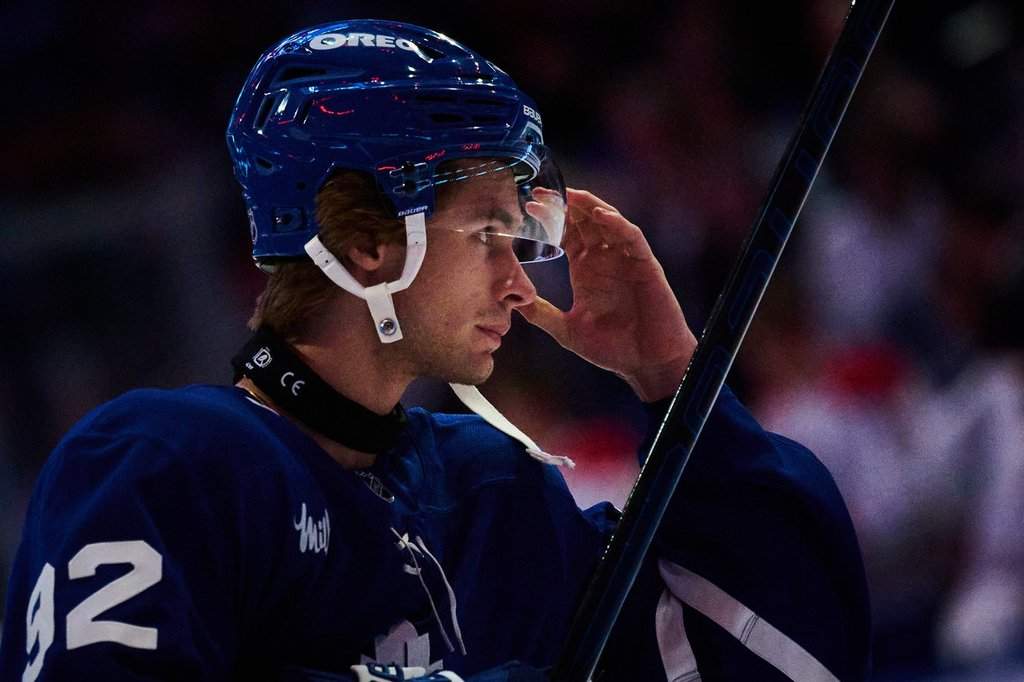
The NHL rookie lap is a ritual in which a player making his regular-season debut skates onto the ice alone for pregame warmups while his teammates hang back in the tunnel. To the casual fan watching from the upper bowl, it looks like a charming, harmless tradition—a momentary spotlight for a kid who just realized a lifelong dream. Inside the dressing room, however, it is viewed as a high-stakes psychological gauntlet designed to strip away amateur habits and test how a newcomer handles sudden, suffocating isolation under bright arena lights.
There is no safety net out there. When the heavy arena doors swing open and twenty thousand people suddenly realize only one sweater is gliding across the fresh sheet of ice, the noise shifts from ambient chatter to a focused, expectant roar. For a twenty-year-old whose entire nervous system is already flooded with adrenaline, those thirty seconds of solitary skating feel closer to thirty minutes. The immediate objective is painfully simple, yet universally dreaded across every locker room in North America. Do not catch an edge, do not trip over the blue line, and whatever you do, do not fall. If you found value in this piece, you should check out: this related article.
How a Locker Room Prank Became League Doctrine
Nobody can point to a single afternoon in hockey history and say the rookie lap was invented right then and there. Like most enduring traditions in professional sports, it evolved organically out of the ruthless, prank-heavy locker room culture of the late twentieth century. In the 1970s and 1980s, veterans rarely needed elaborate staging to remind a newcomer of his place at the bottom of the hierarchy. Tape on skate blades, shortened sticks, and disappearing equipment were standard operating procedures. Letting a kid sprint out onto the ice while the rest of the roster pretended to tie their skates was just another variation on the same theme.
By the late 1990s and early 2000s, the stunt had solidified into an unwritten rule across the National Hockey League. It survived the death of older, more physical forms of rookie hazing precisely because it carried zero risk of injury and looked great on television. As regional sports networks began broadcasting pregame warmups and social media turned every arena tunnel into a content studio, the rookie lap transformed from an internal locker room joke into a public ceremony. For another perspective on this event, refer to the latest coverage from CBS Sports.
Teams quickly realized the commercial and emotional value of the moment. A broadcast camera tracking a wide-eyed defenseman as he circles the faceoff dots alone tells an instant, wordless story of arrival. Yet the public polish never fully erased the original intent. Veterans still watch from the doorway with barely concealed grins, waiting to see if the kid panics, forgets how many circles to make, or loses his balance on the freshly flooded surface.
The Biomechanics of Panic on Fresh Ice
To understand why elite athletes—men who have been skating since they could walk—genuinely fear a simple warmup lap, you have to look at what happens to the human body under acute performance anxiety. Skating at an NHL level is built on proprioception and unconscious muscle memory. You do not think about ankle flexion, blade hollow, or weight distribution when you are moving at twenty-five miles per hour. Your body simply executes thousands of hours of ingrained programming.
The rookie lap shatters that automaticity. When a player steps onto the ice alone, hyper-awareness takes over. Suddenly, he is consciously thinking about every stride, every crossover, and the exact angle of his steel hitting the ice. In sports psychology, this is known as explicit monitoring, and it is the fastest way to make a world-class athlete look like a beginner.
The physical environment makes matters worse. Pregame warmups happen on freshly resurfaced ice that is often still slightly damp, creating subtle variations in friction near the boards and around the creases. At the same time, the player is dealing with adrenaline-induced vasoconstriction, which tightens the small stabilizing muscles in the calves and ankles. A stride that feels effortless during a Tuesday morning practice in the minors suddenly feels stiff and mechanical.
Consider a hypothetical scenario involving a newly recalled winger in a packed Original Six building. He has spent the entire afternoon unable to eat his pregame meal, his resting heart rate is hovering near one hundred beats per minute before he even puts his helmet on, and his legs feel like concrete. When he steps over the threshold and realizes the twenty veterans behind him have stopped dead in their tracks, his visual field narrows. He stops scanning the ice and stares straight down at his own toes, praying his inside edge does not catch a rut. That single moment of hesitation is all it takes to turn a routine crossover into a viral highlight for all the wrong reasons.
The Unspoken Rules of the Solo Skate
While no league manual governs the rookie lap, breaking the unwritten protocol will earn a newcomer an immediate, merciless roasting from the veterans. Every locker room enforces the same basic code, and violating any part of it signals either a lack of awareness or a dangerous excess of ego.
- Never look back at the tunnel. The moment a rookie realizes he is alone, his instinct is to glance over his shoulder to see where his teammates went. Veterans consider this an admission of panic. You keep your head up, commit to the ice, and act like you meant to lead the team out by fifty feet.
- One full loop is mandatory, two is pushing your luck. Most players circle their own end once, cross the red line, touch the far blue line, and loop back toward the bench. Cutting the lap short makes you look terrified; taking three laps makes you look like you are milking the spotlight.
- No bucket, no problem, unless you mess it up. Going without a helmet during warmups is a standard veteran privilege, though newer CBA rules mandate helmets for players entering the league after a certain date. For those who still skate bareheaded during warmups, the wind in the hair adds to the cinematic appeal, provided they stay upright.
- Leave the pucks alone. A rookie lap is strictly for skating. Attempting to grab a loose puck from the bin and fire a shot at an empty net before the goaltender arrives is viewed as trying way too hard to look casual.
When the Ritual Goes Off the Rails
Because the margin for error is razor-thin, the history of the rookie lap is littered with near-misses and legendary recoveries. One of the most famous modern examples belongs to Dallas Stars forward Jason Robertson. During his NHL debut in February 2020, Robertson glided out alone, navigated his solo circle without incident, and only realized the trick had been played on him after he had already completed the loop. His delayed reaction—skating back toward the bench with a bewildered grin as his teammates finally spilled onto the ice—became an instant classic because it captured the sheer sensory overload of a first game.
Other debuts have featured far closer calls. Players routinely admit in postgame interviews that they nearly caught a toe pick right in front of the opposing bench, where rival veterans are always leaning over the boards ready to chirp. The opposing team knows exactly what is happening the second a lone player emerges from the visitors' tunnel. Instead of offering polite applause, rival players will bang their sticks on the boards, shout fake scouting reports, or loudly predict a yard sale at the blue line.
There is also the rare phenomenon of the double or triple rookie lap. When multiple prospects make their debut on the exact same night—a common occurrence late in the regular season when eliminated teams call up talent from the American Hockey League—the veterans will hold back and send the entire group out together. While having company dulls the sharp edge of isolation, it introduces a new hazard: colliding with another nervous twenty-year-old who is also staring at his skates.
Why Veterans Refuse to Let the Tradition Die
In an era where professional sports teams employ full-time mental skills coaches, sleep specialists, and biometric analysts to eliminate every conceivable stressor from an athlete's game-day routine, the rookie lap looks completely backward. Why deliberately spike a young player's cortisol levels twenty minutes before the most important shift of his life?
The answer lies in how hockey culture defines readiness. Coaching staffs and veteran leadership groups view the rookie lap as a controlled stress test. The NHL schedule is an eighty-two-game grind defined by hostile road buildings, relentless media scrutiny, and moments where a player must execute under crushing pressure without anyone holding his hand. If a prospect falls apart mentally because he had to skate in a circle by himself for twenty-five seconds, he is going to struggle when he is defending a one-goal lead in the third period in front of a hostile playoff crowd.
More importantly, the ritual serves as an immediate equalizer. Regardless of whether a player was the first overall draft pick carrying millions in endorsement deals or an undrafted free agent who spent four years riding buses in the minor leagues, everybody takes the exact same lap. The billionaire owner's favorite prospect gets the same treatment as the fourth-line call-up. Once the player finishes the circle and the rest of the roster finally skates out to join him, the barrier between prospect and peer officially dissolves.
The Social Media Panopticon and the Modern Prospect
What has changed dramatically over the past decade is the permanence of the moment. When a rookie stumbled during warmups in 1994, maybe a few thousand people in the lower bowl saw it, and a beat writer might have buried a two-sentence mention at the bottom of a game story the next morning. Today, forty-eight high-definition cameras, team social media producers, and thousands of smartphones capture every micro-expression from the moment the player steps off the rubber matting.
This hyper-visibility has altered how young players prepare for the night. Prospects entering the league now have watched dozens of rookie lap videos on their phones before they ever sign an entry-level contract. They know the trick is coming. Some even rehearse their facial expressions or plan their exact skating route during the afternoon nap at the team hotel.
Yet knowing the prank is coming rarely diminishes its impact. Knowing you are about to be pushed out of an airplane does not make the sudden drop feel any less violent when the door opens. Veterans have adapted by finding new ways to keep newcomers guessing. Sometimes they will fake out a rookie by skating right behind him all the way to the threshold, only to slam on the brakes in unison at the last possible millisecond. Other times, a veteran captain will tell a rookie in the dressing room that the team does not do the lap anymore, lull him into a false sense of security, and then leave him stranded at the red line anyway.
The Thin Line Between Initiation and Distraction
For all its charm, the rookie lap is not without critics inside the game, particularly among performance staff and players who experienced disastrous debuts. The gray area is obvious: when a player is already battling severe anxiety, turning his first moments on NHL ice into a public spectacle can backfire. A player who spends the entire first period thinking about how awkward he looked during warmups is not tracking the puck, is not reading defensive coverage, and is far more likely to take a careless penalty or get caught flat-footed along the boards.
Coaches largely stay out of it, treating warmups as the players' domain, though a sharp bench boss will watch a rookie's body language during that solo skate closely. You can tell a lot about a player's internal wiring by how he handles those twenty seconds. The ones who glide out with loose shoulders, take a deep breath, and flash a genuine smile usually settle into the pace of the game within their first two shifts. The ones who look like they are walking across a tightrope over a canyon often spend the rest of the night fighting the puck.
Once the warmup horn sounds and the players gather at the bench to tap the goaltender's pads before heading back down the tunnel, the initiation is over. Nobody brings up the lap again unless the kid actually fell—in which case he will hear about it until the day he retires. The rookie takes his stall, drinks some water, and waits for the national anthems to end, finally realizing that the hardest part of surviving his first night in the show happened before the puck was even dropped.