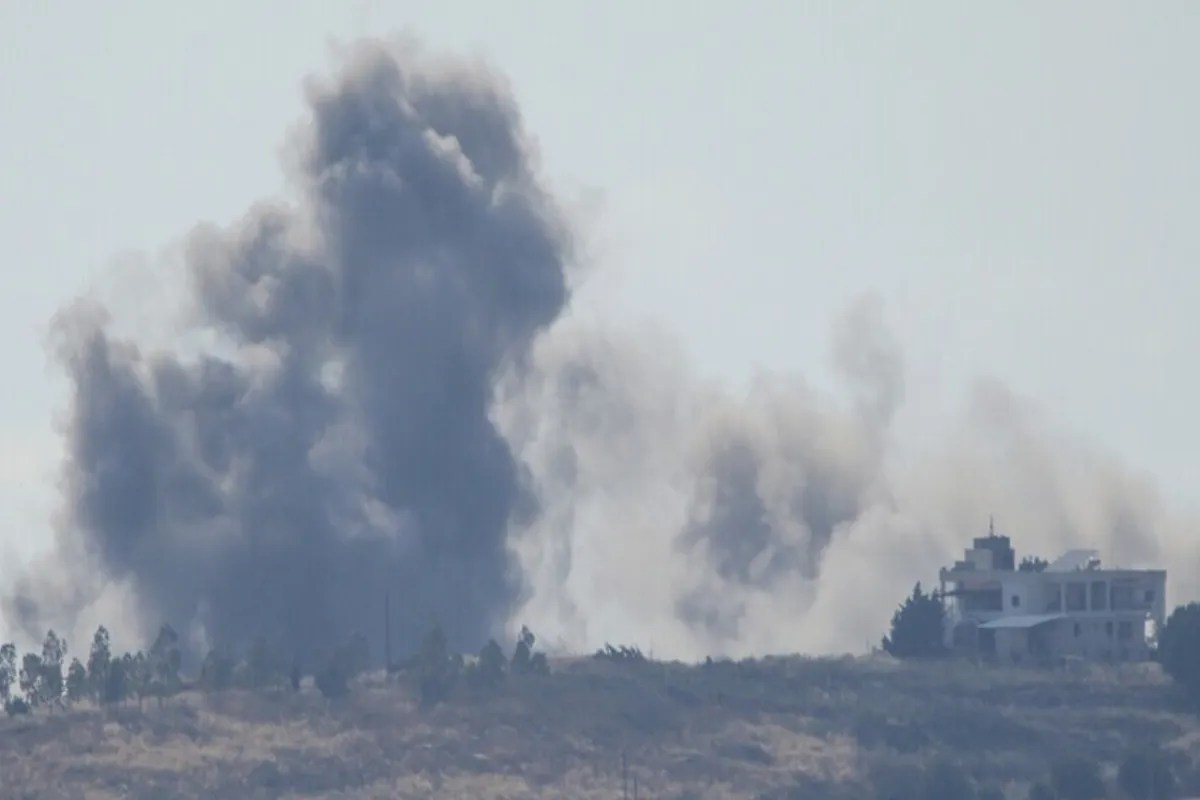
The air in Beirut does not just smell of dust after an explosion. It smells of sulfur, pulverized concrete, and burnt electricity. When the airstrikes leveled entire blocks in Lebanon, the shockwaves traveled far beyond the Mediterranean coast. They ripped through the carpeted hallways of diplomatic compounds in Tehran, thousands of miles away.
In the quiet rooms where foreign policy is crafted, decisions are rarely made with loud declarations. They happen when someone quietly hangs up a phone.
For months, an invisible, fragile thread connected Washington and Tehran. It was a backchannel. No public handshakes. No joint press conferences. Just Swiss diplomats carrying encrypted messages back and forth, trying to ensure that a volatile Middle East did not slide into an all-out global conflagration. It was a safety valve. If a drone flew too close to a base, or a warship miscalculated a turning radius in the Strait of Hormuz, this was the line used to whisper, “It was a mistake. Do not retaliate.”
Now, that line is dead.
Following the devastating escalation and destruction in Lebanon, Iran made a choice that received little fanfare in the Western press but altered the geopolitical landscape instantly. They suspended all strategic, indirect talks with the United States. The safety valve has been welded shut.
The Human Cost of a Silent Line
Consider a young diplomat sitting in a windowless room in Geneva. For weeks, his entire existence has been reduced to translating nuanced Persian idioms into precise English legal terminology. He knows that a single mistranslated word could mean the difference between a tense night at the office and a missile strike on an oil refinery.
When Tehran pulled the plug on these talks, men like him simply packed their briefcases.
To the average observer scrolling through a news feed, a headline about "suspended relations" feels abstract. It sounds like bureaucratic posturing. But bureaucracy is the only thing that stands between stability and chaos. When strategic communication stops, paranoia takes its place.
Imagine driving a car down a mountain highway at midnight with your headlights turned off. You cannot see the road ahead, and the drivers coming toward you cannot see you. You are relying entirely on memory and luck. That is what diplomacy looks like without backchannels. Every troop movement is suddenly viewed not as a routine exercise, but as the opening salvo of an invasion. Every radar blip becomes a potential strike.
The decision to freeze talks was not a sudden burst of anger. It was a cold, calculated response to the shift in the regional balance of power. Iran watched the destruction in Lebanon and realized that the old rules of engagement no longer applied. For years, a delicate system of deterrence existed. You push here, we push there, but nobody crosses the red line.
Lebanon changed that. The sheer scale of the devastation signaled to Tehran that the red lines had been erased. In their eyes, continuing to talk to the United States while American-made munitions fell on Beirut was no longer viable. It looked like weakness.
The Ghost in the Machine
We often think of nations as monolithic entities. We say "Iran decided" or "America responded." But nations are just collections of human beings reacting to fear, pride, and survival instincts.
Within the Iranian political establishment, a fierce internal debate had been raging for a year. The pragmatists argued that keeping the line open to Washington was essential to lifting economic sanctions. They pointed to the empty shelves in Tehran pharmacies, the skyrocketing price of bread, and the young population desperate for connection to the outside world. They believed that a bad dialogue was still better than a good war.
The hardliners smiled and waited. Every time an strike hit an asset or a commander was targeted, their argument grew stronger. “Look at what your dialogue gets us,” they would say in closed-door meetings. “It buys them time to plan the next strike.”
When Lebanon was hit, the pragmatists lost the argument. The phone line wasn't just disconnected; it was ripped out of the wall.
This leaves the international community in a dangerous gray zone. For the past decade, the fear of an accidental war has kept the region from tilting over the edge. During the highest points of tension, it was the Swiss embassy in Tehran that acted as the mailman of last resort. If a US drone was shot down, a message would flash from Washington to Bern, then to Tehran within minutes: We are not looking for escalation.
Without that mailman, the silence is deafening.
The Miscalculation Trap
Human history is rarely written by grand designs. It is written by accidents.
In 1914, nobody wanted a world war. A series of alliances, miscommunications, and rigid timetables dragged empires into a conflict they thought would last a few weeks. The danger today is remarkably similar. If an armed drone targets a base in Iraq or Syria, and there is no direct line to clarify who launched it or why, the response will be dictated by the worst-case scenario.
When a state operates in total informational darkness, it must assume the enemy's intentions are maximalist. It must assume that the incoming strike is not an isolated incident, but the start of a campaign to destroy the regime. Therefore, the response must be massive.
The suspension of these talks means that the margin for error has shrunk to zero.
The psychological weight of this reality falls heavily on the civilian populations of the region. In Tehran, Beirut, and Tel Aviv, people watch the news not as a matter of political interest, but as an existential weather report. Will the sky fall tomorrow?
A shopkeeper in the Grand Bazaar of Tehran watches the currency exchange rates fluctuate on his phone. Every rumor of war devalues the money in his drawer. He is not thinking about strategic depth or ideological victories. He is thinking about whether he can afford the rent on his stall next month. The high-stakes chess game played by elites in capitals has a direct, crushing weight on the lives of people who have never set foot in a government building.
The Empty Chair in Geneva
The diplomatic infrastructure built over decades cannot be rebuilt overnight. Trust is an asymmetrical resource; it takes twenty years to build and five minutes to destroy. By walking away from the table, Iran has signaled that it no longer believes the United States has the will or the ability to restrain its allies in the region.
The United States, conversely, views the suspension as proof that Iran is committed to a path of escalation. Both sides look at the same empty chair in Geneva and see a different villain.
This deadlock creates a vacuum. And in diplomacy, a vacuum is always filled by something more volatile. Other global powers are already looking at the severed connection as an opportunity. Russia and China observe the breakdown of Western-Iranian dialogue and see a chance to cement their own influence, offering alternative alliances that don't carry the baggage of Western demands.
The world has become more fragmented, more tribal, and infinitely louder.
Behind the grand statements about sovereignty and resistance lies a simpler, darker reality. The adults in the room have stopped talking. The machinery of peace has been paused, while the machinery of war runs on a continuous loop.
Somewhere in Washington, an encrypted terminal sits idle, its screen blank, waiting for a signal that isn't coming. In Tehran, the officials who once held the credentials to negotiate have been reassigned or silenced. The silence between the two nations is not peaceful. It is the heavy, suffocating silence that settles over a landscape right before the storm breaks.