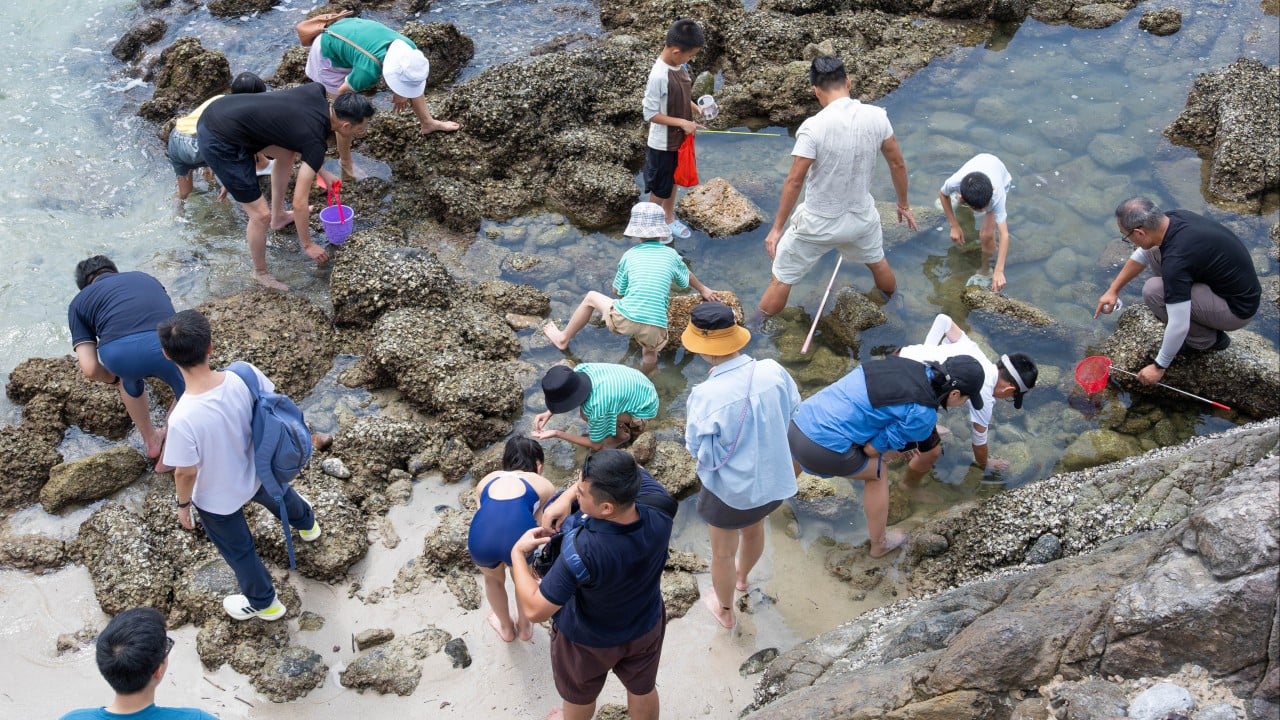
During peak holiday travel surges, thousands of visitors descend upon the fragile coastal ecosystems of the Hong Kong UNESCO Global Geopark, turning protected marine habitats into unregulated souvenir hunts. When environmental watchdogs from Greenpeace deployed field teams to Hap Mun Bay on Sharp Island, they did not just log overcrowding; they documented tourists using metal tools to pry sea snails and clams from rocks, harvesting live sea cucumbers, and stripping coral skeletons from shallow waters.
This destruction exposes a glaring failure in environmental protection. Despite increased public funding and the deployment of more than one hundred officers during mainland China' administrative holiday periods, the current enforcement model remains entirely reactive. Authorities react to viral exposés and NGO whistleblowing rather than maintaining permanent, proactive deterrence on remote islands.
The Illusion of Enforcement
The core issue lies in jurisdictional fragmentation and a lack of statutory teeth. Sai Kung's pristine islands draw hordes seeking an escape from urban concrete, yet the administrative framework governing these zones treats ecological preservation as an afterthought. Park rangers and Agriculture, Fisheries and Conservation Department (AFCD) staff are stretched impossibly thin across scattered archipelagos.
When hundreds of ferry passengers arrive simultaneously at small piers like those on Sharp Island, enforcement officers are overwhelmingly outnumbered. Verbal warnings and educational posters do little to deter visitors equipped with metal pry bars and buckets. By the time patrols navigate across the coves, the damage to slow-growing coral communities and intertidal zones is already complete.
Carrying Capacity and Commercial Tourism
Overtourism in Hong Kong eco-sites is rarely framed through the lens of economic drivers, but commercial ferry operators and tour agencies profit directly from driving maximum volume to ecologically sensitive zones. Marketing campaigns push pristine nature as an open-access commodity, omitting any education on local wildlife protection laws or marine ecology.
Without statutory visitor caps or mandatory ecological guides, these islands function under an open-access tragedy of the commons. Every holiday surge accelerates the degradation of branching corals and marine invertebrates that take decades to recover. Environmental groups have repeatedly urged the Culture, Sports and Tourism Bureau to implement science-based carrying capacity assessments, yet long-term planning stalls behind bureaucratic inertia.
Protecting What Remains
Fixing this systemic failure requires moving past passive signage and temporary holiday task forces. Statutory protected area designations must be applied to vulnerable zones with strict zoning laws that restrict access during peak breeding seasons. Furthermore, limiting commercial ferry frequency during high-density holidays would cap the influx at levels the local ecosystem can absorb.
Until the government treats ecological crime with the same urgency as urban regulatory infractions, volunteer watchdogs will continue to act as the primary defense line for Hong Kong's natural heritage.
The rocks of Sharp Island will keep absorbing the blows of metal tools until authorities realize that conservation requires physical presence, structural limits, and real legal consequences.