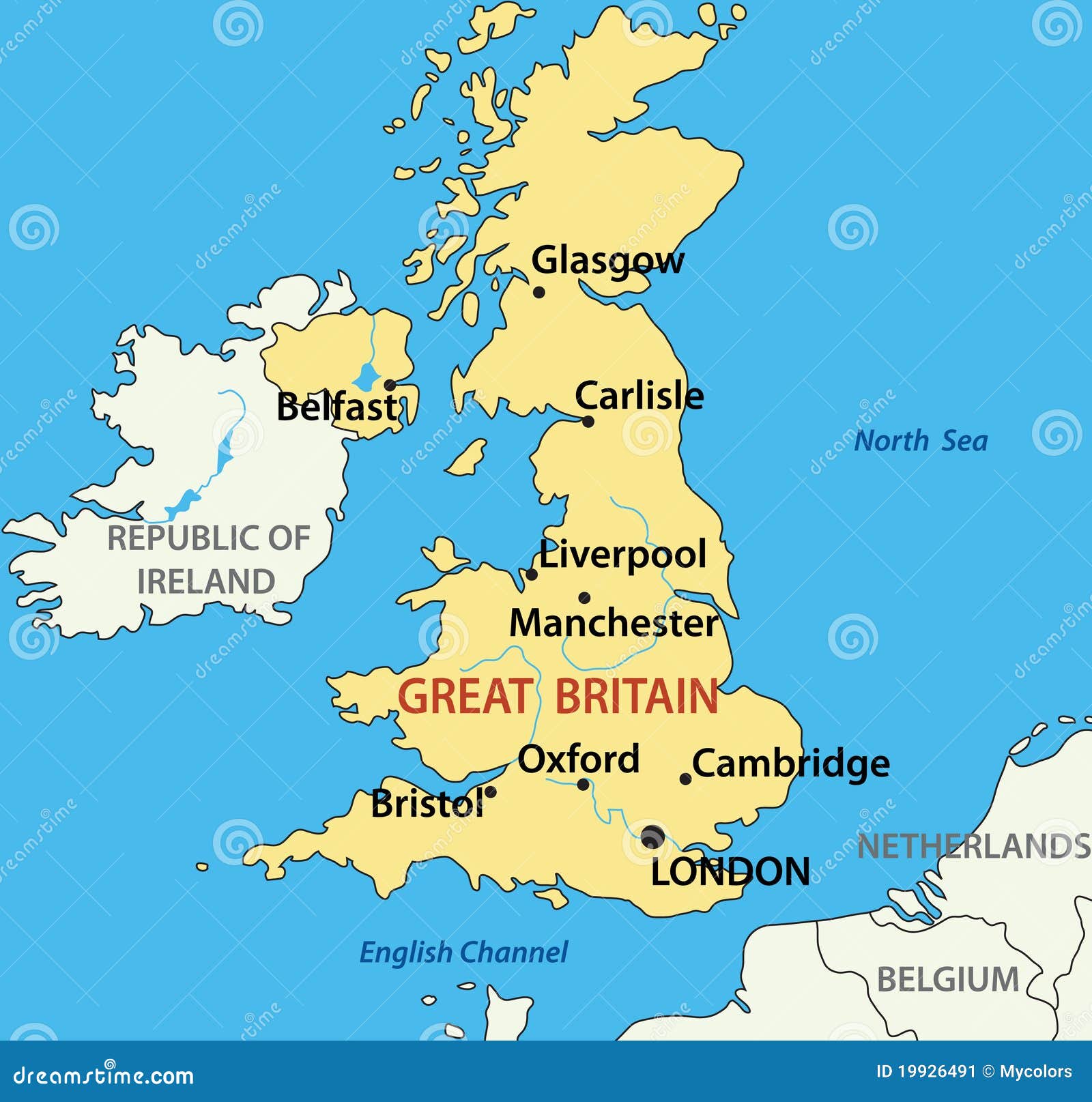
Britain is currently executing a slow, deliberate, and largely unannounced realignment with the European Union, driven not by ideological regret in Westminster, but by cold economic arithmetic and severe geopolitical pressure. While politicians in London strictly avoid uttering the words "single market" or "customs union," the machinery of the British state is steadily dismantling the regulatory barriers erected after 2016. Through bilateral security pacts, veterinary agreements, and quiet regulatory shadowing, the United Kingdom is walking back across the Brexit Rubicon—one technical annex at a time.
You will not hear a cabinet minister announce this shift at a podium in Downing Street. The political trauma of the referendum decade remains far too volatile for any mainstream party to admit that the flagship project of modern British conservatism has run aground on the rocks of commercial reality. Instead, the reversal is happening in the dry, unglamorous corridors of Whitehall and Brussels, where trade negotiators and civil servants are furiously patching up a relationship that neither side can afford to leave broken.
The Myth of Regulatory Divergence
For years, the core economic argument for leaving the European Union rested on a single, seductive promise. Freed from the bureaucratic weight of Brussels, Britain would slash red tape, strike agile trade deals across the Indo-Pacific, and transform itself into a nimble, high-growth economy. That vision has collided head-on with the laws of commercial gravity.
When a market of 68 million people sits twenty miles off the coast of a market of 450 million people, regulatory divergence is not an opportunity. It is a self-imposed tax.
Consider the reality facing British manufacturers today. Under the Trade and Cooperation Agreement (TCA), goods moving between Great Britain and the EU face customs declarations, rules-of-origin checks, and sanitary inspections. For large multinational corporations with dedicated compliance departments, these hurdles are an expensive nuisance. For small and medium-sized enterprises—the actual backbone of the British economy—they have proved fatal, forcing thousands of firms to simply abandon European export markets altogether.
Rather than diverging from European rules to create a bold new regulatory framework, the British government has spent the last several years doing the exact opposite. Whitehall has repeatedly delayed or watered down its own post-Brexit border checks because implementing them would choke supply chains and stoke food inflation. More tellingly, British regulators have quietly adopted European standards by default.
Take the chemical sector, one of Britain's most vital export industries. The UK attempted to build its own standalone chemical registration system, known as UK REACH, to replace the EU's regulatory regime. The projected cost to British businesses to duplicate decades of safety data ran into the billions of pounds. Faced with an industry revolt and the threat of mass factory closures, the government repeatedly extended deadlines and began exploring ways to simply mirror European data requirements.
The same pattern holds across product safety standards. The much-vaunted UKCA mark, designed to replace the European CE safety stamp on everything from machinery to toys, was indefinitely shelved after manufacturers pointed out that printing two different labels for identical products made zero commercial sense. In practice, Britain remains a rule-taker from Brussels, paying the price of exclusion without exercising any of the theoretical freedoms of independence.
The Gravity of Trade and the Failure of Distant Deals
To understand why London is creeping back toward Brussels, you have to look at the ledger. The Office for Budget Responsibility (OBR), the government's own independent fiscal watchdog, has maintained a consistent, sobering assessment of the economic fallout. Their modeling indicates that leaving the EU will reduce the long-run productivity of the UK economy by roughly four percent compared to remaining inside the bloc, with both exports and imports down by around fifteen percent.
Proponents of the split argued that new trade agreements with fast-growing economies outside Europe would offset these losses. Britain did indeed join the Comprehensive and Progressive Agreement for Trans-Pacific Partnership (CPTPP) and signed bilateral deals with Australia and New Zealand.
The math, however, is unforgiving. According to the government's own impact assessments, the CPTPP deal will add less than 0.1 percent to UK gross domestic product over fifteen years. The trade deals with Australia and New Zealand will add even less. You cannot replace frictionless trade with your largest, wealthiest neighbor by selling slightly cheaper lamb and biscuits to markets on the other side of the planet. Distance still matters in economics, even in an era of digital commerce.
Facing stagnant growth, crumbling public infrastructure, and a tax burden at its highest level since the Second World War, the British treasury has run out of fiscal road. Growth is the only escape hatch available to the current administration. And the fastest, cheapest way to generate growth without borrowing billions on the bond markets is to remove the non-tariff barriers currently strangling trade with the European Union.
How the Quiet Realignment Actually Works
Because rejoining the formal structures of the EU remains politically radioactive, London is pursuing a strategy of piecemeal integration. Analysts in Brussels call it "cherry-picking with a smile." British officials prefer the term "pragmatic reset." Whatever the label, the mechanics rely on specific, technical agreements designed to lower trade friction without triggering the constitutional tripwires that enrage hardline Eurosceptics.
The Veterinary and Sanitary Deal
The centerpiece of this quiet rapprochement is a proposed sanitary and phytosanitary (SPS) agreement. Currently, British food and agricultural exports to the continent face exhaustive border checks, veterinary certificates, and physical inspections. An SPS agreement would eliminate the vast majority of these checks by aligning British food safety, animal welfare, and plant health standards directly with EU law.
This is a massive concession dressed up as a technical fix. Signing an SPS deal means accepting dynamic alignment—when Brussels updates its agricultural rules, London must follow suit automatically, with no seat at the table to shape those regulations. Furthermore, disputes under such an agreement inevitably fall under the jurisdiction of the European Court of Justice (ECJ), a red line that was once considered sacred in Westminster. Yet the economic prize—unblocking billions in agricultural trade and easing the bureaucratic nightmare of the Irish Sea border—is deemed worth the ideological surrender.
Security, Defense, and Geopolitical Reality
While trade economics push Britain toward Europe from below, global instability is pulling it back from above. The Russian invasion of Ukraine and the shifting priorities of American foreign policy have fundamentally altered the strategic calculus in London and Brussels.
In a world where European security can no longer take unconditional American underwriting for granted, the idea of keeping Europe's two primary nuclear powers—Britain and France—separated by bureaucratic squabbles has become absurd. Consequently, defense and security cooperation has become the primary vehicle for diplomatic reconciliation.
A comprehensive UK-EU security pact allows British defense contractors to participate in joint European procurement programs, unlocks intelligence-sharing frameworks that were severed in 2020, and establishes structured foreign policy coordination. For Brussels, integrating Britain's formidable military and intelligence apparatus into European defense architecture is a strategic necessity. For London, security cooperation serves as the ultimate goodwill gesture, creating the political warmth needed to extract trade concessions on energy, financial services, and youth mobility.
Energy and Emissions Trading
The quiet convergence extends deep into the power grid. Britain's ambitious net-zero targets depend heavily on offshore wind farms in the North Sea and subsea interconnectors linking the UK power market to France, Belgium, Norway, and the Netherlands. Under the existing Brexit treaty, energy trading between the UK and the EU became vastly more inefficient, costing consumers hundreds of millions of pounds in lost trading efficiency.
Linking the UK Emissions Trading Scheme (ETS) back to the European carbon market is another prime target for technical reintegration. Without a linked carbon market, British exporters of steel, cement, and aluminum face punitive border carbon taxes when selling into the EU. Re-linking the systems removes those tariffs instantly, though it again requires Britain to shadow European carbon pricing policy.
The Structural Obstacles Nobody Wants to Mention
If this gradual return to the European orbit sounds tidy, the reality on the ground in Brussels is anything but. The narrative in parts of the British press suggests that the European Union is desperate to welcome Britain back into the fold, eager to offer bespoke deals to a repentant neighbor.
That assumption misreads the mood across the continent entirely.
For European leaders, Brexit is no longer a frontline crisis. It is a settled administrative file. Brussels spent four exhausting years negotiating the withdrawal agreement and the TCA, and the institutional appetite for reopening complex treaty negotiations is virtually nonexistent. European diplomats are preoccupied with war on their eastern border, economic competition from China and the United States, and the rise of nationalist parties within their own member states.
More importantly, the European Union operates on a strict legal hierarchy of rights and obligations. Brussels will not allow Britain to enjoy the commercial benefits of the single market without accepting the corresponding responsibilities.
This fundamental tension plays out sharply over the issue of youth mobility. Brussels has made clear that if London wants easier market access for British touring artists, financial professionals, and agricultural goods, it must offer something tangible in return. European capitals want a reciprocal youth mobility scheme allowing citizens aged 18 to 30 to live, study, and work freely across the Channel for up to three years.
In London, however, anything that resembles the return of free movement triggers immediate panic. With net migration figures dominating British domestic politics, Downing Street has repeatedly pushed back against broad youth mobility proposals, fearful of handing ammunition to populist critics who would brand any deal a betrayal of the 2016 mandate.
Furthermore, the EU demands financial contributions for access to its programs. When Britain negotiated its re-entry into Horizon Europe, the bloc's flagship scientific research program, it had to pay billions into the central budget. Any future alignment on security, energy, or trade infrastructure will come with a similar invoice, testing the patience of a cash-strapped British Treasury.
The Democratic Deficit of Stealth Realignment
Perhaps the greatest flaw in Britain's current trajectory is not economic or diplomatic, but democratic. By pursuing reintegration through incremental, technocratic adjustments rather than an honest public debate, the political class is storing up profound trouble for the future.
Consider what dynamic alignment actually means in practice. When Britain was a member of the European Union, it held a veto over key legislation, commanded one of the largest voting blocs in the European Parliament, and appointed a senior commissioner to the executive branch. It was a rule-maker.
Under the emerging model of quiet realignment, Britain is steadily voluntarily subjecting itself to European rules, European courts, and European budget contributions without a single vote in the rooms where those decisions are made. It is taxation and regulation without representation—the exact grievance that fueled the Eurosceptic movement for forty years.
This arrangement works only as long as the public remains largely unaware of the details, or too exhausted by economic stagnation to care. The moment a future regulatory dispute flares up—say, Brussels passes an environmental directive or an industrial standard that actively harms a specific British sector—the lack of democratic consent will become painfully obvious. British ministers will be forced to enforce laws written in Brussels that they had no power to block, a scenario guaranteed to reignite nationalist backlash.
The Unspoken Endgame
History rarely moves in clean, dramatic reversals. Empires do not collapse overnight, and geopolitical blunders are seldom corrected with a formal apology. Instead, nations adjust to reality through quiet compromises, euphemisms, and bureaucratic workarounds.
Britain is not going to apply for full membership in the European Union next year, or likely even within the next decade. The constitutional hurdles, the requirement to adopt the Euro, and the sheer political exhaustion on both sides of the Channel make formal re-entry a fantasy.
What is happening instead is the construction of a shadow membership. Step by step, sector by sector, the United Kingdom is negotiating its way back into the orbit of the European regulatory sphere because the alternative—economic isolation on the periphery of a fracturing global economy—is unsustainable. The flags will remain lowered in Brussels, the British passport will stay dark blue, and politicians in Westminster will continue to praise the virtues of national sovereignty. Meanwhile, the goods, the capital, the electricity, and the regulations governing British daily life will quietly flow back toward the continent, proving once again that in the end, geography always beats ideology.