Breath.
You never notice the weight of it until the ribcage turns into a locked room, until the simple, unconscious act of pulling oxygen across wet tissue becomes a negotiation you are suddenly losing. Anyone who has ever sat beside a hospital bed in the dead hours before dawn knows the exact cadence of a post-operative recovery ward—the rhythmic hiss of the wall-mounted regulator, the sharp antiseptic sting that coats the back of your throat, and the terrifying fragility of a human chest held together by surgical staples and sheer stubbornness. Meanwhile, you can read other developments here: Inside the Political Storm Behind the Paraguay Police Arrest of an Ex-President After Impeachment.
Now strip away the anonymous blue hospital gown and replace it with white wool.
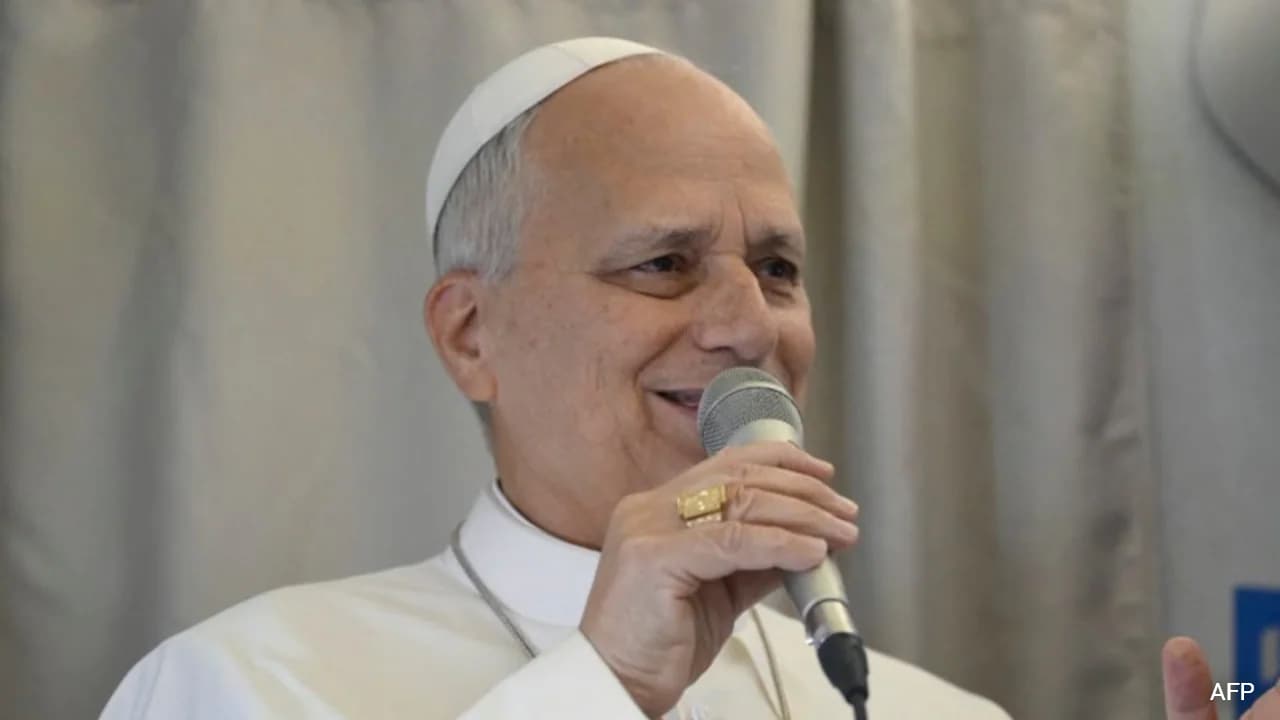
When word slipped out from behind the bronze doors of the Vatican that Pope Leo had emerged from lung cancer surgery claiming to be in "fairly good shape," the global wire services did what they always do. They flattened a terrifying human ordeal into a three-line dispatch. They treated a thoracotomy or a minimally invasive lobectomy—an operation where surgeons part the ribs to excise a malignant shadow from the very engine of human speech—as if it were a routine dental cleaning. To understand the full picture, we recommend the recent report by Al Jazeera.
They missed the real story entirely.
To understand why three modest words—"fairly good shape"—carry the weight of an earthquake across both medical science and two millennia of institutional history, you have to step out of the press room and into the recovery suite. You have to look at what happens to an aging body when a piece of its lung is cut away, and what happens to a billion-member institution when the man wearing the Fisherman’s Ring has to fight simply to draw air.
The Architecture of a Vulnerable Chest
Consider a hypothetical patient we will call Matteo. Matteo is seventy-one, a retired carpenter from Genoa who spent forty years breathing sawdust and salt air, and who went in for a routine chest scan only to find a dime-sized opacity tucked into the upper lobe of his right lung.
When Matteo wakes up after surgery, he is not thinking about theology or geopolitics. He is thinking about the chest tube. Every surgical patient knows the tyranny of that clear plastic drain snaking out from between the ribs, pulling fluid and trapped air out of the pleural space so the remaining lung can expand against the chest wall. To understand how a lung heals after a wedge resection or a lobectomy, think of a partially deflated hot-air balloon trying to fill a rigid wooden barrel; until the air leaks seal and the fluid drains, the balloon cannot press flush against the wood, and every single cough feels like a lightning bolt tearing across your sternum.
I have watched family members endure that exact recovery, holding a folded pillow tightly against their ribs just to survive a single sneeze, their voices reduced to a papery whisper because there simply isn't enough air volume left in the bellows to vibrate the vocal cords.
That is the physical reality behind Pope Leo’s understated dispatch.
When a pontiff undergoes surgery for lung cancer, the public imagines a marble statue temporarily placed in storage. The reality is flesh, cartilage, anesthesia fog, and the grueling, unglamorous work of spirometry—blowing slowly into a plastic tube every hour to force collapsed alveoli back open so pneumonia does not creep in during the night. Saying you are in "fairly good shape" after thoracic surgery is not a clinical diagnosis. It is the universal code spoken by every bruised, exhausted survivor on earth who wants their children—or, in this case, their flock—to stop crying in the hallway.
Why the Vatican Never Whispers Without a Reason
History is brutally honest about what happens when popes get sick. For centuries, the Apostolic Palace treated papal illness like a state secret locked inside an iron vault, terrified that a cough in Rome would trigger a succession crisis in Madrid, Vienna, or Paris.
Look back at the twentieth century alone. When Pope Pius XII deteriorated in 1958, his personal physician famously sold photographs of the dying pontiff on his deathbed to tabloid magazines, turning a sacred agony into a grotesque spectacle. Two decades later, when John Paul II survived an assassin's bullets in St. Peter's Square and later endured the slow, agonizing march of Parkinson's disease, the world watched a man who had once skied down the Apennines struggle to force a single syllable past frozen vocal cords during Easter Sunday blessings. Even Pope Francis, facing repeated bouts of bronchitis, intestinal surgery, and sciatica, spent years navigating the relentless rumor mill of Italian newspapers that drafted his obituary every time he canceled a morning audience.
Against that heavy, anxious backdrop, Pope Leo’s candid phrasing lands like a deliberate break from centuries of institutional theater.
He did not claim to be miraculously restored. He did not hide behind vague bulletins about "routine seasonal fatigue" or "preventative checkups." By acknowledging the reality of lung cancer surgery while offering a measured, grounded assessment of his own stamina, Leo did something quietly radical for an absolute monarch. He admitted his humanity without surrendering his authority.
The Invisible Stakes of Early Detection
Yet if you only read this news through the lens of Vatican intrigue, you miss the urgent, life-or-death lesson sitting right in front of us.
Lung cancer remains the deadliest malignancy on the planet, claiming more lives each year than breast, prostate, and colorectal cancers combined. For decades, a diagnosis felt like a death sentence handed down in a cold examination room because the lungs contain very few pain receptors. A tumor can grow silently in the dark for years, casting no warning signs until it presses against a major airway or spreads to the bone, at which point surgery is rarely an option.
The mere fact that Pope Leo underwent surgery—rather than immediate systemic chemotherapy or palliative radiation—tells every oncologist on earth a crucial story before a single medical chart is ever released. You only operate on lung cancer when you catch it early enough to cut it out cleanly.
Think about what that means for ordinary people walking past hospital billboards every day. Low-dose computed tomography scans—simple, painless ten-minute imaging tests—have completely rewritten the survival math for localized lung tumors. When caught at Stage I before lymph node involvement, surgical resection pushes five-year survival rates past seventy or eighty percent. Left undiscovered for eighteen more months, that same silent nodule drops survival odds into the single digits.
Pope Leo has access to the finest diagnostic imaging and thoracic surgeons in Italy, likely operating out of Rome’s Gemelli Hospital—the famous tenth-floor suite that John Paul II affectionately nicknamed "Vatican Three." Most people do not have a dedicated papal floor waiting for them. They have crowded waiting rooms, insurance pre-authorizations, and the terrifying temptation to ignore a lingering cough because they are too busy working to schedule a scan.
The Voice That Must Carry Across a Square
There is an irony tucked inside a lung operation on a pope that cuts deeper than almost any other profession. A carpenter works with his hands. A mathematician works with a chalkboard. A pope works with his breath.
In the Catholic tradition, the very word spirit—spiritus in Latin, pneuma in Greek—literally means breath, wind, air moving through the lungs. The entire architecture of the papacy relies on the spoken voice: the murmured absolution, the rhythmic chant of the Mass, the homily echoing across the cavernous acoustics of St. Peter’s Basilica, the Urbi et Orbi blessing broadcast across six continents.
When a thoracic surgeon removes a portion of a lung, the body eventually compensates. Over months, the remaining lung tissue expands slightly, the diaphragm strengthens, and oxygen saturation climbs back toward normal. Yet in the first weeks after surgery, every sentence requires conscious calculation. You learn to ration your words the way a hiker rations water in the desert. You speak in shorter phrases. You pause where you never used to pause.
Imagine standing before tens of thousands of expectant faces—or sitting across from diplomats, cardinals, and grieving families—knowing that the physical instrument of your ministry has been permanently altered. That is the quiet, unspoken crucible waiting on the other side of the hospital discharge papers. Will his voice carry? Will the fatigue of afternoon audiences force a slower, more delegated style of governance? Could a prolonged recovery reopen the modern debate sparked by Benedict XVI’s historic resignation in 2013—the question of whether a pope is obligated to step down when physical frailty limits his stamina, or whether enduring weakness in full view of the world is itself a form of leadership?
No medical bulletin can answer those questions. Even the best surgeons at Gemelli cannot measure the psychological weight of waking up at three in the morning in a quiet room, testing your lungs against the dark, and wondering how many winters remain.
What Survives the Scalpel
I remember sitting with an older friend three days after his upper left lobe was removed. He was a man who had spent his whole life filling rooms with noise—boisterous, impatient, always three steps ahead of everyone else in the conversation. When I walked into his hospital room, he was propped upright at a forty-five-degree angle, pale as parchment, watching afternoon sunlight creep across the linoleum floor.
He didn't give me a speech about courage. He didn't pretend the pain wasn't tearing him in half every time he swallowed. He just looked at me, took one slow, deliberate breath that made his shoulders rise an inch, and whispered, "I'm still here."
That is the unvarnished truth stripped of every headline, every press release, and every speculative column written from a safe distance. Survival is rarely cinematic. It does not look like a triumphant wave from a balcony or a flawless address delivered without a tremor. More often, it looks like a man in a quiet room, resting between breaths, measuring his progress not in grand decrees, but in the steady, stubborn rise and fall of his own chest.
Somewhere in Rome tonight, monitors are blinking softly in the dim light, recording the quiet, persistent rhythm of a lung learning to work with less than it had a week ago.