You can have all the shootout scenes and heist sequences you want, but they don't mean a thing without a beating heart behind them. When the first season of HBO’s crime drama Task exploded onto screens, audiences expected another high-octane thriller in the vein of Mare of Easttown. What they got instead was something far heavier. They got a brutal, unblinking look at grief and structural collapse.
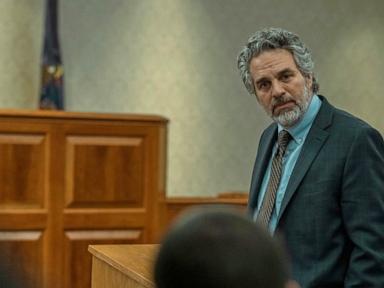
At the very center of this storm is Tom Brandis, an FBI agent and former Catholic priest played with shattering vulnerability by Mark Ruffalo. His character isn't just dealing with the usual gritty television trauma. He is wrestling with the ultimate betrayal of his universe. His adopted son murdered his wife.
When showrunner Brad Inglesby sat down to map out the seven-episode series, he didn't start with the robbery mechanics or the tracking of the Dark Hearts motorcycle gang. He started with the absolute lowest point of a man’s life. He began with a father standing in a courtroom, reading a victim impact statement while his own flesh and blood awaits sentencing for matricide.
The Blueprint of a Broken Man
Most crime shows use the procedural element as a crutch. The mystery drives the plot, and the character development happens during the quiet moments between interrogations. Inglesby flipped that dynamic entirely on its head.
The emotional foundation of the show was locked in before the external plot even existed. Inglesby revealed that the agonizing courtroom scene was among the earliest pieces of text written for the series. For him, the narrative puzzle wasn't about how Tom Brandis would catch a group of thieves robbing drug houses in Delaware County, Pennsylvania. It was about how a man who dedicated his life to God could possibly survive when that same God allowed his family to be obliterated from the inside out.
To make that courtroom moment land with genuine authenticity, Inglesby didn't rely on Hollywood tropes of theatrical grieving. He looked at real life. He researched the true stories of parents navigating severe domestic challenges with children experiencing profound mental struggles. One specific account stuck with him. A parent confessed to hating Fridays because seeing other families joyfully pick up their kids for the weekend served as a cruel reminder of the isolation waiting at home. That raw, unvarnished exhaustion became the fuel for Ruffalo's performance.
Breaking Down the Dynamic of Two Fathers
While Mare of Easttown focused heavily on the weights borne by mothers, Task redirects its lens toward the complexities of fatherhood, guilt, and the desperate lengths men go to when they feel cornered. The narrative balance works because Ruffalo has a perfect counterweight in Tom Pelphrey, who plays Robbie Prendergast.
Robbie isn't a cartoon villain. He is a local garbage truck driver who robs drug dens to keep his family afloat. He is a criminal, yes, but he is also a protective uncle and father trying to raise kids in a town that feels entirely left behind. This sets up a terrifyingly empathetic collision course. You don't want either of these men to lose, yet you know they are running full speed toward a total wreck.
| Character | Actor | Core Motivation | The Ultimate Crisis |
|---|---|---|---|
| Tom Brandis | Mark Ruffalo | Seeking spiritual recovery and justice | Reconciling faith with family tragedy |
| Robbie Prendergast | Tom Pelphrey | Providing survival for his family | Escalating violent crimes to escape poverty |
The peak of this parallel journey happens in the fifth episode, when Robbie kidnaps Tom. Instead of a typical Hollywood hostage situation filled with screamed demands, the show gives us a long, quiet car ride into the Poconos. It becomes a theological debate between an ex-priest who wants to believe in goodness and an atheist criminal who thinks the universe is empty. When Robbie eventually sets Tom free instead of killing him, choosing a path of self-sacrifice instead, it isn't just a plot twist. It is the catalyst that allows Tom to see a flicker of grace in a dark world.
The Crushing Weight of Getting the Neighborhood Right
Inglesby grew up in the suburbs of Philadelphia, right where the urban sprawl bleeds into rural Pennsylvania landscape. He knows the people. He knows how they talk, what they wear, and exactly how they pronounce "water." He moved back to the area around the time Mare took off, and he stayed there to produce Task.
Living among your subjects creates a unique kind of creative paranoia. When you walk the same streets as your characters, you become hyper-vigilant about accuracy. Inglesby has spoken about the pressure of the local gaze. He knows that if a character wears the wrong T-shirt, listens to a song that wouldn't play on a local radio station, or drinks the wrong brand of beer, the illusion shatters instantly for the people who actually live there.
That precision pays off. The working-class environment of Delaware County doesn't feel like a decorated stage set. It feels heavy, cold, and entirely real. It gives the actors a solid foundation to do their best work. Ruffalo's performance works because the world around him feels just as exhausted as he is. Martha Plimpton shines as Tom's FBI supervisor, providing a dry, local humor that keeps the bleakness from becoming completely unbearable.
The Shocking Shift to a Second Season
Initially, Task was engineered to be a standalone limited series. It had a definitive, closed arc. But television executives love a hit, and HBO greenlit a second season.
Transitioning a self-contained story into an ongoing series is an incredibly risky gamble. Inglesby openly admitted that doing another season felt strange initially because the story had hit such a natural conclusion. The decision to return didn't come from a burning desire to drag out Tom Brandis's misery; it came from the fact that the cast and crew simply loved working together in Pennsylvania.
The upcoming season will shift gears dramatically. Two-time Oscar winner Mahershala Ali is joining the cast as a DEA agent, introducing a massive new law enforcement dynamic to the area. While much of the original ensemble will move on, the emotional fallout of that first block of episodes will continue to ripple through the community.
If you want to understand how to build a crime drama that lingers long after the credits roll, look at how Inglesby structured this story. Don't worry about the mechanics of the crime until you know exactly what your protagonist has lost. Strip them of their defense mechanisms, place them in a community that feels entirely alive, and let them fight their way back to the light.