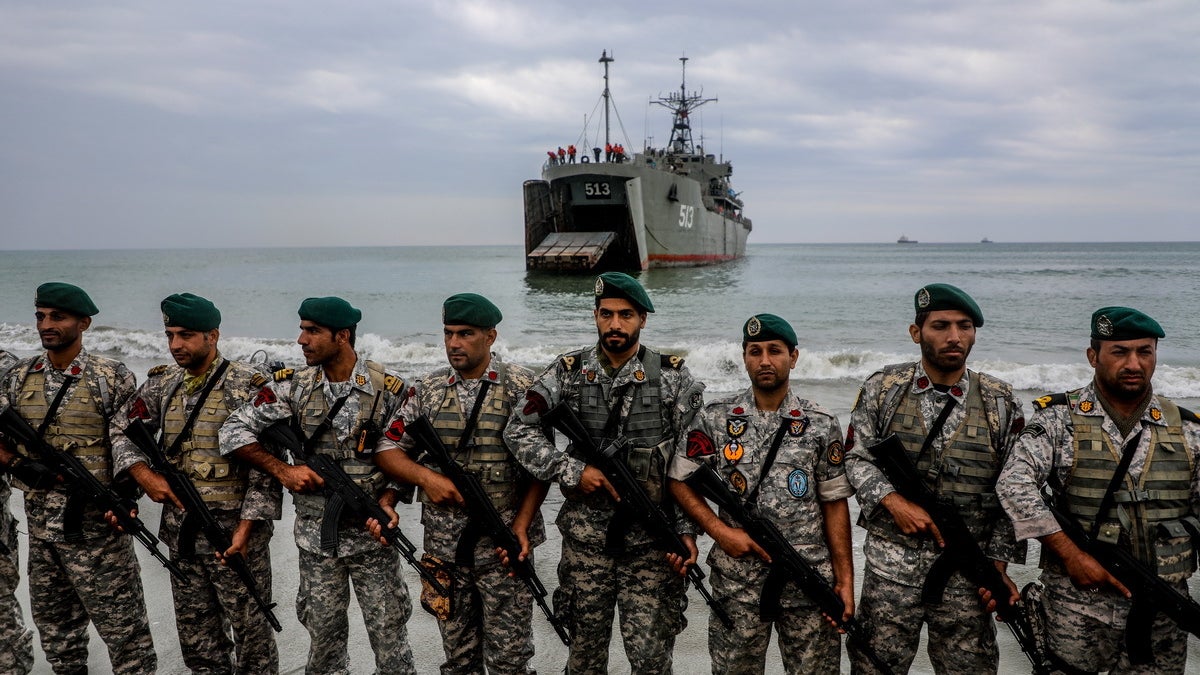
The headlines are screaming about a "decisive move" by the United States to board Iran-linked vessels and seize ships in international waters. The mainstream press treats this like a masterstroke of maritime enforcement. It is not. It is a tactical bandage on a sucking chest wound of failed regional policy.
Washington is playing a high-stakes game of "pirate and police" while the actual mechanics of global energy transit and asymmetric warfare shift beneath its feet. Seizing a few tankers might make for a great press briefing, but it ignores the brutal reality of modern naval attrition. We are watching a superpower use a multi-billion dollar sledgehammer to swat a swarm of hornets, and the hornets are winning the math.
The Myth of Interdiction as Deterrence
The lazy consensus suggests that seizing Iranian oil or weapons shipments will choke the Islamic Revolutionary Guard Corps (IRGC) into submission. This logic is fundamentally flawed. In my years tracking supply chain vulnerabilities and maritime risk, I have seen this movie before. Interdiction does not stop the flow; it merely raises the premium for the smugglers.
Iran has spent four decades perfecting the "ghost fleet" strategy. They use ship-to-ship transfers, AIS spoofing, and a revolving door of shell companies registered in jurisdictions that don't give a damn about US Treasury sanctions. When the US seizes one ship, it isn't "crippling" a network. It is providing a data point for the Iranians to further refine their evasion tactics.
Interdiction is a performance, not a strategy. It provides the illusion of control while the actual leverage—control over the Strait of Hormuz—remains a hair-trigger away from total chaos.
The High Cost of Low-Tech Resistance
Let’s talk numbers. The cost to the US to maintain a carrier strike group or a high-end destroyer in the Persian Gulf is astronomical. We are burning millions of dollars in fuel, maintenance, and personnel daily to monitor vessels that cost a fraction of that to operate.
The Iranians are masters of "asymmetric cost imposition." They don't need to defeat the US Navy in a blue-water engagement. They just need to make the cost of being there so high that it becomes politically and economically unsustainable.
- US Asset: $2 billion Arleigh Burke-class destroyer.
- Iranian Threat: A $50,000 suicide drone or a converted speed boat with a C-802 missile.
When you start boarding ships in international waters, you invite "tit-for-tat" seizures. For every Iranian tanker the US seizes, expect a commercial vessel with Western ties to be harassed, boarded, or redirected to Bandar Abbas. This creates a risk premium on global shipping that hits the consumer at the pump and the grocery store. Washington isn't just seizing oil; it’s taxing the global economy to maintain a facade of toughness.
International Law Is a Pick-and-Choose Buffet
The Hindustan Times and other outlets cite "international waters" as if it’s a magic shield. It’s a legal gray zone that the US is currently weaponizing. But here is the nuance the "experts" miss: the legal justification for these seizures is often built on domestic US sanctions law, not universal maritime law.
When the US boards a vessel in international waters based on its own domestic policy, it erodes the very "rules-based order" it claims to protect. If Washington can do it, why can't Beijing seize ships in the South China Sea because they violate Chinese domestic fishing regulations? Why can't Russia seize grain ships based on their own internal security decrees?
We are setting a precedent that will be used against Western interests within the decade. We are trading long-term maritime stability for a short-term political win.
The Tanker War 2.0 Fallacy
Observers love to point to the 1980s Tanker War as a success story for US intervention. This is a dangerous historical misreading. The 1980s were a different era of kinetic warfare. Today, the IRGC doesn't need to sink a ship to win. They just need to make the insurance premiums for the region uninsurable.
Lloyd’s of London doesn't care about "decisive US action." They care about the probability of a vessel being detained. The moment boarding operations become a standard US operating procedure, the entire Persian Gulf becomes a "high-risk zone" in the eyes of every major insurer. The result? A massive spike in shipping costs that bypasses Iran entirely and hits every nation relying on that oil.
The Invisible Winners
Who actually wins when the US seizes an Iranian ship?
- Defense Contractors: They get to sell more monitoring equipment and munitions.
- Rival Energy Producers: Every barrel of Iranian oil kept off the market increases the price of their own exports.
- Hardliners in Tehran: Nothing justifies domestic repression and increased military spending like "American piracy" on the high seas.
The losers are the sailors caught in the middle and the global economy that relies on predictable, boring maritime transit.
Why You’re Asking the Wrong Question
The media asks, "Can the US successfully seize these ships?"
The answer is yes, physically.
But the question you should be asking is, "What happens on the thousandth mile after the seizure?"
If the goal is to stop Iran’s regional influence, seizing ships is like trying to stop a flood by catching raindrops with a pair of tweezers. Iran’s influence is built on ground-level proxies, ballistic missile proliferation, and deep-seated religious and political ties that a captured tanker won't change.
I’ve watched Western governments dump billions into "security initiatives" that ignore the cultural and geographic realities of the Middle East. You cannot police a coastline that doesn't want to be policed, especially when the neighbors—China and Russia—are more than happy to facilitate the very trade you’re trying to stop.
The Brutal Truth About "International Cooperation"
The US likes to frame these boarding operations as part of a coalition. The reality is that most "allies" are terrified of the blowback. They will offer verbal support in a press release and then quietly tell their own shipping companies to stay as far away from US-led operations as possible. Nobody wants their cargo held hostage because of a US domestic policy dispute.
The "coalition" is a ghost. It is the US acting as a global policeman while the rest of the world watches with growing anxiety, waiting for the inevitable escalation that sends oil to $150 a barrel.
Stop Visualizing Victory
We need to stop thinking of maritime seizures as a "win." They are a symptom of a failed diplomatic framework. When you resort to boarding ships in the middle of the night, you have already lost the strategic argument. You are now in a street fight, and in a street fight, the guy with the most to lose—the US—usually ends up paying the highest price.
Seizing ships won't stop the drones. It won't stop the enrichment of uranium. It won't stop the proxy wars. It will only ensure that the next time a Western commercial vessel enters the Gulf, it has a target on its back.
The US is walking into a trap of its own making, blinded by the desire to "do something" while ignoring the fact that the "something" in question is exactly what its adversaries want. They want the escalation. They want the chaos. They want the US tied down in a perpetual maritime skirmish that drains resources and political capital.
The brave face in the Pentagon doesn't change the math on the water. If you want to stop the Iranian threat, you have to deal with the source, not the shipping manifest. Everything else is just theater for a distracted public.
Stop cheering for the seizures. Start worrying about the retaliation.