The fluorescent lights of a fourth-floor federal office building hum with a distinct, bureaucratic frequency. It is 4:55 PM on a Thursday. Down the hall, a mid-level analyst named Marcus—a hypothetical composite of thousands of career civil servants working across Washington today—is staring at a draft email. His boss, a presidentially appointed Cabinet official, wants a slide deck pulled together before tomorrow morning. The topic is a new infrastructure grant program rolling out in three swing states. On the surface, the request looks like standard government business. Then Marcus notices the specific framing requested for the final slide: a sharp, partisan jab at the opposition party’s voting record, paired with a slogan that sounds suspiciously like the bumper stickers currently plastered across sedans in Ohio and Pennsylvania.
Marcus pauses. His cursor blinks.
If he sends that deck, and his boss reads those exact lines from a podium paid for by taxpayers tomorrow afternoon, someone has just crossed an invisible tripwire.
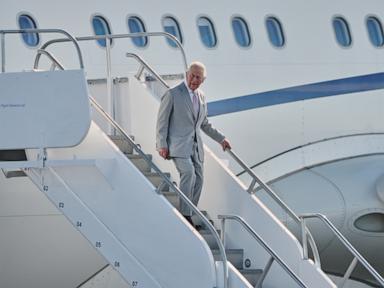
For decades, Americans have watched high-ranking officials step off government jets, stride up to microphones adorned with official agency seals, and deliver speeches that sound remarkably like stump rallies. To the casual observer scrolling past a thirty-second clip on their phone, it looks like normal politics. Isn’t the President’s team supposed to sell the President’s agenda? Isn’t advocacy part of the job?
Yes. And no.
Behind that blurred boundary sits a 1939 statute that most citizens can barely name, let alone quote, yet it serves as one of the primary load-bearing walls of American democracy. Ethics watchdogs across the political spectrum are sounding alarms right now because that wall is showing deep, structural cracks. Cabinet officials are hitting the campaign trail with unprecedented frequency, weaving partisan electioneering into their official duties, and leaving legal scholars to ask a sobering question: when the referee puts on a team jersey, who is left to call the foul?
The Ghost of 1939
To understand why a Cabinet secretary’s speech in a battleground state triggers legal panic among government watchdogs, you have to travel back to the Great Depression.
Picture the late 1930s. Millions of desperate Americans relied on the Works Progress Administration for a paycheck, a hot meal, and basic survival. In states like Kentucky and Tennessee, local political bosses realized they held absolute life-or-death leverage over those workers. The message delivered to shovel-wielding laborers was brutally simple: donate to the incumbent’s campaign, rally for the party, and vote the right way—or lose your relief check by Monday morning.
The public outrage was fierce. In response, Congress passed the Hatch Act of 1939, named after Senator Carl Hatch of New Mexico.
Think of the Hatch Act as a firewall inside a sprawling apartment building. On one side of the wall sits the business of governing—serving every citizen equally, whether they voted for the current administration or despised it. On the other side sits the rough-and-tumble arena of partisan politics—raising money, endorsing candidates, and winning elections. The firewall exists so that the machinery of the federal government, funded by everyone’s tax dollars, cannot be hijacked as a private campaign engine for whoever currently holds the keys to the White House.
For a rank-and-file federal employee like our hypothetical analyst Marcus, the rules of that firewall are unforgiving. If Marcus wears a campaign button to his desk, sends a fundraising link from his government email, or tweets a partisan endorsement while on the clock, he risks suspension or immediate termination. There is no ambiguity. The line is painted in bright, wet neon.
Yet when you climb to the very top of the org chart—to the Cabinet secretaries who run massive departments like Transportation, Labor, Housing, or Health and Human Services—the law bends in strange, counterintuitive ways.
The Exemption Trap
Cabinet officials are not career civil servants; they are Senate-confirmed political appointees. Under the Hatch Act, they occupy a unique, privileged tier. Unlike Marcus, a Cabinet secretary is legally permitted to engage in partisan political activity even while on duty, and even inside a federal building, provided they do not use taxpayer funds to do it.
That single caveat—provided they do not use taxpayer funds—is where the entire system begins to wobble.
How do you separate the human being from the office? When the Secretary of Agriculture steps onto a stage in Iowa, they do not arrive in a rented compact car paying for their own gas. They travel with a security detail. Advance teams scout the venue days ahead. Staffers draft talking points. Air Force planes or chartered jets transport them across time zones.
To manage this impossible knot, federal ethics rules rely on a meticulous accounting dance. If a trip is strictly official—say, inspecting a flooded levee—taxpayers foot the bill. If the trip is strictly political—headlining a party fundraiser—the campaign committee must reimburse the government. And if a trip mixes both, accountants must calculate a precise percentage split down to the dollar.
At least, that is how it works on paper.
In practice, the distinction has dissolved into a gray fog. Over the past several election cycles, across both Democratic and Republican administrations, Cabinet members have perfected the art of the "official" trip that happens to land in a crucial swing district forty-eight hours before early voting begins. They announce a local grant, praise the incumbent senator standing beside them, warn of the catastrophic consequences if the opposing party takes power, and never once utter the magic words "vote for."
Because they avoid explicit campaign slogans, lawyers often classify these appearances as official policy outreach. The taxpayer picks up the tab. The incumbent gets priceless local news coverage. And the challenger is left shouting into the wind, completely outgunned by the sheer weight of the federal treasury.
A Pattern Across Administrations
It is tempting to view this erosion as a partisan crisis belonging solely to whichever party currently occupies the Oval Office. That instinct is understandable, and it is completely wrong. The slow dismantling of ethical norms around official travel and political speech is a bipartisan addiction.
Consider the record compiled by the U.S. Office of Special Counsel—the independent federal agency tasked with investigating Hatch Act violations, not to be confused with Justice Department special counsels. Over the last decade, the agency has issued formal rebuke after formal rebuke to high-ranking officials from across the ideological divide.
During the Trump administration, senior aides and Cabinet-level figures racked up dozens of documented violations. Kellyanne Conway, serving as Counselor to the President, repeatedly used television appearances in her official capacity to attack Democratic candidates and promote the President’s reelection, prompting the Office of Special Counsel to take the extraordinary step of recommending her removal from federal service. Secretary of State Mike Pompeo shattered a decades-old diplomatic taboo in 2020 by delivering a prerecorded speech to the Republican National Convention while on an official taxpayer-funded diplomatic mission in Jerusalem.
When the Biden administration took office, promising a return to strict institutional norms, the gravitational pull of campaign season proved just as irresistible. Watchdog groups flagged multiple Cabinet secretaries for weaving partisan attacks and reelection messaging into official press briefings and agency announcements. Housing Secretary Marcia Fudge and White House Press Secretary Karine Jean-Pierre both drew formal warnings from ethics investigators over remarks that crossed the line into partisan electioneering while speaking in their official roles.
Notice the pattern. Every incoming administration arrives in Washington pledging to respect the firewall. Then the midterms approach. Or a presidential race tightens. The polls look grim, donors grow anxious, and suddenly the temptation to deploy the most recognizable, authoritative voices in the government becomes overwhelming.
Why pay for a thirty-second television ad in Michigan when you can send a Cabinet secretary to stand in front of a newly paved highway, flanked by local reporters, delivering the exact same message for free?
The Toothless Watchdog
If these actions violate federal law, why don’t the offenders face real consequences? Why isn’t anyone fired, fined, or hauled into court?
Here lies the quiet secret that frustrates constitutional scholars and career ethics lawyers to the point of exhaustion: when it comes to the highest levels of the executive branch, the Hatch Act is essentially an honor system backed by a strongly worded letter.
When a low-level postal worker or a VA nurse violates the Hatch Act, the Office of Special Counsel prosecutes the case before the Merit Systems Protection Board. The penalties are swift and brutal—fines up to $1,000, debarment from federal employment for five years, or immediate firing.
When a Senate-confirmed Cabinet official violates the exact same statute, the enforcement mechanism hits a brick wall. Under the law, the Office of Special Counsel cannot fire or fine a presidential appointee. Instead, investigators compile a thorough report documenting the violation and hand it directly to the President of the United States for "appropriate disciplinary action."
Read that again.
The enforcement mechanism for a Cabinet secretary breaking the law to help the President get reelected is to ask the President to punish the secretary for helping him.
Unsurprisingly, presidents almost never discipline their loyal lieutenants for going too hard on the campaign trail. When the Office of Special Counsel recommended firing Kellyanne Conway, the White House dismissed the agency’s findings as deeply flawed and overreaching. When Biden officials received Hatch Act warnings, the White House stood firmly behind them, brushing off the infractions as minor technicalities.
Without a credible penalty, the law loses its deterrent power. Compliance becomes entirely voluntary. And in a hyper-polarized political environment where every election is framed as an existential battle for the soul of the nation, voluntary restraint feels like unilateral disarmament. Nobody wants to be the only side playing by the old rules while the opponent exploits every loophole on the board.
What We Lose When the Wall Falls
It is easy to shrug at all of this. Politics is messy. Politicians stretch the truth, bend rules, and use every lever at their disposal to stay in power. In a world overflowing with urgent crises—inflation, wars abroad, healthcare costs—worrying about whether a Cabinet secretary used the wrong podium during a speech in Pennsylvania can feel like agonizing over etiquette during a bar fight.
That cynicism is exactly what allows the rot to spread.
The invisible stakes of the Hatch Act have nothing to do with protecting delicate political sensibilities. They have everything to do with trust—the fragile, unseen currency that keeps a massive, diverse republic functioning without tearing itself apart.
Imagine you are a small business owner in rural North Carolina, or a teacher in suburban Arizona, or a retired machinist in Wisconsin. You pay your taxes every April. You rely on the Department of Transportation to keep bridges from collapsing, the Department of Agriculture to keep food safe, and the Department of Veterans Affairs to care for your aging parents. You need to believe, down in your bones, that when those agencies make decisions about where to send disaster relief, which communities get broadband grants, or how regulations are enforced, those choices are driven by data, need, and the public good.
The moment Cabinet officials turn their agencies into extensions of a campaign headquarters, that faith fractures.
If the Secretary of Health and Human Services spends Tuesday morning railing against the opposing party at a political rally, why should a voter belonging to that opposing party trust the department’s public health guidance on Wednesday afternoon? If the Secretary of Energy frames every green-tech grant as a victory lap for the President’s reelection campaign, citizens in red states begin to suspect—rightly or wrongly—that federal dollars are being used as political patronage rather than national investment.
Worse still, it poisons the culture inside the agencies themselves.
Think back to Marcus, our hypothetical analyst staring at his computer screen at 4:55 PM. When career civil servants—scientists, economists, lawyers, engineers—are pressured by political appointees to massage data, tweak press releases, or schedule official events to align with campaign calendars, they are placed in an impossible bind. If they push back, they risk being sidelined, labeled disloyal, or pushed out of careers they spent decades building. If they comply, they become complicit in turning nonpartisan public institutions into partisan weapons.
Over time, the best people leave. Those who remain learn to keep their heads down and follow political winds rather than objective truth. The institution hollowing out from the inside looks identical from the street—the marble columns still gleam, the flags still snap in the wind—until a real crisis hits and there is nobody left inside who knows how to steer the ship.
Can the Guardrails Be Rebuilt?
Restoring the boundary between governing and campaigning does not require reinventing the Constitution, nor does it demand naive faith in human nature. It requires fixing the broken mechanics of accountability.
Legal scholars and bipartisan ethics reformers have spent years sketching out practical, concrete remedies that could give the Hatch Act real teeth at the top of the executive branch.
First, Congress could sever the absurd conflict of interest that makes the President the sole judge and jury for Cabinet violations. Allowing the Merit Systems Protection Board—or an independent judicial panel—to levy substantial, personal civil fines directly against Senate-confirmed appointees who violate the law would instantly change the calculus. A $50,000 personal fine that cannot be paid using campaign funds or taxpayer dollars would make any Cabinet secretary pause before turning an official press conference into a stump speech.
Second, transparency rules around mixed-purpose travel need radical sunlight. Currently, the formulas used to split costs between taxpayers and campaign committees are opaque, often shielded from public scrutiny until months or years after an election has already been decided. Requiring agencies to publish itemized, real-time receipts showing exact taxpayer versus campaign expenditures within seven days of any domestic trip during an election year would allow journalists and voters to see immediately who is paying for the show.
Finally, enforcement depends on public refusal to normalize the abuse. Voters hold immense power when they stop excusing ethical shortcuts simply because "our team" is the one taking them. Accountability only works when citizens apply the exact same standard to a Cabinet secretary they admire as they do to one they despise.
Step outside that fourth-floor federal office building as dusk settles over Washington. Down on the street, commuters hurry toward the Metro station, briefcases slung over their shoulders, tired from a long day of trying to make the machinery of a vast country work for three hundred and thirty million people. They are not thinking about 1939 statutes or obscure administrative rulings. They are just hoping the systems they pay for are honest, fair, and built to serve everyone equally.
Above them, inside corner offices lined with flags and framed portraits, the lights stay on late. Tomorrow morning, another official plane will taxi down a runway at Joint Base Andrews, bound for a swing state, carrying a speech that someone stayed up all night to write—and leaving the rest of us to figure out who is actually paying the fare.