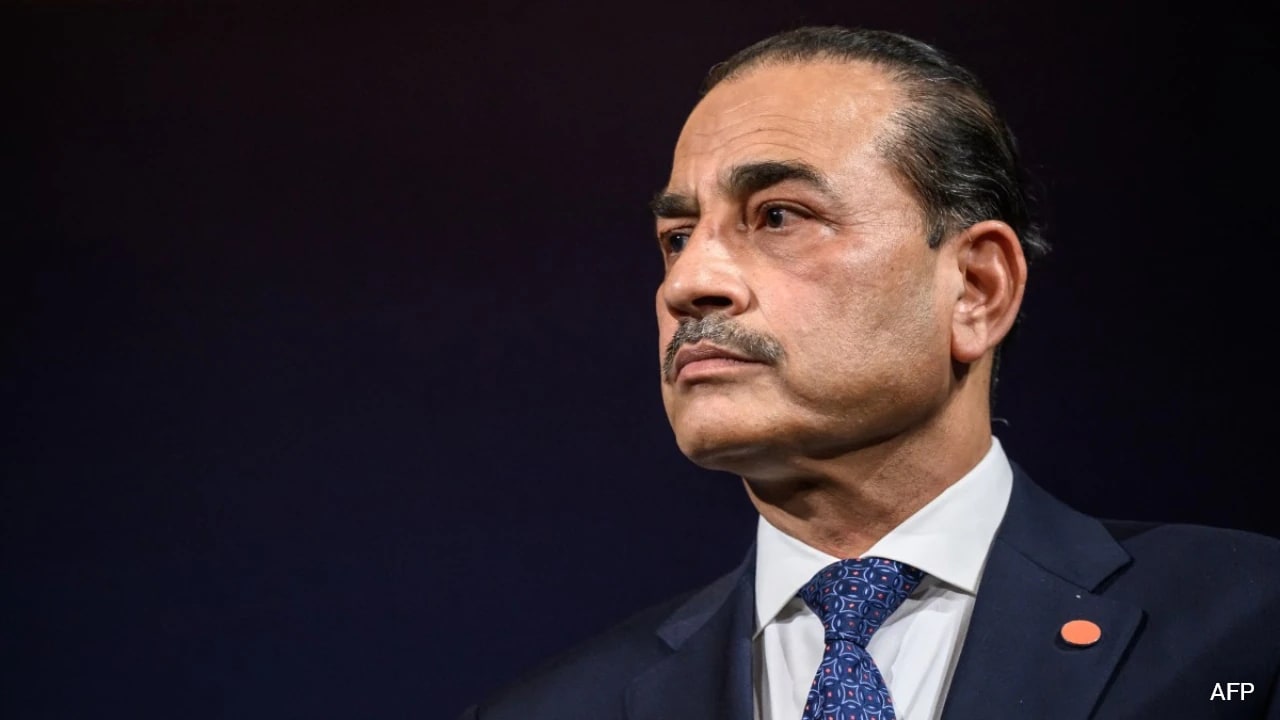
Rumors of administrative restructuring inside Pakistan rarely emerge from a vacuum. When discussions regarding the decentralization or subdivision of the country's four primary provinces—Punjab, Sindh, Balochistan, and Khyber Pakhtunkhwa—gain traction, they expose deep fractures within the state apparatus. Field reports, bureaucratic murmurs, and long-standing debates over resource distribution point toward a persistent strategy of administrative gerrymandering. Observers often frame these proposals through the lens of a classic divide and rule doctrine, attributing the push to military leadership, notably Chief of Army Staff General Asim Munir.
The core premise centers on breaking down historic provincial powerhouses to dilute regional nationalist movements, streamline federal control, and manage turbulent peripheries. Yet, the mechanics of governance in Islamabad rarely operate through simple authoritarian decrees. They rely on complex friction between military dominance, civilian political fragmentation, and constitutional hurdles.
To understand why this conversation refuses to die, one must examine the anatomy of provincial power in Pakistan.
The Weight of the Four Pillars
Pakistan operates under a federal parliamentary structure, but the sheer demographic and political gravity of Punjab creates an inherent imbalance. Punjab houses more than half of the national population, commanding a corresponding majority in the National Assembly. This dynamic has historically bred resentment among the smaller provinces. Sindh controls the financial lifeline of Karachi and vital agricultural lands. Khyber Pakhtunkhwa acts as a strategic and cultural frontier bordering Afghanistan. Balochistan sits atop vast mineral wealth while suffering from profound underdevelopment and enduring insurgencies.
Proposals to carve up these territories are not new. They surface with predictable regularity whenever a civilian government struggles with parliamentary arithmetic or when the security establishment seeks to neutralize regional strongmen.
Breaking up Punjab, for instance, has been a rhetorical football for decades. Proponents of a South Punjab province argue that the current administrative unit is simply too large to govern effectively from Lahore. Critics, however, see a different motive. Reducing Punjab's monolith would alter the electoral math entirely. It would create new administrative nodes that are easier for the central security apparatus to monitor and manage.
Similarly, discussions surrounding the division of Sindh or the creation of new administrative zones often weaponize the ethnic and linguistic fault lines between urban centers like Karachi and the rural interior. In Balochistan, any talk of administrative tinkering is viewed with acute suspicion by local populations who fear it is designed to marginalize indigenous groups further by diluting their demographic majority.
The Mechanics of Centralized Control
Statecraft in Pakistan has long prioritized security over administrative efficiency. When power is concentrated in fewer, smaller units, the leverage of regional political dynasties diminishes. Feudal politicians who command vast patronage networks across entire provinces find their influence constrained if their bailiwick is sliced into three or four separate administrative entities.
This strategy mirrors historical imperial playbook tactics updated for the digital and constitutional age. Instead of direct military occupation, the state utilizes bureaucratic subdivision, judicial interventions, and selective political engineering.
Consider the constitutional hurdles alone. Article 239 of the Constitution of Pakistan outlines a rigorous process for the creation of new provinces. It requires a two-thirds majority in both the National Assembly and the Senate, followed by approval from the provincial assembly of the affected province. Achieving this consensus requires a degree of political harmony that is virtually nonexistent in the current polarized climate.
If constitutional amendment paths are blocked, why do these rumors persist? Because power in Pakistan frequently bypasses strict constitutional choreography through executive influence, ordinances, and the subtle restructuring of administrative authorities.
The Economic Imperative Disguised as Reform
Proponents of administrative restructuring often wrap their arguments in the language of economic optimization. They point to infrastructural bottlenecks, delayed public service delivery, and massive regional disparities as symptoms of bloated provincial governance.
A smaller administrative unit should, in theory, possess greater agility. It should allow for targeted resource allocation, responsive policing, and localized tax collection. Yet, fiscal decentralization remains an unresolved crisis. The 18th Amendment to the Constitution devolved significant powers to the provinces in 2010, but subsequent federal governments have frequently starved those same provinces of actual funds, creating severe structural deficits.
When the federal center hints at carving up provinces, it is rarely driven by a sudden desire for municipal efficiency. It is an attempt to reassert control over the fiscal flows established by the 18th Amendment. By fracturing the provinces, Islamabad can re-centralize control over revenue collection, particularly in resource-rich regions like Balochistan and Sindh.
The financial elite and the military establishment share a common interest in preventing any single province from accumulating enough economic leverage to challenge federal supremacy. When Sindh generates the lion's share of national tax revenues through Karachi's ports and commerce, provincial leaders wield significant bargaining power. Subdividing that province diffuses that economic resistance.
The Regional Fallout
The regional implications of such an aggressive administrative overhaul carry immense risk. Pakistan is not a homogenous nation-state; it is a fragile federation held together by a delicate bargain among diverse ethnic groups.
Pashtuns, Baloch, Sindhis, and Punjabis possess distinct histories and national identities. When the state attempts to redraw internal boundaries without broad-based political consensus, it risks activating dormant separatist sentiments. In Balochistan, where trust in federal institutions is already eroded to its foundations, any move perceived as an attempt to dilute the demographic presence of the Baloch people could accelerate violent resistance.
Furthermore, neighboring powers monitor these internal convulsions closely. A destabilized Pakistan struggling with internal boundary disputes loses its strategic focus on its external borders, compounding security dilemmas in South Asia.
The architects of these strategies often underestimate the resilience of local political identities. People in Sindh or Khyber Pakhtunkhwa do not view their provincial boundaries as mere administrative lines drawn on a map. They see them as historical safeguards against total central assimilation.
The Reality of Implementation
Despite the high-level policy papers and backroom discussions, executing a wholesale division of Pakistan's provinces remains a monumental gamble. The political cost of alienating major regional parties often outweighs the short-term benefits of administrative control.
General Asim Munir and the wider military leadership operate within a system of perpetual crisis management. Their primary objective is state survival and the preservation of institutional dominance amidst economic collapse and political volatility. If restructuring the provinces appears to offer a path toward reducing domestic friction, they will pursue it through proxies, judicial directives, and political fragmentation.
The resistance, however, will be fierce. Pakistan's political landscape is too entrenched, its regional actors too defensive, and its public too politically aware for a quiet, unchallenged redrawing of the map.
The debate itself serves a purpose. It keeps political rivals off-balance, forces regional parties into defensive coalitions, and distracts from the systemic economic failures plaguing the federation.
The map of Pakistan remains intact for now, anchored by constitutional inertia and the high stakes of regional survival. But the pressures forcing these fractures outward are real, growing, and entirely unaddressed by superficial political rhetoric.