Political pundits love a clean narrative, and nothing sells airtime faster than declaring a sudden ideological realignment across the American heartland. When Democratic candidates make unexpected gains in Midwestern suburbs, Rust Belt industrial towns, or Plains state legislatures, coastal commentators inevitably reach for the same tired metaphor: a blue wave breaking across middle America. Yet on-the-ground election data, historical voting patterns, and decades of precinct-level reporting tell a far more complicated story. What looks from afar like a sweeping partisan conversion is almost always a localized, fragile coalition built on specific economic grievances, shifting suburban demographics, and temporary backlash against the party in power.
To understand why these electoral surges happen—and why they rarely solidify into permanent majorities—you have to look past national cable news panels and examine how voters between the Appalachians and the Rockies actually make decisions. They do not move in unison. They react to local factory closures, school board battles, property tax assessments, and ballot initiatives that bypass party labels entirely.
The Anatomy of a Heartland Surge
National political coverage treats middle America as a monolithic block of red states waiting to be flipped, or a solid wall of conservative populism that cracks only during historic national landslides. Both assumptions are wrong. The twelve states typically grouped into the Midwest, alongside border states like Missouri and Kentucky, contain some of the most politically volatile precincts in the country.
When a blue wave materializes in these regions, it rarely stems from rural counties suddenly embracing national Democratic platforms. Instead, it is driven by three distinct geographic engines operating simultaneously.
First, inner-ring and outer-ring suburbs surrounding mid-sized metros—places like Grand Rapids, Michigan; Waukesha County outside Milwaukee; Johnson County outside Kansas City; and Hamilton County north of Indianapolis—have undergone a steady demographic transformation. As college-educated professionals, healthcare workers, and corporate employees have moved into these communities, the traditional country-club Republicanism that dominated for forty years has eroded. These voters are often fiscally cautious, yet they recoil at hardline social policies and institutional instability.
Second, university towns and regional medical hubs have grown faster than the surrounding agricultural counties. Cities like Madison, Ann Arbor, Iowa City, and Lawrence act as demographic anchors. When voter turnout spikes among students and faculty—often triggered by specific ballot measures regarding reproductive rights, minimum wage hikes, or public education funding—the raw vote totals generated in these pockets can overwhelm low-turnout rural margins statewide.
Third, mid-sized industrial cities—the classic Rust Belt towns that have spent decades navigating manufacturing decline—swing violently based on kitchen-table economics. Voters in Erie, Pennsylvania, Kenosha, Wisconsin, or Lorain, Ohio, exhibit low partisan loyalty compared to coastal voters. Many are registered independents or legacy union members who split their tickets without hesitation. When an incumbent administration fails to deliver tangible wage growth or inflation relief, these voters punish the party in charge.
The Illusion of Realignment
Here is where campaign strategists consistently misread the room. A surge in Democratic vote share during a midterm election or a high-profile gubernatorial race is not the same thing as a durable partisan realignment.
Consider a hypothetical example to see how this plays out at the precinct level. Imagine a suburban township outside Columbus, Ohio, that voted Republican by twelve points in 2012, shifted to a two-point Republican margin in 2016, and flipped to a six-point Democratic win in a subsequent midterm. National observers point to that township as proof that middle America is turning blue.
Look closer at the ballots cast in that exact same precinct. While the Democratic candidate for governor won by six points, the Republican candidate for state auditor or county sheriff frequently wins that exact same pool of voters by four points. Voters are not signing up for a lifetime membership in the Democratic Party. They are firing incumbents they dislike, rejecting candidates they view as extreme, or voting strategically to restore what they perceive as political balance.
What National Pundits Miss About Rural and Small-Town Voters
The most persistent blind spot in modern political journalism is the assumption that rural and small-town voters in middle America vote exclusively on cultural grievances. Cultural identity matters, and guns, religion, and social values carry immense weight in non-metro counties. However, reducing heartland politics to culture wars ignores the deep economic pragmatism that drives local elections.
Across agricultural states like Iowa, Nebraska, and Minnesota, voters have a long history of supporting populist economic policies—farm subsidies, cooperative utilities, public infrastructure investment, and aggressive antitrust enforcement against meatpacking conglomerates—while remaining socially conservative. Historically, the Democratic-Farmer-Labor (DFL) coalition in Minnesota and similar progressive-agrarian movements across the upper Midwest thrived precisely because they spoke the language of rural economic self-interest.
When modern Democratic campaigns win back ground in these areas, it is almost never because they won an argument on national cultural messaging. It happens when local candidates focus relentlessly on tangible regional issues:
- Rural hospital closures and the loss of local obstetric and emergency care facilities across counties that lack major medical centers.
- Consolidation in agriculture, where corporate seed monopolies and packing plant oligopolies squeeze independent family farms on both input costs and market prices.
- Public school funding, which serves as the lifeblood and largest employer in hundreds of small towns across the plains.
- Water quality and land rights, including disputes over carbon capture pipelines, industrial runoff, and eminent domain seizures affecting private farmland.
A candidate who campaigns in rural Wisconsin or western Pennsylvania by talking about local trade schools, broadband expansion, and hospital staffing can cut Republican margins in rural counties from seventy percent down to fifty-eight percent. That twelve-point shave in the countryside, combined with high suburban turnout, is the mathematical formula behind every modern midwestern Democratic victory. You do not have to win rural counties to win statewide in middle America. You just have to lose them by less.
The Ballot Initiative Effect
If you want to understand the mechanics of recent Democratic overperformance in states long written off as safely conservative, look at direct democracy. In states that allow citizen-initiated constitutional amendments and statutory referendums—such as Ohio, Michigan, Kansas, Missouri, and Montana—voters have repeatedly separated policy from party.
Time and again, electorates that comfortably elect Republican governors, senators, and state legislatures have voted overwhelmingly in favor of policies traditionally championed by Democrats. They have voted to expand Medicaid, raise the state minimum wage, legalize recreational marijuana, protect reproductive freedom, and establish independent redistricting commissions.
This phenomenon exposes a massive disconnect between party branding and policy preference in middle America. For millions of heartland voters, the Democratic Party brand carries heavy baggage—associated with coastal elites, bureaucratic overreach, and cultural condescension. Yet when those exact same policies are stripped of party labels and presented directly on a ballot in plain English, majorities support them.
Smart political operatives have learned to weaponize this dynamic. By placing popular economic or personal-freedom initiatives on the ballot during general elections, organizers draw low-propensity voters to the polls who might otherwise stay home. Once those voters are standing in the booth to vote yes on a minimum wage increase or a constitutional amendment, a significant percentage of them stay on the ballot to vote for Democratic candidates down-ballot. The ballot measure acts as a turnout engine that bypasses partisan resistance.
Gerrymandering and the Structural Ceiling
Even when a genuine surge in Democratic votes washes across a midwestern state, it slams directly into a structural wall built over the last two decades: legislative mapmaking.
Understanding middle American politics requires separating statewide races from state legislative and congressional races. Statewide offices—governors, U.S. senators, attorneys general—cannot be gerrymandered. A raw majority of votes wins. Consequently, Democrats have repeatedly won governorships and Senate seats in states like Wisconsin, Michigan, Pennsylvania, Kansas, and Kentucky even during cycles where Republicans maintained firm control of the statehouses.
Inside those state legislatures, the math operates under entirely different rules. Following the 2010 census, sophisticated geographic mapping software allowed state lawmakers to draw district boundaries with surgical precision. By packing urban and university voters into hyper-concentrated districts where Democrats win with eighty percent of the vote, and cracking suburban communities across multiple rural-anchored districts, mapmakers engineered durable legislative majorities that are largely insulated from wave elections.
In states like Wisconsin and Ohio, this structural asymmetry meant that Democrats could win over fifty-three percent of the total statewide vote for state assembly or congressional seats while walking away with fewer than forty percent of the actual seats. Even where state supreme courts have ordered new maps—as happened in Wisconsin ahead of the 2024 cycle and Michigan via an independent commission—the natural geographic clustering of Democratic voters in dense cities creates an inherent structural disadvantage compared to Republican voters spread efficiently across towns and rural townships.
A wave of voters can easily flip a governor's mansion. Breaking a legislative supermajority requires a sustained, multi-cycle demographic shift that overcomes geography itself.
The Historical Precedent of Heartland Backlash
Nothing happening in middle America today is entirely unprecedented. The region has always functioned as the country's political shock absorber, swinging aggressively against whichever party overplays its hand in Washington or the state capital.
Look back at 2006 and 2008. Exhaustion over the Iraq War, the collapse of domestic manufacturing, and the 2008 financial crisis triggered a massive Democratic surge across the heartland. Democrats held Senate seats in North Dakota, South Dakota, Montana, Arkansas, Missouri, and Indiana. They controlled state legislatures across the Midwest and won presidential electoral votes in Indiana, Ohio, and Iowa. Pundits at the time confidently predicted a permanent Democratic lock on the industrial heartland.
Within four years, that entire coalition evaporated.
The 2010 midterms saw one of the sharpest reversals in modern American political history, driven by backlash against the Affordable Care Act, lingering unemployment, and a fierce conservative grassroots mobilization. Within six years, states like Iowa and Ohio had shifted decisively into the Republican column, while traditional Democratic strongholds across rural Minnesota, Wisconsin, and Michigan collapsed.
The lesson from 2008—and from the Republican reversal in 2010—is brutal and clear: heartland voters rent their loyalty; they rarely sell it.
When either party interprets a narrow wave election in middle America as a mandate to govern from its ideological fringe, the backlash is swift and unforgiving. Suburban independents who voted Democratic to check conservative overreach will pivot back to Republicans the moment they feel taxes are rising too fast, public safety is deteriorating, or local schools are embroiled in ideological disputes. Conversely, working-class voters who backed Republicans on promises of economic nationalism will abandon them if factory jobs continue disappearing and healthcare costs climb.
What Actually Sustains Political Power in the Midwest
If a single wave election does not constitute a permanent shift, what does it take for Democrats—or any political coalition—to build lasting power across middle America? Looking closely at the states where Democrats have actually consolidated control over the past decade, such as Michigan and Minnesota, reveals a clear blueprint that has very little to do with national television talking points.
1. Local Candidate Recruitment Over National Messaging
The candidates who outperform national benchmarks in middle America almost always possess deep, verifiable roots in their districts. Voters in small towns and mid-sized cities have an acute radar for carpetbaggers and candidates reciting focus-grouped national scripts. Candidates who come from local school boards, county commissions, small businesses, labor unions, or military service carry built-in credibility that insulates them from national partisan attacks.
2. Relentless Focus on Bread-and-Butter Governance
In states where Democrats won narrow trifectas—control of the governorship and both legislative chambers—their political survival depended entirely on delivering visible, material improvements. Repealing restrictive labor laws, investing heavily in road and bridge repairs, expanding free school meals, cutting prescription drug costs, and protecting reproductive rights gave voters concrete reasons to reward them. Abstract ideological battles alienate the exact independent voters who make up the decisive margin in swing districts.
3. Year-Round Ground Infrastructure
You cannot parachute field organizers into Ohio, Wisconsin, or Pennsylvania six weeks before November and expect to move skeptical voters. The most successful regional operations maintain year-round county-level offices, invest in local community media, and rely on trusted neighborhood messengers rather than impersonal digital ad blitzes. Trust in middle America is built face-to-face over years, not bought through last-minute television saturation.
4. Respecting Voter Intelligence on Nuanced Issues
Heartland voters regularly hold positions that confuse ideological purists on both sides. A voter in rural Michigan might strongly support union collective bargaining rights and reproductive freedom while simultaneously opposing strict gun control measures and aggressive federal environmental mandates. Campaigns that demand total ideological conformity lose these voters immediately. Candidates who acknowledge nuance and focus on common ground keep them in the coalition.
The Fragility of the Current Map
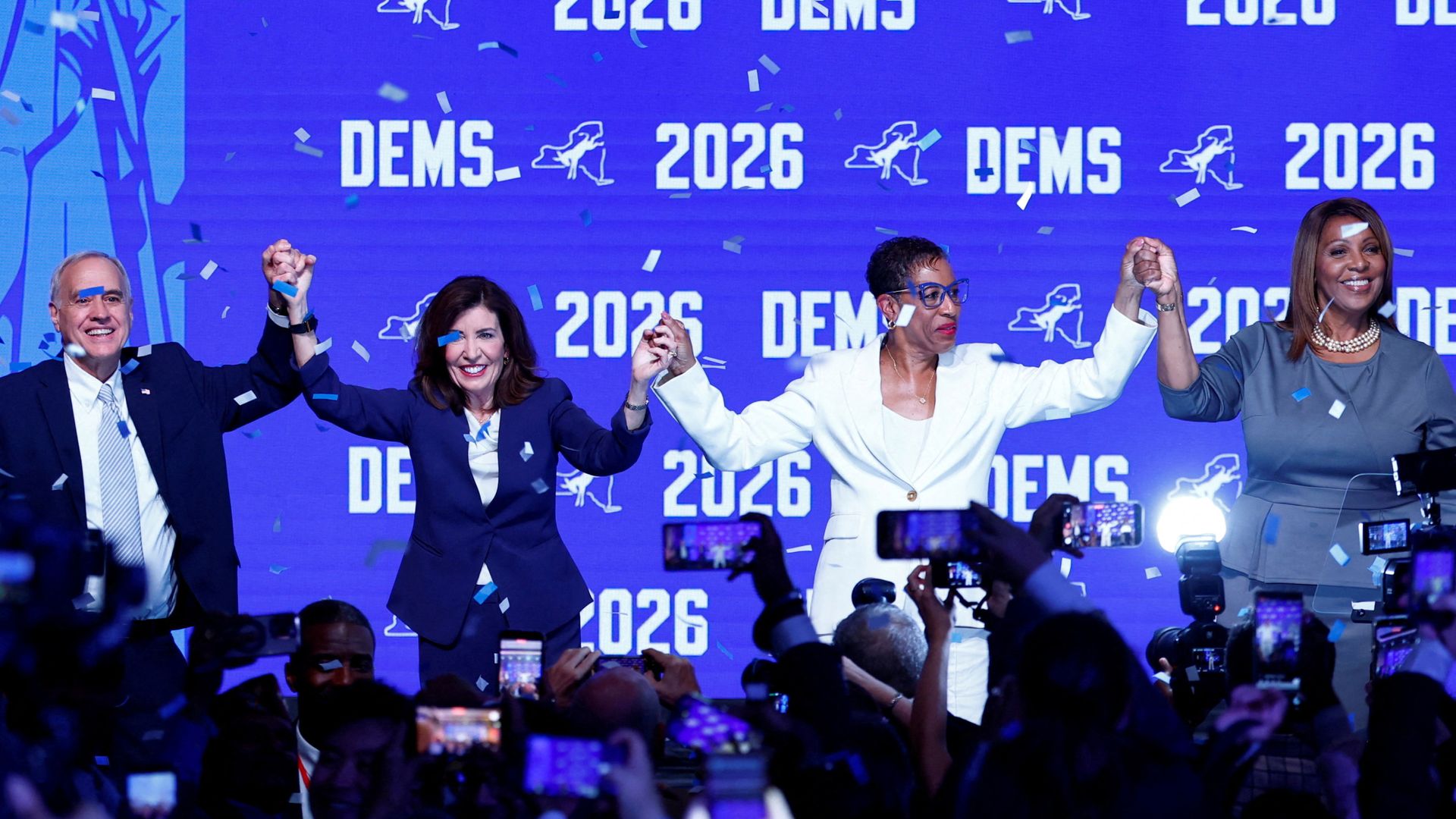
As the 2026 election cycle unfolds and parties prepare for the battles ahead, the temptation to overinterpret regional swings remains as strong as ever. Every special election victory in a suburban district or narrow statewide win in the Midwest will be hailed by partisan commentators as proof that the political map has permanently shifted.
It hasn't.
Middle America remains what it has been for over a century: an intensely competitive, deeply pragmatic, and fiercely independent battleground where neither party enjoys a guaranteed birthright. A blue wave can certainly break across the heartland when economic anxiety, suburban alienation, and targeted ballot issues align at the right moment. Yet waves, by definition, recede—unless the people riding them build something solid on the shore before the tide turns back out.